

Screenprint on wove paper
- Hand signed and numbered in pencil
Yue Minjun's The Three Musketeers (2019-2022) is a vibrant screenprint that showcases his signature style of using self-portraiture and satirical expression. The composition features three figures in front of a turquoise background: a laughing man in a Batman mask (a recurring motif in Minjun's work), a serene Buddha statue, and a cartoon-like character wearing a hat resembling a police cap. The juxtaposition of these elements blends humor with cultural and philosophical symbolism, creating a surreal and playful narrative. The laughing figure's exaggerated grin is emblematic of Minjun's exploration of human emotion and societal critique. The bright, flat colors and bold lines give the print a graphic, almost pop-art aesthetic. The piece, hand-signed and numbered by the artist, is a captivating example of his commentary on identity and modernity.
Artwork Copyright © Yue MinjunYue Minjun (China, 1962) is a renowned contemporary artist celebrated for his satirical self-portraits featuring exaggerated laughter. His works, rooted in Cynical Realism, critique societal norms and political issues with humor and irony. Using bold colors and repetitive imagery, Yue’s paintings are iconic representations of post-Tiananmen Chinese art.
Artwork Copyright © Yue MinjunThe Three Musketeers, 2019-2022
Form
Medium
Size
- Inches
- Centimeters
Edition
Price
- USD
- EUR
- GBP
- CHF
- Authenticity Guaranteed
- Insured Shipping
- Online Since 2005
●Inventory 12343
●Signed and numbered in pencil
●Comes with gallery invoice and certificate
●Sell Us a Similar Artwork. Learn more.
Screenprint on wove paper
- Hand signed and numbered in pencil
Yue Minjun's The Three Musketeers (2019-2022) is a vibrant screenprint that showcases his signature style of using self-portraiture and satirical expression. The composition features three figures in front of a turquoise background: a laughing man in a Batman mask (a recurring motif in Minjun's work), a serene Buddha statue, and a cartoon-like character wearing a hat resembling a police cap. The juxtaposition of these elements blends humor with cultural and philosophical symbolism, creating a surreal and playful narrative. The laughing figure's exaggerated grin is emblematic of Minjun's exploration of human emotion and societal critique. The bright, flat colors and bold lines give the print a graphic, almost pop-art aesthetic. The piece, hand-signed and numbered by the artist, is a captivating example of his commentary on identity and modernity.
Artwork Copyright © Yue MinjunYue Minjun (China, 1962) is a renowned contemporary artist celebrated for his satirical self-portraits featuring exaggerated laughter. His works, rooted in Cynical Realism, critique societal norms and political issues with humor and irony. Using bold colors and repetitive imagery, Yue’s paintings are iconic representations of post-Tiananmen Chinese art.
Artwork Copyright © Yue Minjun- Recently Added
- Price (Low-High)
- Price (High-Low)
- Year (Low-High)
- Year (High-Low)

Yue Minjun
Untitled (Smile-ism No.25), 2006
Limited Edition Print
Lithograph
USD 6,500

Yue Minjun
The Three Musketeers, 2019-2022
Limited Edition Print
Screen-print
USD 2,300

Yue Minjun
Untitled (Smile-ism No. 9), 2006
Limited Edition Print
Lithograph
USD 3,750
Related Artists

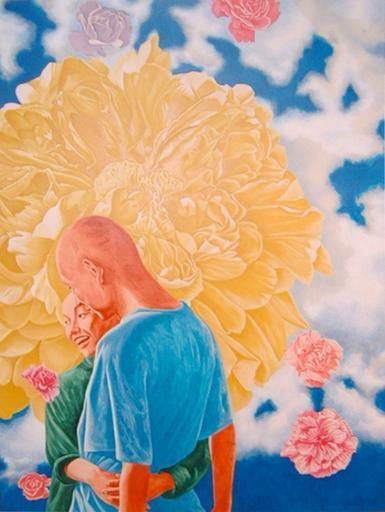
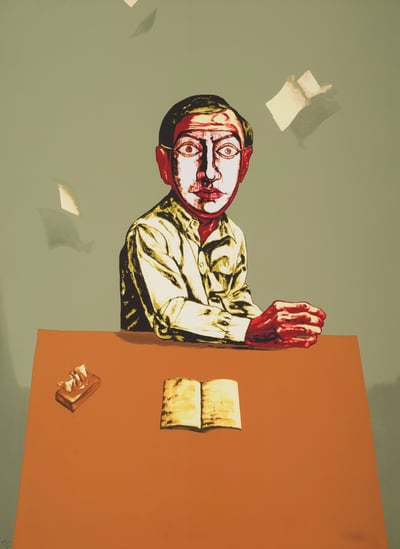
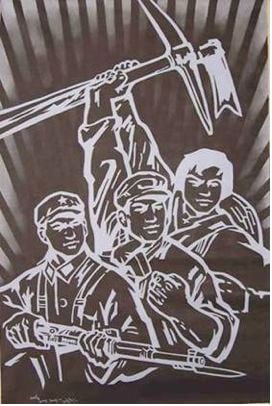

Artwork by Feng Zhengjie
What is Chinese contemporary art?
Chinese Contemporary Art is marked by a wide range of styles and experimental approaches. In the 1980s, avant-garde exhibitions were often shut down by government officials. The 1990s saw the rise of political pop and cynical realism, while China's One-Child Policy influenced artists to explore the individual as a subject matter.

Yue Minjun
The Three Musketeers, 2019-2022
80 x 100 cm


