

Hand-signed by the artist, front.
Yue Minjun’s Untitled (Smile-ism No. 25) (2006) is a striking lithograph that embodies his signature satirical and surrealist style. Featuring three nearly identical, semi-nude male figures reclining on a white surface, their exaggerated grins stretch unnaturally across their faces. Their pinkish, almost sunburned skin contrasts starkly against the pale background, emphasizing the grotesque, almost mechanical nature of their laughter.
Minjun, a leading figure in China’s Cynical Realism movement, often uses self-portraiture to explore themes of identity, absurdity, and collective experience. The forced, almost unsettling laughter in Smile-ism No. 25 critiques societal pressures, mass conformity, and the contradictions within contemporary life. The piece, part of a limited edition of 45, captures Minjun’s ability to transform humor into a vehicle for deeper introspection and social commentary.
Artwork Copyright © Yue MinjunYue Minjun (China, 1962) is a renowned contemporary artist celebrated for his satirical self-portraits featuring exaggerated laughter. His works, rooted in Cynical Realism, critique societal norms and political issues with humor and irony. Using bold colors and repetitive imagery, Yue’s paintings are iconic representations of post-Tiananmen Chinese art.
Artwork Copyright © Yue MinjunUntitled (Smile-ism No.25), 2006
Form
Medium
Size
- Inches
- Centimeters
Edition
Price
- USD
- EUR
- GBP
- CHF
- Authenticity Guaranteed
- Insured Shipping
- Online Since 2005
●Inventory 15589
●Signed
●Comes with gallery invoice and certificate
●Sell Us a Similar Artwork. Learn more.
Hand-signed by the artist, front.
Yue Minjun’s Untitled (Smile-ism No. 25) (2006) is a striking lithograph that embodies his signature satirical and surrealist style. Featuring three nearly identical, semi-nude male figures reclining on a white surface, their exaggerated grins stretch unnaturally across their faces. Their pinkish, almost sunburned skin contrasts starkly against the pale background, emphasizing the grotesque, almost mechanical nature of their laughter.
Minjun, a leading figure in China’s Cynical Realism movement, often uses self-portraiture to explore themes of identity, absurdity, and collective experience. The forced, almost unsettling laughter in Smile-ism No. 25 critiques societal pressures, mass conformity, and the contradictions within contemporary life. The piece, part of a limited edition of 45, captures Minjun’s ability to transform humor into a vehicle for deeper introspection and social commentary.
Artwork Copyright © Yue MinjunYue Minjun (China, 1962) is a renowned contemporary artist celebrated for his satirical self-portraits featuring exaggerated laughter. His works, rooted in Cynical Realism, critique societal norms and political issues with humor and irony. Using bold colors and repetitive imagery, Yue’s paintings are iconic representations of post-Tiananmen Chinese art.
Artwork Copyright © Yue Minjun- Recently Added
- Price (Low-High)
- Price (High-Low)
- Year (Low-High)
- Year (High-Low)

Yue Minjun
Untitled (Smile-ism No.25), 2006
Limited Edition Print
Lithograph
USD 6,500

Yue Minjun
The Three Musketeers, 2019-2022
Limited Edition Print
Screen-print
USD 2,300

Yue Minjun
Untitled (Smile-ism No. 9), 2006
Limited Edition Print
Lithograph
USD 3,750
Related Artists

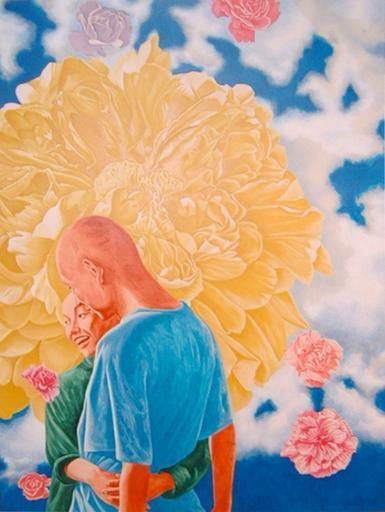
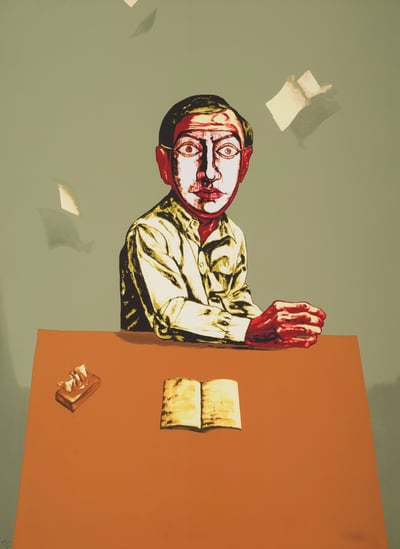
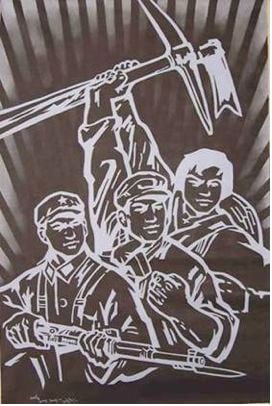
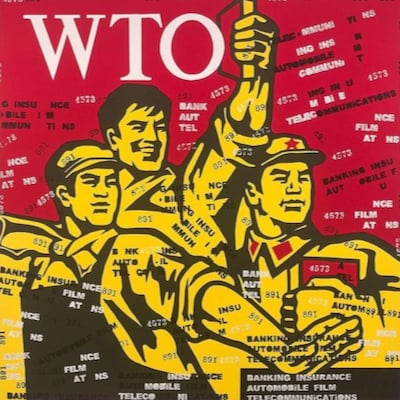
Artwork by Wang Guangyi
What is Political Pop?
Political Pop was an art movement that emerged in China during the 1980s, blending the Pop Art style of Western countries with the socialist realism of China. This movement arose during a time of rapid social and political change in China, as artists sought to create works that questioned and critiqued these cultural shifts. Political Pop often juxtaposed iconic images from Chinese propaganda with Western consumer culture, highlighting the tensions between tradition and modernization.

Yue Minjun
Untitled (Smile-ism No.25), 2006
80 x 109.5 cm


