

Hungary
Hungary's contemporary art scene is a captivating blend of history and modernity, encapsulating the nation's unique cultural evolution. Key venues such as the Ludwig Museum in Budapest and the MODEM Centre for Modern and Contemporary Arts in Debrecen celebrate this balance. Artists like El Kazovsky, remembered for his surrealist paintings, and Dóra Maurer, recognized internationally for her conceptual and visual art, carry forward the legacy of Hungarian creativity. As Budapest's Art Market grows annually, new talents are continually emerging, enriching the nation's artistic profile. Explore Hungary's dynamic contemporary art at Composition Gallery's website.
Artworks Related to Hungary

Victor Vasarely
VY-29-C, 1973
Limited Edition Print
Serigraph
EUR 2,200

Victor Vasarely
Firka
Limited Edition Print
Silkscreen
EUR 1,700

Victor Vasarely
Gordes Nives, 1971
Limited Edition Print
Lithograph
EUR 1,400
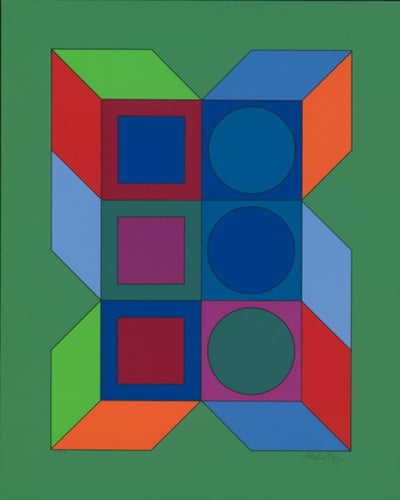
Victor Vasarely
XLV
Limited Edition Print
Silkscreen
EUR 2,200
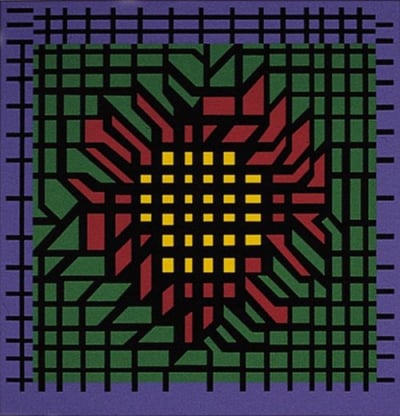
Victor Vasarely
Kat-Zag, 1980
Limited Edition Print
Lithograph
EUR 1,980

Victor Vasarely
Pleionne, 1990
Sculpture / Object
Acrylic sculpture
Currently Not Available

Victor Vasarely
Drawing I
Drawing / Watercolor
Mixed Media
EUR 4,500

Victor Vasarely
Drawing II
Drawing / Watercolor
Mixed Media
EUR 4,500
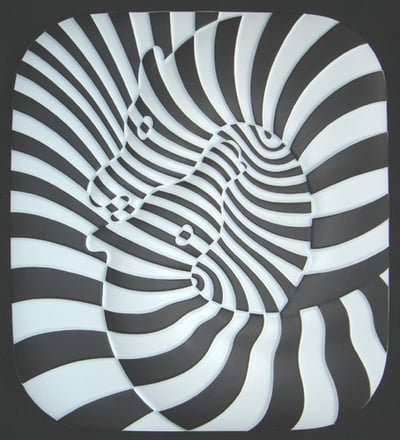
Victor Vasarely
Zebra Ceramique, 1977
Sculpture / Object
Ceramic
EUR 1,600
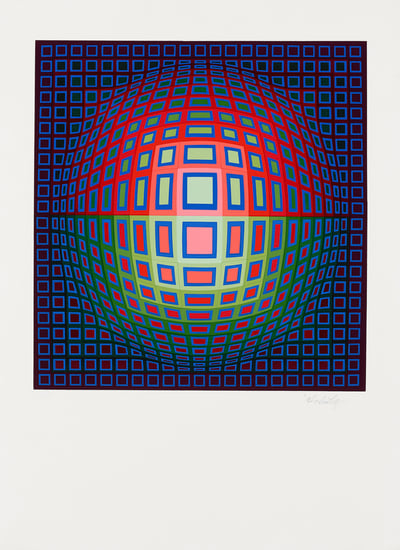
Victor Vasarely
Blue Composition, c. 1980
Limited Edition Print
Serigraph
EUR 1,500
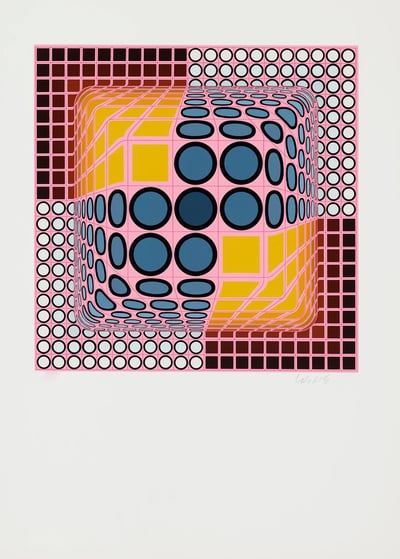
Victor Vasarely
Pink Composition, c. 1980
Limited Edition Print
Serigraph
EUR 1,500
Related Articles


Graffiti art refers to drawings and writings that are painted, scratched, or scribbled on walls or other surfaces, typically in public spaces. This art form ranges from small tags to elaborate wall paintings. Graffiti has been in existence since ancient times, with examples dating back to the Roman Empire, Ancient Greece, and Ancient Egypt.

Video art is an art form that uses video and audio data, primarily featuring moving images. It emerged in the late 1960s and early 1970s with the advent of new technology and consumer video equipment that became accessible beyond corporate broadcasting. Video art can take many forms, including broadcast recordings, installations in museums or galleries, online streamed works, videotapes, and performances incorporating video monitors, television sets, or projections that display live or recorded sounds and images.

Minimalism is a style in music and visual arts characterized by pared-down designs and simplicity. It began in Western art after World War II, gaining prominence particularly in American visual arts. Minimalism draws heavily on aspects of modernism and is often viewed as a reaction against Abstract Expressionism, as well as a precursor to post-minimal art practices. Prominent minimalist artists include Agnes Martin, Donald Judd, Robert Morris, Frank Stella, and Dan Flavin.
Can't find your Answer?
Thank you! Your question has been sent — we'll get back to you shortly.
