

What is appropriation?
- Show All
- Established
- Discoveries
- Show All
Artworks Related to Appropriation

Damien Hirst
The Beautiful Painting (small) - #116, 2023
Painting
Giclée printing
EUR 7,500

Damien Hirst
The Beautiful Painting (small) - #206, 2023
Painting
Giclée printing
EUR 7,500

Damien Hirst
The Beautiful Painting (large) - #936, 2023
Painting
Giclée printing
EUR 12,000

Damien Hirst
The Beautiful Painting (large) - #1059, 2023
Painting
Giclée printing
EUR 14,000

Damien Hirst
The Beautiful Painting (large) - #860, 2023
Painting
Giclée printing
EUR 12,000

Damien Hirst
The Beautiful Painting (large) - #297, 2023
Painting
Giclée printing
EUR 12,000

Damien Hirst
The Beautiful Painting (large) - #204, 2023
Painting
Giclée printing
EUR 12,000

Damien Hirst
The Beautiful Painting (large) - #1410, 2023
Painting
Giclée printing
EUR 12,000
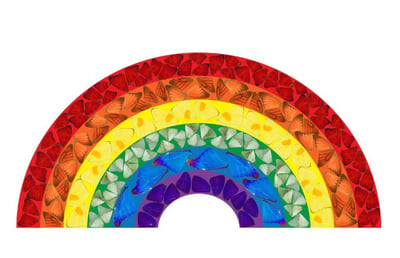
Damien Hirst
H7-1 Butterfly Rainbow (Large), 2020
Limited Edition Print
Archival Print
EUR 2,500

Damien Hirst
H7-3 Butterfly Heart (Large), 2020
Limited Edition Print
Archival Print
EUR 2,800

Andy Warhol
Silver Marilyn, 1990s
Tapestry
Tapestry
EUR 18,000

Andy Warhol
Flowers, 1968
Tapestry
Tapestry
EUR 25,000

Damien Hirst
Eternal Love (Clear & Gold), 2015
Sculpture / Object
Mixed Media
EUR 23,000

Damien Hirst
Eternal Prayer (Clear & Gold), 2017
Sculpture / Object
Mixed Media
EUR 20,000
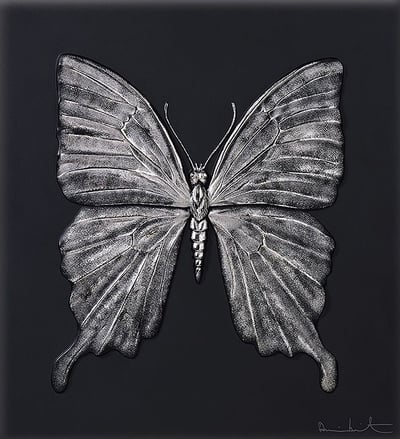
Damien Hirst
Eternal Beauty (Black & Platinum), 2017
Sculpture / Object
Mixed Media
Inquire For Price

Damien Hirst
The Hours Spin Skull, 2009
Sculpture / Object
Mixed Media
EUR 7,500
Related Articles
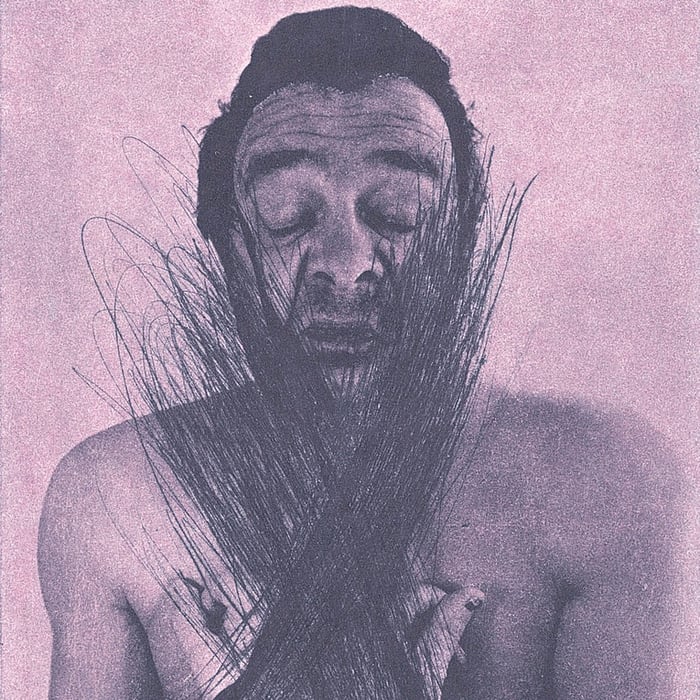

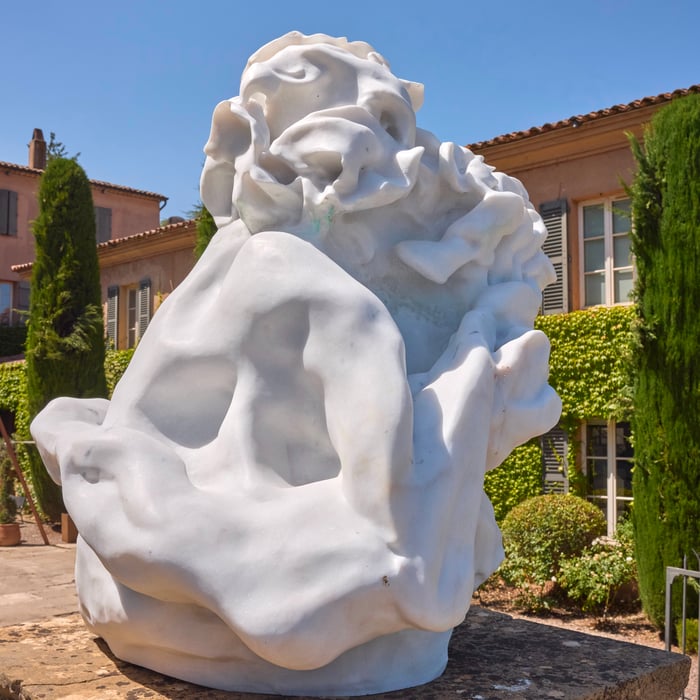

Montage is a film editing technique where a series of shots are edited into a sequence to condense time, convey information, and manage space within the narrative. While it primarily refers to this method in film, the term can also be used in various other contexts to describe the assembly of disparate elements into a cohesive whole.

An object in art refers to any tangible thing that exists and can be depicted in a work of art. Sometimes, the object becomes the focal point of a painting, drawing, or sculpture, meaning it is the most important element in the composition. An object can be anything that can be seen or touched, and it is often used to convey meaning or emphasize certain aspects of the artwork.
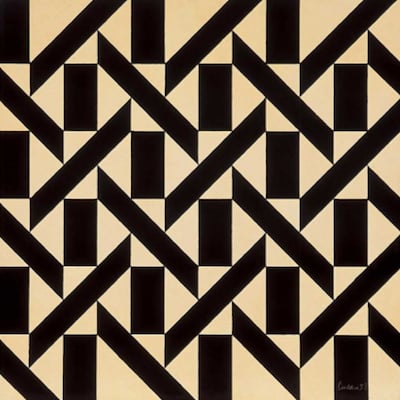
Grupo Ruptura was an organization formed in Brazil by artists who sought to break away from traditional naturalist painting in favor of geometric abstract art. In the early 1950s, the group published the Ruptura Manifesto, advocating for new art for a new country. The manifesto emphasized a departure from the past and a commitment to innovation, aligning with the modernist vision of Brazil as a forward-looking nation.
Can't find your Answer?
Thank you! Your question has been sent — we'll get back to you shortly.
