

Zevs
Zevs (France, 1977) is a prominent street artist and conceptual provocateur, known for his Liquidation series, where he 'melts' iconic logos to critique consumerism. A pioneer of urban art, Zevs often integrates public spaces into his work, blending graffiti, performance, and social commentary. His art challenges perceptions of branding and urban aesthetics.
© Zevs. All rights reserved.
- Recently Added
- Price (Low-High)
- Price (High-Low)
- Year (Low-High)
- Year (High-Low)
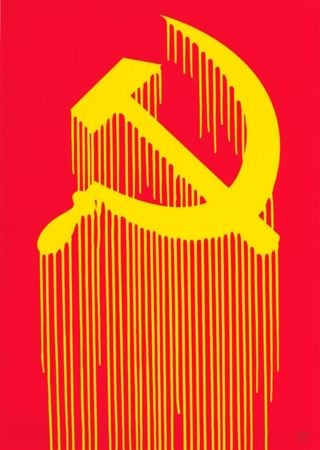
Zevs
CCCP - Liquidated Hammer and Sickle
Painting
Mixed Media
EUR 14,250
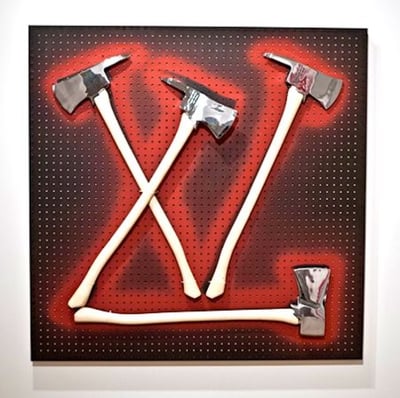
Zevs
LV - Axes, date unknown
Painting
Mixed Media
EUR 13,500
No sold works to show.
I consider artistic expression to be an opposing force based on power of itself. I
reverse the power to change the flow at my advantage.
- Zevs
reverse the power to change the flow at my advantage.
- Zevs
Frequently referred to as France’s own Banksy, Zevs is an anonymous street artist, renowned for his trademarked ‘liquidation’ practice – this liquidation technique involves Zevs recreating a well-recognised logo, such as Google, and allowing the paint to run, a technique that Zevs has described as an investigation into the logo’s visual power: “It’s a simple gesture, just as in Aikido when you reverse the power and change the flow of energy.”
Zevs’ work has also received recognition for its frequent attack on commercialism and advertisement – one of his most notable pieces involved him cutting out a model on an advertisement billboard for Lavazza, and filling the hole with the statement: ‘VISUAL KIDNAPPING – PAY NOW!’ he has likened this to a reversal of consumer demand on behalf of the brands; just as the brand has kidnapped the consumer’s attention, he has kidnapped the brand’s model and demanded a ransom.
Zevs’ work has also received recognition for its frequent attack on commercialism and advertisement – one of his most notable pieces involved him cutting out a model on an advertisement billboard for Lavazza, and filling the hole with the statement: ‘VISUAL KIDNAPPING – PAY NOW!’ he has likened this to a reversal of consumer demand on behalf of the brands; just as the brand has kidnapped the consumer’s attention, he has kidnapped the brand’s model and demanded a ransom.
Related Artists

Related Articles
Popular, Artists, Collecting - July 22, 2025
Investing in Emerging Artists: A Guide for Collectors
Learn how to invest wisely in emerging artists—spot talent early, manage risk, and build a meaningful, future-focused art collection.Read More
 Artwork by Roger Raveel
What is new figuration?
Neo-Figurative Art is a collective term that refers to the revival of figurative art in America and Europe during the 1960s, following a period dominated by abstraction. Michel Ragon, a French art critic, argued that this resurgence of figuration occurred during a critical time of social and political upheaval in both regions.
Explore »

