
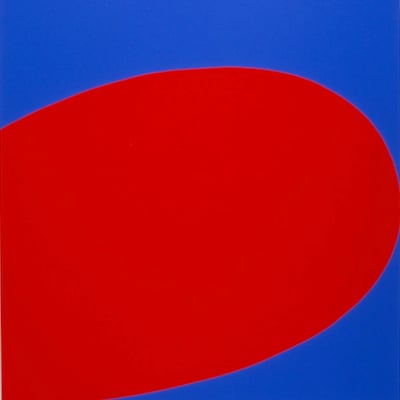
What is Colour Field Painting?
- Show All
- Established
- Discoveries
- Show All
Artworks Related to Colour Field Painting

Ellsworth Kelly
Orange and Blue over Yellow, 1964-65
Limited Edition Print
Lithograph
USD 20,000 - 25,000

Helen Frankenthaler
Reflections IX, 1995
Limited Edition Print
Lithograph
USD 7,150

Frank Stella
Had Gadya: Front Cover, from Illustrations after El Lissitzky's Had Gadya, 1984
Limited Edition Print
Collage
USD 19,850
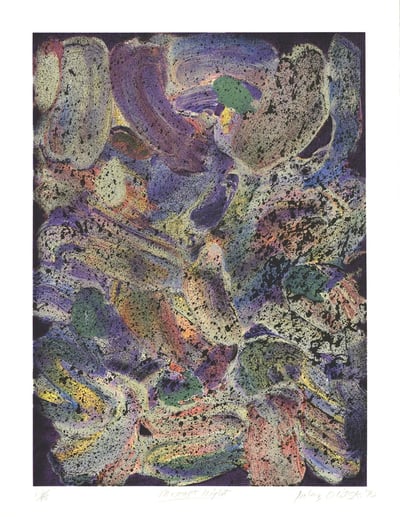
Jules Olitski
Mozart Night, 1992
Limited Edition Print
Silkscreen
USD 3,960
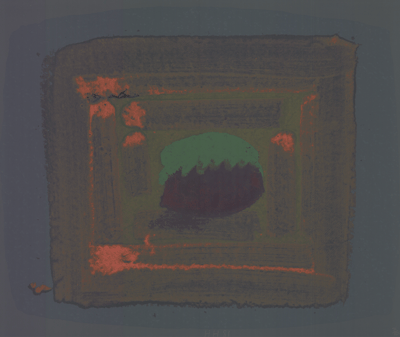
Howard Hodgkin
Tropical Fruit, 1981
Limited Edition Print
Serigraph
USD 5,000 - 7,000

Helen Frankenthaler
Solar Imp, 2001
Limited Edition Print
Screen-print
Currently Not Available

Robert Motherwell
Newport Opera, 1979
Limited Edition Print
Offset Print
USD 2,310

Howard Hodgkin
David's Pool at Night, 1979-85
Limited Edition Print
Etching and Aquatint
Inquire For Price
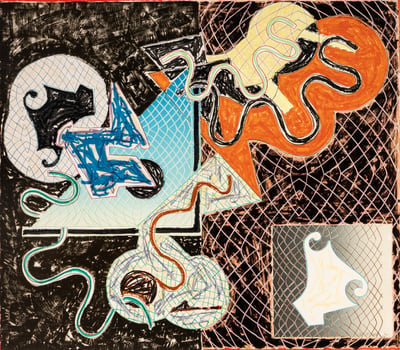
Frank Stella
Shards Variant IVa, 1982
Limited Edition Print
Mixed Media
Inquire For Price

Helen Frankenthaler
Pompeii Forte, 1976-82
Limited Edition Print
Etching and Aquatint
Currently Not Available

Helen Frankenthaler
Venice II, 1969-1972
Limited Edition Print
Lithograph
Currently Not Available
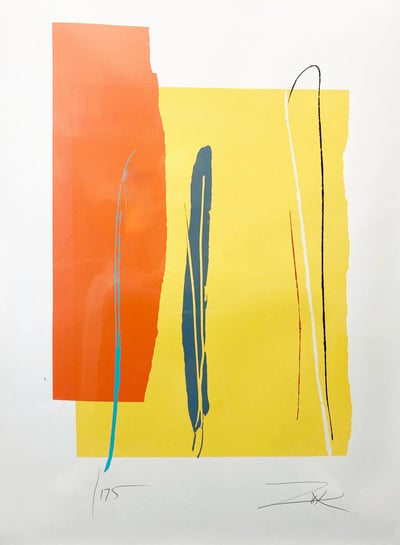
Larry Zox
Untitled 3 from Niagara Series, 1980
Limited Edition Print
Linocut
USD 850

Gunther Forg
The Reason Why I Work With Maurice, is Because Here the Beer Cost Me Nothing, 1990
Limited Edition Print
Lithograph
USD 6,000
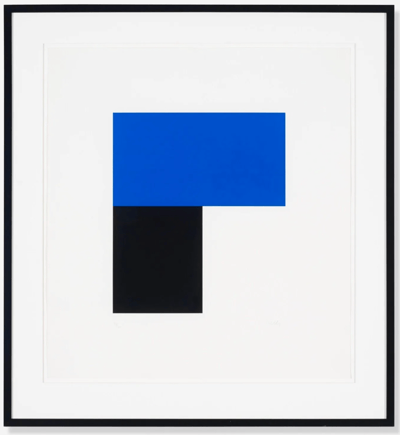
Ellsworth Kelly
Blue with Black II, 1972-74
Limited Edition Print
Screen-print
USD 18,900
Sam Francis
Private Listing
Drawing / Watercolor

Ellsworth Kelly
Black/White/Black, 1970
Limited Edition Print
Lithograph
USD 10,350
Related Articles
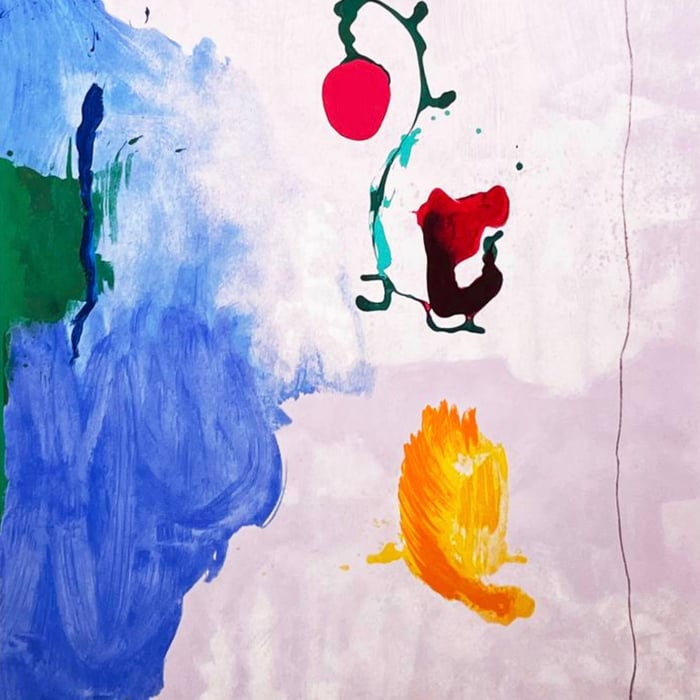
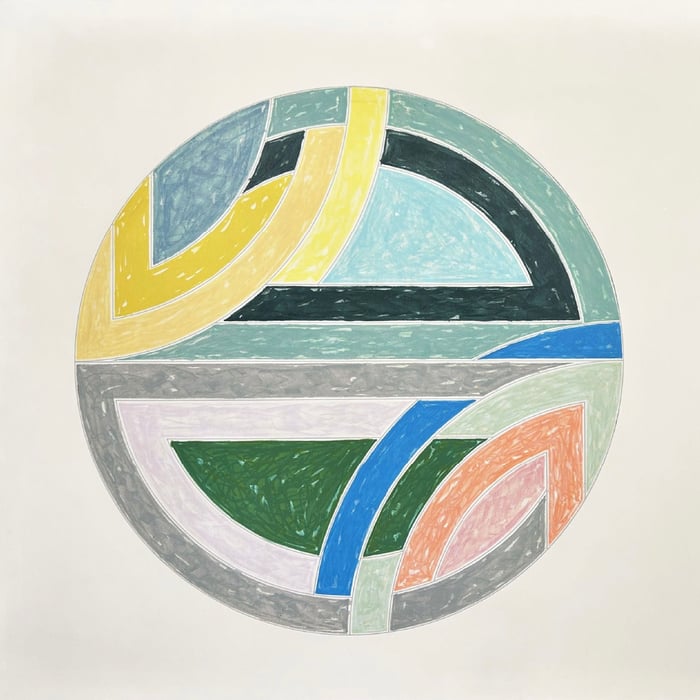
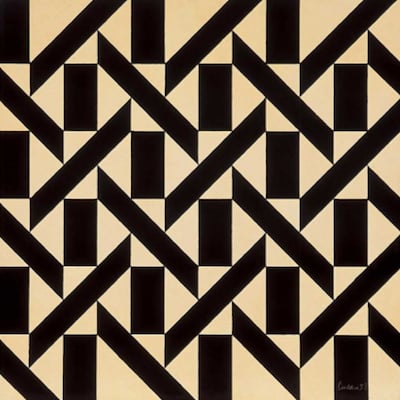
Grupo Ruptura was an organization formed in Brazil by artists who sought to break away from traditional naturalist painting in favor of geometric abstract art. In the early 1950s, the group published the Ruptura Manifesto, advocating for new art for a new country. The manifesto emphasized a departure from the past and a commitment to innovation, aligning with the modernist vision of Brazil as a forward-looking nation.

The Light and Space Movement refers to loosely affiliated art movements connected to minimalism, geometric abstraction, and op art that originated in Southern California in the 1960s. Greatly influenced by artist John McLaughlin, these artists focused on sensory phenomena such as light, perception, and space as central elements of their work. They also incorporated cutting-edge technologies from the aerospace and engineering industries to develop light-filled and sensuous objects, creating immersive experiences that emphasize the viewer's perception.

Embossing is a technique used to create raised designs or images on a surface, typically paper. Artists achieve this effect by altering the shape of the paper, often by pressing it from the reverse side using a template and a tool like a sanded dowel. The result is a design with multiple levels of depth, giving a three-dimensional appearance.
Can't find your Answer?
Thank you! Your question has been sent — we'll get back to you shortly.
