
Published by The Lincoln Center for the Performing Arts
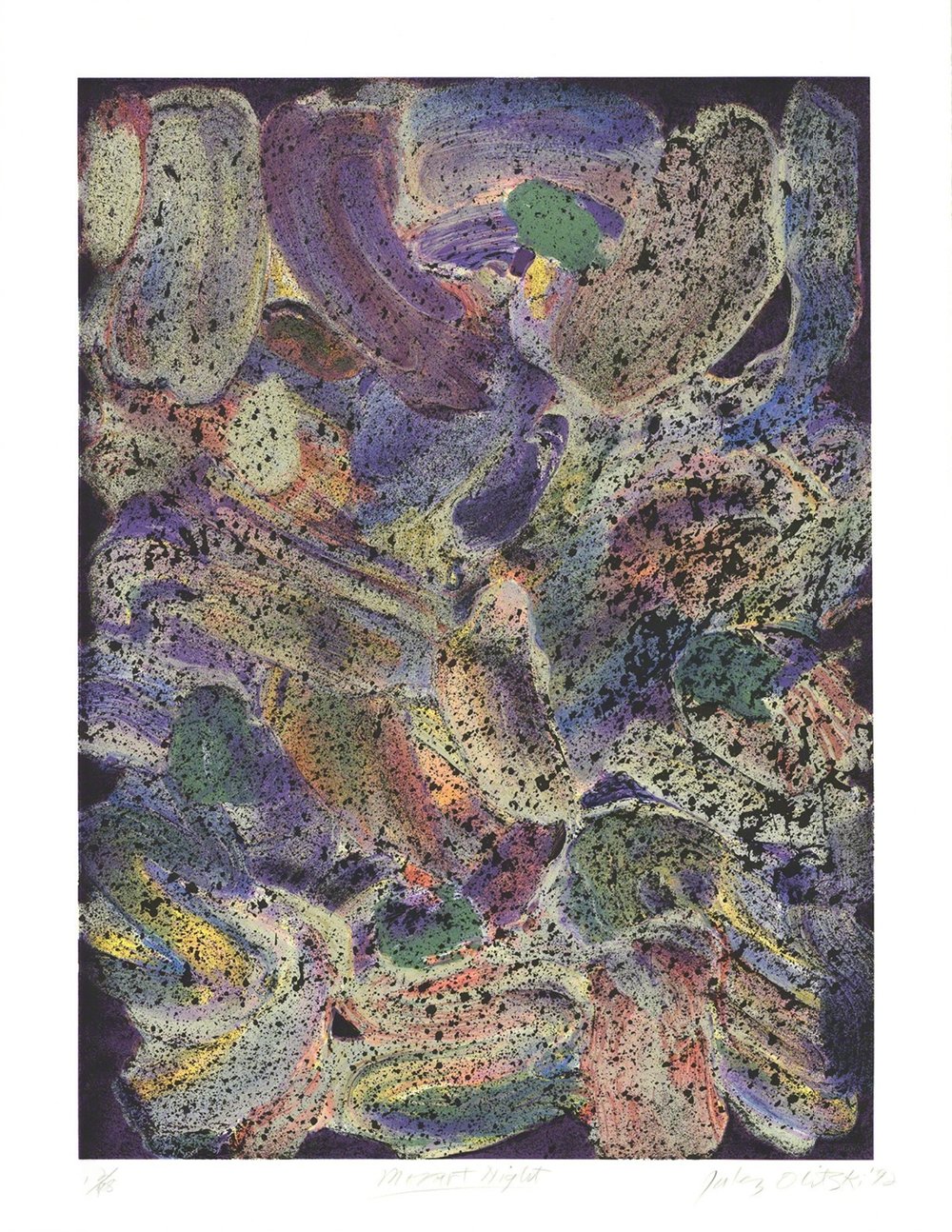
Hand signed, dated, titled and numbered out of 108 in pencil by Olitski.
Mozart Night (1992) by Jules Olitski is a vibrant silkscreen filled with expressive, gestural swaths of color. Swirling strokes in deep purples, bright yellows, greens, and blues intermingle with black speckled textures, creating a dynamic surface full of energy and movement. Known for his contributions to Color Field painting, Olitski brings a lyrical intensity to this print, echoing the emotional cadence of a musical composition. The title suggests a synesthetic dialogue between visual art and music, where abstract forms resonate like notes. This silkscreen is part of an edition of 108.
Artwork Copyright © Jules OlitskiJules Olitski (USA, 1922–2007) was a prominent abstract painter and sculptor, celebrated for his contributions to Color Field painting. Known for his atmospheric gradients and innovative spray-painting techniques, Olitski explored color and texture in groundbreaking ways. His works are featured in major museums worldwide, solidifying his legacy in modern art.
Artwork Copyright © Jules OlitskiMozart Night, 1992
Form
Medium
Size
- Inches
- Centimeters
Edition
Price
- USD
- EUR
- GBP
- CHF
- Authenticity Guaranteed
- Insured Shipping
- Online Since 2005
●Inventory 16029
●Signed
●Comes with gallery invoice and certificate
●Sell Us a Similar Artwork. Learn more.
Published by The Lincoln Center for the Performing Arts
Hand signed, dated, titled and numbered out of 108 in pencil by Olitski.
Mozart Night (1992) by Jules Olitski is a vibrant silkscreen filled with expressive, gestural swaths of color. Swirling strokes in deep purples, bright yellows, greens, and blues intermingle with black speckled textures, creating a dynamic surface full of energy and movement. Known for his contributions to Color Field painting, Olitski brings a lyrical intensity to this print, echoing the emotional cadence of a musical composition. The title suggests a synesthetic dialogue between visual art and music, where abstract forms resonate like notes. This silkscreen is part of an edition of 108.
Artwork Copyright © Jules OlitskiJules Olitski (USA, 1922–2007) was a prominent abstract painter and sculptor, celebrated for his contributions to Color Field painting. Known for his atmospheric gradients and innovative spray-painting techniques, Olitski explored color and texture in groundbreaking ways. His works are featured in major museums worldwide, solidifying his legacy in modern art.
Artwork Copyright © Jules Olitski- Recently Added
- Price (Low-High)
- Price (High-Low)
- Year (Low-High)
- Year (High-Low)
Jules Olitski
Mozart Night, 1992
Limited Edition Print
Silkscreen
USD 3,960
Related Artists


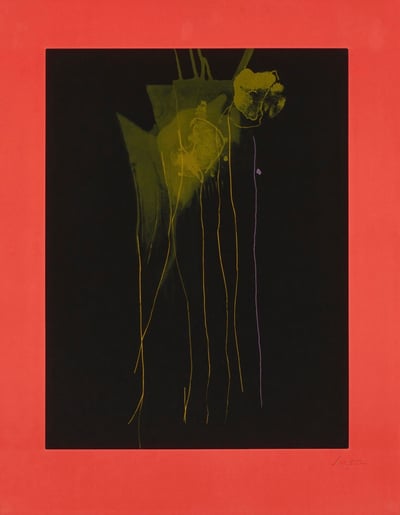


Artwork by Helen Frankenthaler
What is abstract expressionism?
Abstract Expressionism is an art movement that emerged in the United States during the 1940s and 1950s. Characterized by large, abstract canvases, the movement emphasized spontaneous, expressive brushwork and the use of color and form to convey emotion rather than represent reality. Artists like Jackson Pollock, Mark Rothko, and Willem de Kooning are key figures in this movement. Abstract Expressionism marked a shift in the art world, making New York City a center of the international art scene.
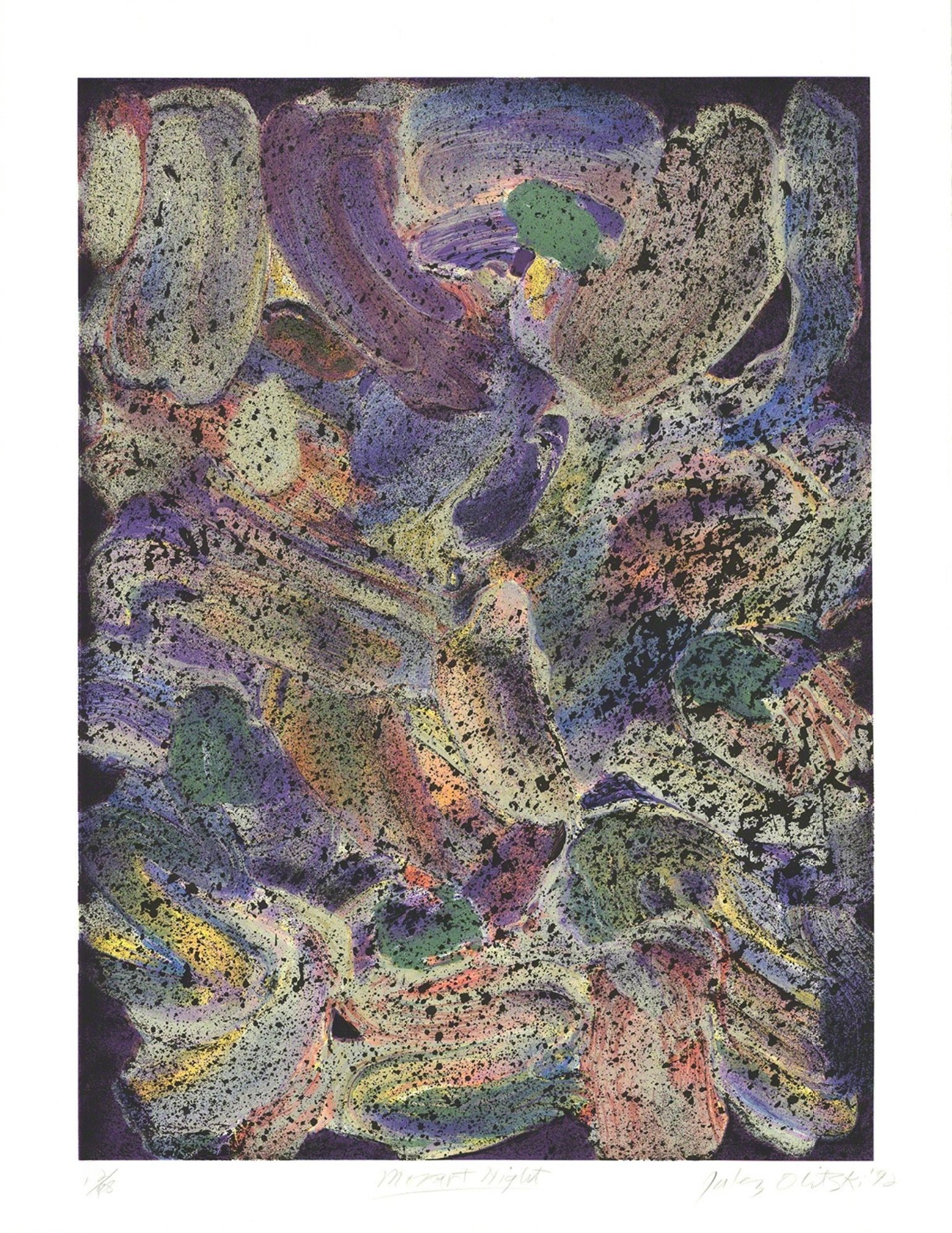
Jules Olitski
Mozart Night, 1992
119.4 x 91.4 cm


