

What is figurative art?
- Show All
- Established
- Discoveries
- Show All
Artworks Related to Figurative art
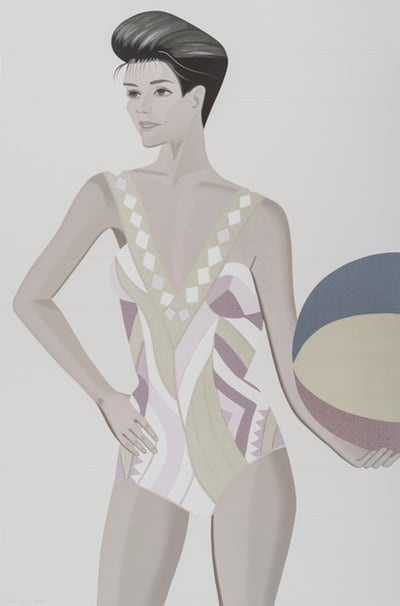
Alex Katz
Chance 3 (Darinka), 2016
Limited Edition Print
Silkscreen
USD 20,000 - 25,000

Alex Katz
Wildflowers, 2017
Limited Edition Print
Silkscreen
USD 20,000 - 30,000

Alex Katz
Red Dancer 2, 2019
Limited Edition Print
Silkscreen
USD 25,000 - 30,000

Alex Katz
Black Dress 9 (Christy) - Cutout, 2018
Sculpture / Object
Mixed Media
USD 17,750

Alex Katz
Black Dress 6 (Yvonne), 2018
Sculpture / Object
Mixed Media
USD 17,750

Alex Katz
Black Dress 5 (Ulla), 2018
Sculpture / Object
Mixed Media
USD 17,750
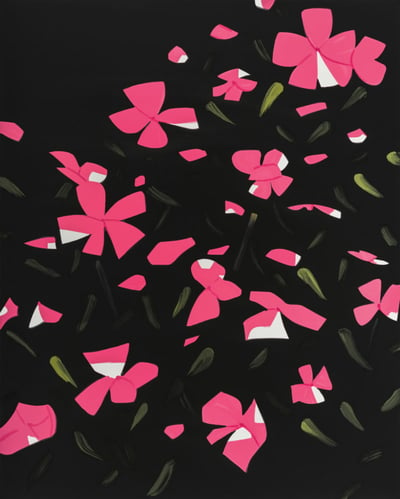
Alex Katz
White Impatiens, 2016
Limited Edition Print
Screen-print
USD 30,000 - 40,000

Alex Katz
Coca-Cola girl 7, 2019
Limited Edition Print
Screen-print
USD 35,000 - 40,000

Alex Katz
Coca-Cola girl 9, 2019
Limited Edition Print
Screen-print
USD 35,000 - 40,000

Alex Katz
Coca-Cola girl 4, 2019
Limited Edition Print
Screen-print
USD 20,000 - 25,000

Alex Katz
Coca-Cola Girl 3, 2019
Limited Edition Print
Silkscreen
USD 20,000 - 30,000
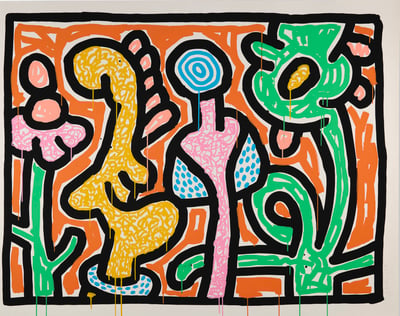
Keith Haring
Flowers IV, 1990
Limited Edition Print
Screen-print
USD 42,500

Alex Katz
Red Dogwood 2 from The Flowers Portfolio, 2021
Limited Edition Print
Archival Print
USD 17,750

Alex Katz
Red Dogwood 1 from Flowers Portfolio, 2021
Limited Edition Print
Archival Print
USD 17,750

Alex Katz
Peonies from The Flowers Portfolio, 2021
Limited Edition Print
Archival Print
USD 17,750

Alex Katz
Sara, 2012
Limited Edition Print
Silkscreen
USD 21,000
Related Articles

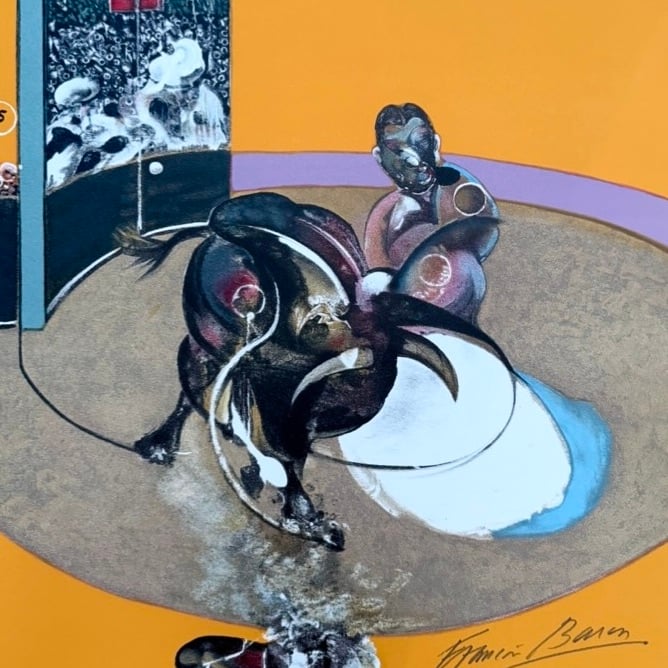

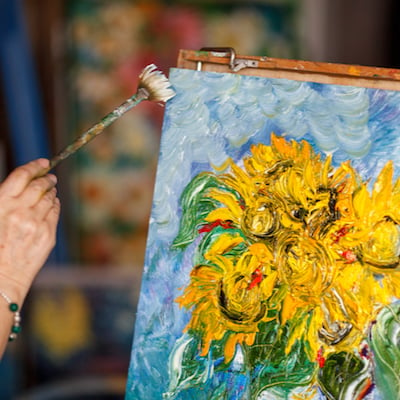
Oil paint is a slow-drying type of paint made from pigment particles suspended in a drying oil, typically linseed oil. The viscosity of the paint can be adjusted by adding a solvent like turpentine, and varnish can be added to increase the glossiness of the dried paint film. Oil painting has been used since the 12th century in Europe, initially for decoration, but it was not widely adopted as a primary painting medium until the 15th century.

Viennese Actionism was a short-lived but intense art movement in the 20th century, emerging as part of the broader action art efforts of the 1960s. Known for its violent and provocative performances, the movement sought to break traditional art boundaries. Key figures in this movement included Arnulf Rainer and Hermann Nitsch.

A pigment is a material that changes the color of light by selectively absorbing certain wavelengths and reflecting others. Unlike phosphorescence or fluorescence, where materials emit light, pigments work by altering the light that passes through or is reflected from them. In art, pigments are chosen for their special properties, such as high tinting strength, making them ideal for coloring various materials.
Can't find your Answer?
Thank you! Your question has been sent — we'll get back to you shortly.
