
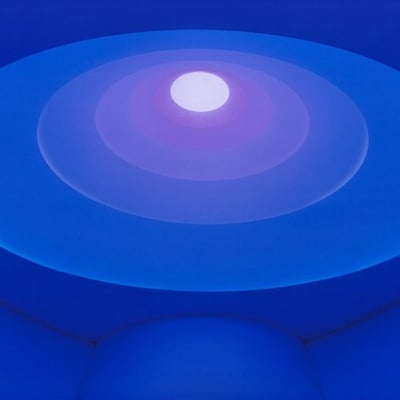
What is ‘light and space’?
- Show All
- Established
- Discoveries
- Show All
Artworks Related to Light and Space

Julio Le Parc
Dessin Infinie 26, 2022
Drawing / Watercolor
Marker
EUR 2,000

Julio Le Parc
Dessin Infinie 25, 2022
Drawing / Watercolor
Marker
EUR 2,000

Julio Le Parc
Dessin Infinie 22, 2022
Drawing / Watercolor
Marker
EUR 2,000

Julio Le Parc
Dessin Infinie 19, 2022
Drawing / Watercolor
Marker
EUR 2,000

Julio Le Parc
Dessin Infinie 13, 2022
Drawing / Watercolor
Marker
EUR 2,000

Julio Le Parc
Dessin Infinie 14, 2022
Drawing / Watercolor
Marker
EUR 2,000
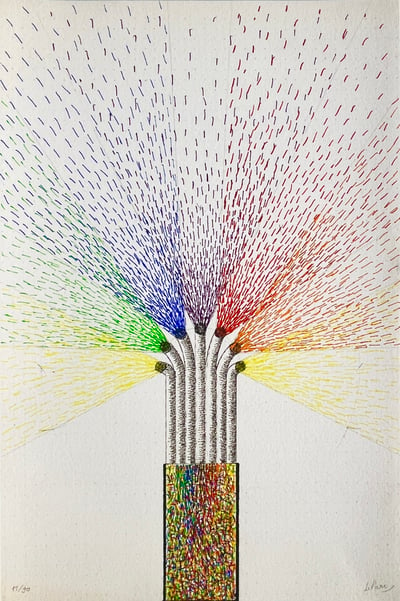
Julio Le Parc
Dessin au téléphone, 2024
Limited Edition Print
Digital Print on paper
EUR 1,000

Joseph Kosuth
Titled Quotation (for L.C.) from the portfolio of Leo Castelli's 90th Birthday, 1997
Limited Edition Print
Screen-print
USD 1,650

Bruce Nauman
Life fly Lifes Flies from the portfolio of Leo Castelli's 90th Birthday, 1997
Limited Edition Print
Etching
USD 3,750

Kenny Scharf
Blobosistic, 2022
Limited Edition Print
Pigment print
USD 7,200

Kenny Scharf
Paradis Perdu, 2022
Limited Edition Print
Mixed Media
USD 10,250
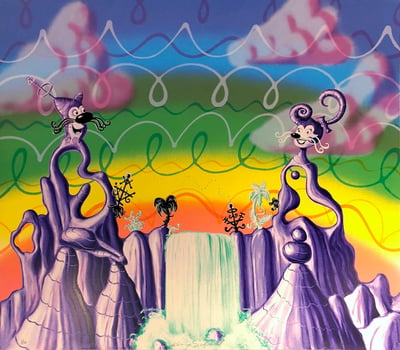
Kenny Scharf
Aqua Pollination, 1988
Limited Edition Print
Screen-print
USD 3,000

Kenny Scharf
Acid Rain, 1988
Limited Edition Print
Screen-print
USD 3,000

Julio Le Parc
Collage 4, 2017
Drawing / Watercolor
Collage
Currently Not Available
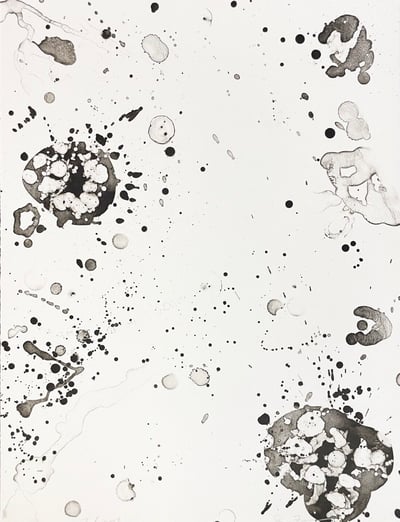
Sam Francis
Spring Solution, 1972
Limited Edition Print
Lithograph
Inquire For Price
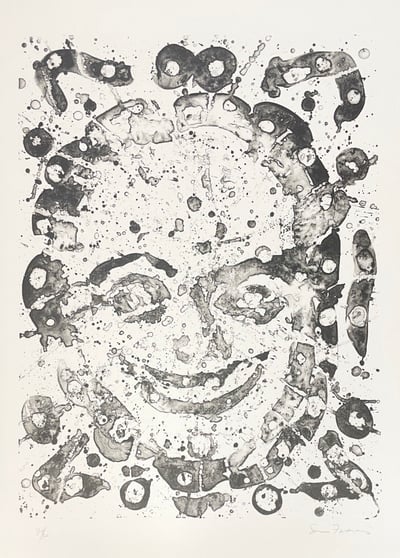
Sam Francis
Self Portrait (SF-051), 1976
Limited Edition Print
Lithograph
Inquire For Price
Related Articles

Found objects (or objet trouvé in French) are everyday items that an artist finds and incorporates into a work of art. While collectors have displayed aesthetically pleasing objects for centuries, modern art often uses objects that originally had non-artistic functions, such as recycled or repurposed materials.
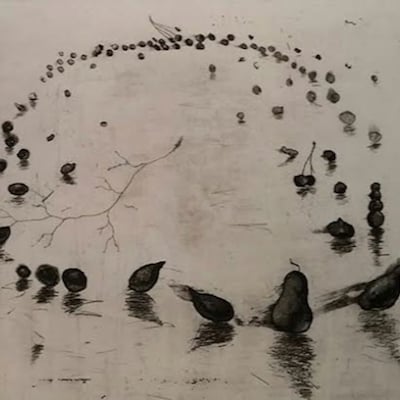
Drypoint is an intaglio printmaking technique where an image is incised onto a plate using a sharp, pointed tool, typically a needle made of metal or diamond. Traditionally, copper plates were used, but today zinc, plexiglass, or acetate are also common. Drypoint is easier for drawing artists to master compared to engraving, as the needle technique resembles drawing with a pencil rather than the more complex burin used in engraving.
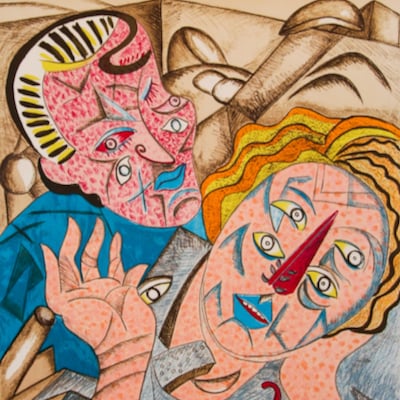
Arte Nucleare was the name of an artist group founded in Milan in 1951. The group aimed to create art that responded to the dangers and technologies of the nuclear age. Their works often utilized automatic techniques and depicted devastated landscapes and mushroom clouds, reflecting the anxieties of a world on the brink of nuclear catastrophe.
Can't find your Answer?
Thank you! Your question has been sent — we'll get back to you shortly.
