

What is Modern Realism?
- Show All
- Established
- Discoveries
- Show All
Artworks Related to Modern Realism

Banksy
Morons (Sepia), 2007
Limited Edition Print
Screen-print
USD 80,000 - 95,000

Takashi Murakami
Doraemon, 2018
Limited Edition Print
Offset Print
USD 2,100

Banksy
Turf war , 2003
Limited Edition Print
Screen-print
GBP 34,800

David Hockney
Growing, 1986
Limited Edition Print
Mixed Media
GBP 17,500

Takashi Murakami
Untitled XXV from We Are the Jocular Clan, 2018
Limited Edition Print
Lithograph
USD 1,550

Fernando Botero
Fumador de Cigarrillos, 1975 -1980
Limited Edition Print
Lithograph
Currently Not Available

Rene Magritte
La Valse Hesitation, 1971
Limited Edition Print
Etching and Aquatint
Currently Not Available
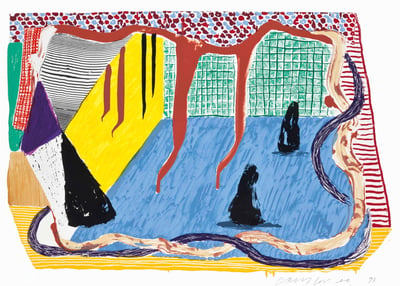
David Hockney
Ink in the Room (from Some New Prints), 1993
Limited Edition Print
Screen-print
GBP 25,000 - 35,000
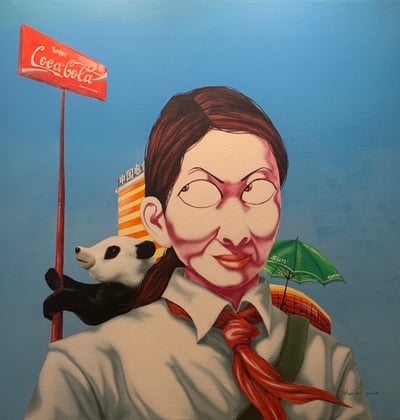
Zhao Bo
Untitled (Coca Cola Panda)
Painting
Oil on canvas
USD 6,000

Takashi Murakami
Rum Pum Pum In A Field Of Flowers!, 2022
Limited Edition Print
Offset Print
GBP 1,800

David Spiller
You Are My Sunshine, 2021
Limited Edition Print
Silkscreen
EUR 1,400

David Spiller
Angels Bright Watch Over You Tonight; Stay Close To Me, 2020
Limited Edition Print
Silkscreen
EUR 2,750
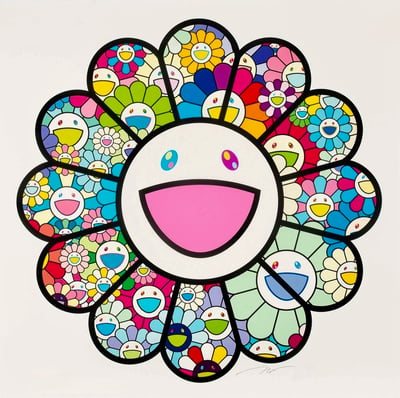
Takashi Murakami
School Entrance Ceremony, 2022
Limited Edition Print
Mixed Media
GBP 3,000 - 5,000

Takashi Murakami
Dob and then, and then, and then, 2006
Limited Edition Print
Offset Print
EUR 1,800

Takashi Murakami
Red dob and then and then…, 2006
Limited Edition Print
Offset Print
EUR 2,000

Takashi Murakami
Red and green dob, and then and then…, 2006
Limited Edition Print
Offset Print
EUR 1,950
Related Articles


Gouache is an opaque watercolor paint that allows artists to layer from light to dark. Unlike traditional transparent watercolors, gouache is used for creating solid, vibrant colors. It belongs to the water-media category and is made of pigment, a binding agent, and an inert material, specifically designed for opaque painting.

A plate is a broad, primarily flat vessel used for serving food, but it can also serve ceremonial or decorative purposes. Plates are typically circular, though they can be any shape and made from various water-resistant materials. Most plates have raised edges, either by curving upward or featuring a wider lip. Vessels without a raised edge or with a more rounded profile are often considered bowls or dishes, while very large, plate-shaped vessels might also be classified as dishes.

Transavanguardia is the Italian version of Neo-Expressionism, referring to an art movement that emerged in Italy and other parts of Western Europe during the 1970s and 1980s. The term translates to beyond the avant-garde. Transavanguardia arose as a reaction against the dominance of conceptual art, reintroducing emotion and reviving painting as a primary medium. The movement marked a return to mythic imagery and figurative art, celebrating a rediscovery of traditional forms and themes in a contemporary context.
Can't find your Answer?
Thank you! Your question has been sent — we'll get back to you shortly.
