
What is Neo-Dada?
- Show All
- Established
- Discoveries
- Show All
Artworks Related to Neo-Dada

Jasper Johns
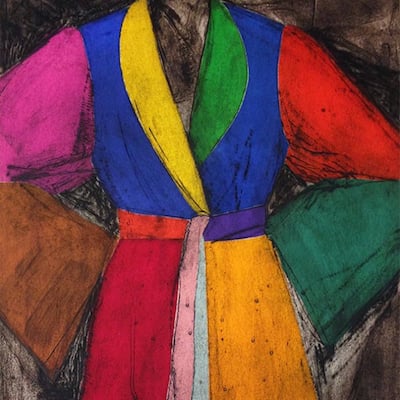
Knee, 1974
Limited Edition Print
Lithograph
USD 7,350

Robert Rauschenberg
Untitled (Native American with Truck), 2000
Limited Edition Print
Pigment print
EUR 2,850

Jasper Johns
Cross Hatch, 1977
Limited Edition Print
Screen-print
Currently Not Available

Robert Rauschenberg
Horsefeathers Thirteen I, 1972
Limited Edition Print
Mixed Media
Currently Not Available

Robert Rauschenberg
International Very Special Arts Festival, 1989
Limited Edition Print
Lithograph
Inquire For Price
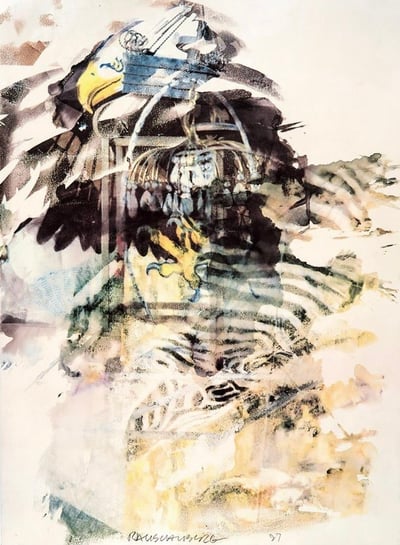
Robert Rauschenberg
Caucus, 1997
Limited Edition Print
Serigraph
USD 2,350
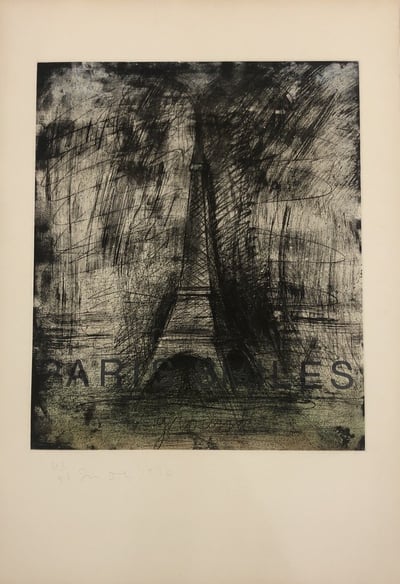
Jim Dine
Paris Smiles in Darkness, 1976
Limited Edition Print
Etching
EUR 4,500

Jim Dine
Dutch hearts, 1970
Limited Edition Print
Mixed Media
EUR 1,875

Jim Dine
Tool Box V, 1966
Limited Edition Print
Screen-print
USD 1,350

Jim Dine
Tool Box VII, 1966
Limited Edition Print
Screen-print
USD 1,350

Jim Dine
Untitled from Pinocchio Suite (wolf and a cat), 2005
Limited Edition Print
Lithograph
Inquire For Price
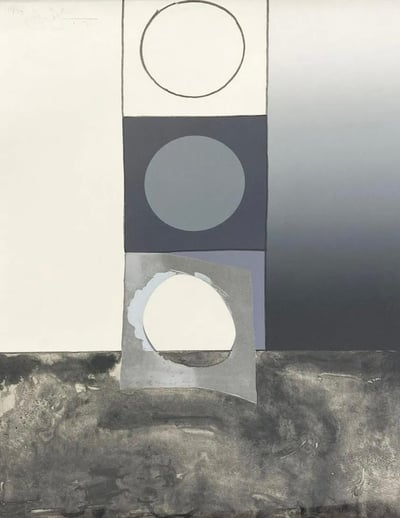
Jasper Johns
Bent Stencil, 1971
Limited Edition Print
Lithograph
USD 7,650

Robert Rauschenberg
Best Buddies, 1992
Limited Edition Print
Screen-print
USD 3,060
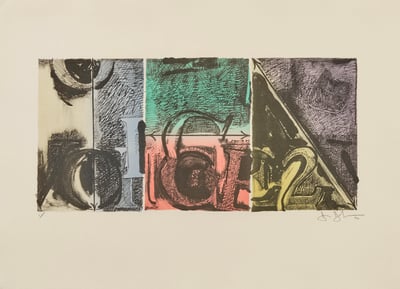
Jasper Johns
Voice 2, 1982
Limited Edition Print
Lithograph
USD 7,670
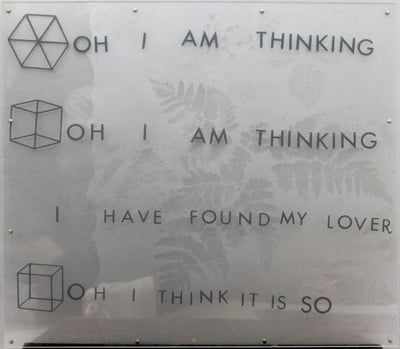
Robert Rauschenberg
Opal Gospel Panel II, 1971
Limited Edition Print
Screen-print
USD 1,650

Robert Rauschenberg
Opal Gospel Panel V, 1971
Limited Edition Print
Screen-print
Inquire For Price
Related Articles


The Bay Area Figurative Movement, which also goes by the names Bay Area Figurative School, Bay Area Figurative Art, or Bay Area Figuration, came to existence in San-Francisco Bay Area. This was in the mid-20th century, when a group of artists from the area stopped working on the then popular Abstract Expressionism for a preference to figuration in painting. The movement lasted a total of two decades during the 1950's and 1960's.

Systems Art refers to a group of artists who, during the late 1960s and early 1970s, used the frameworks of conceptualism and minimalism to create art that was responsive to its environment. Rejecting traditional art themes, they embraced aesthetic systems and experimented with diverse media. Systems Art often connected with contemporary political movements of the time, emphasizing the interrelationship between the artwork, its context, and the broader social and political environment.

Etching is a technique where a design is created on a metal surface by using a strong acid or mordant to eat away the unprotected parts of the metal, leaving the desired pattern in relief (intaglio). In modern art and manufacturing, different chemicals may be used depending on the material being etched.
Can't find your Answer?
Thank you! Your question has been sent — we'll get back to you shortly.
