
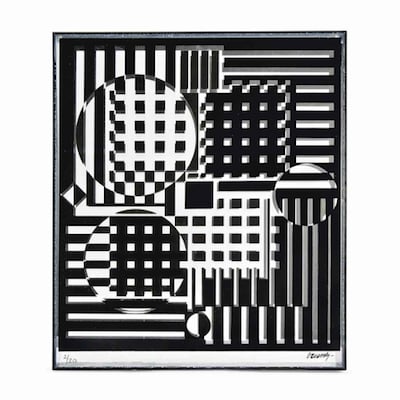
What is Op Art?
- Show All
- Established
- Discoveries
- Show All
Artworks Related to Op Art

Rafael Jesus Soto
Vibrations, 1967
Sculpture / Object
Acrylic sculpture
EUR 9,200

Luis Tomasello
S/T 4 - Verde , 2013
Limited Edition Print
Lithograph
EUR 3,000

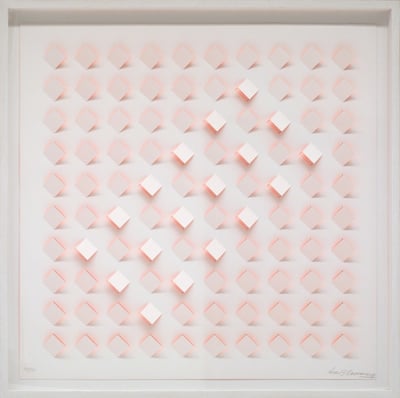
Luis Tomasello
S/T 4 - Rosa , 2013
Limited Edition Print
Lithograph
EUR 3,000
Luis Tomasello
S/T 4 - Naranja , 2013
Limited Edition Print
Lithograph
EUR 3,000

Luis Tomasello
S/T 3 - Verde, 2013
Limited Edition Print
Lithograph
EUR 3,000

Luis Tomasello
S/T 3 - Naranja, 2013
Limited Edition Print
Lithograph
EUR 3,000

Luis Tomasello
S/T 2 - Verde, 2013
Limited Edition Print
Lithograph
EUR 3,000

Luis Tomasello
S/T 2 - Rosa, 2013
Limited Edition Print
Lithograph
EUR 3,000
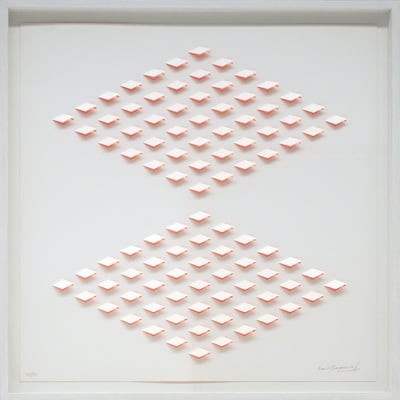
Luis Tomasello
S/T 2 - Naranja , 2013
Limited Edition Print
Lithograph
EUR 3,000

Luis Tomasello
S/T 1 - Rosa , 2013
Limited Edition Print
Lithograph
EUR 3,000

Luis Tomasello
S/T 1 - Naranja , 2013
Limited Edition Print
Lithograph
EUR 3,000
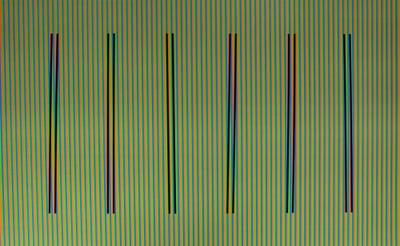
Carlos Cruz-Diez
Couleur à l'Espace Olot, 2014
Limited Edition Print
Lithograph
Currently Not Available

Antonio Asis
Vibration Carré Noir et Bleu, 2012
Sculpture / Object
Mixed Media
EUR 3,000

Antonio Asis
vibration grand cercle, 2010
Sculpture / Object
Mixed Media
EUR 3,000

Antonio Asis
vibration bandes bleus et rouges, 2010
Sculpture / Object
Mixed Media
EUR 3,000
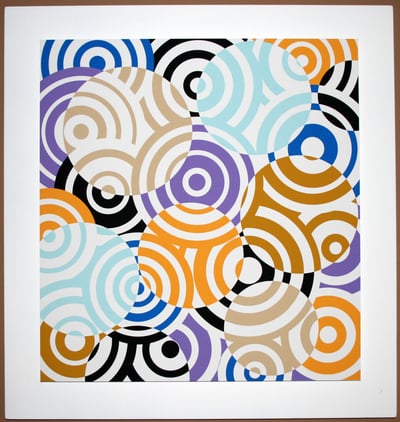
Antonio Asis
interferences cercles de couleurs, 2010
Limited Edition Print
Mixed Media
EUR 2,200
Related Articles

A Biennial is an art exhibition held every two years, typically on a large scale with international participants. The first and most famous example is the Venice Biennale, established in 1895 and held in the Giardini, a public park in Venice. Over time, the event has grown to include thirty permanent pavilions, each representing different countries. Biennials have become significant events in the contemporary art world, offering a platform for artists to showcase their work to a global audience.

Pixel Art is a form of digital art created by placing individual pixels, similar to assembling a mosaic where each small piece contributes to a larger image. The style is often associated with nostalgia, as it draws on the techniques used in early video game graphics. Pixel art has seen a resurgence in popularity, both as a nod to retro aesthetics and as a distinct artistic style in modern digital art.
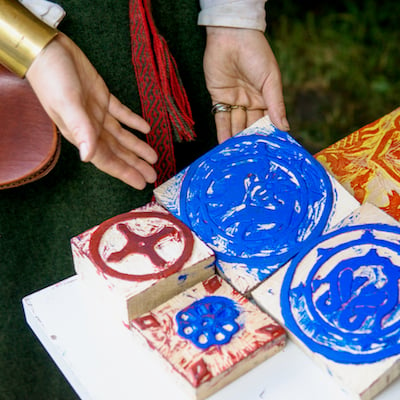
Woodcut is a printing technique where an image is carved into the surface of a woodblock using gouges, with the remaining flat surface holding the ink for printing. The areas cut away by the artist do not carry ink, while the uncut areas do, producing the desired print. The carving follows the wood's grain, unlike wood engraving, where the block is cut across the end-grain. Ink is applied to the surface with a roller, ensuring only the flat, uncarved areas receive ink, leaving the recessed, non-printing areas clean.
Can't find your Answer?
Thank you! Your question has been sent — we'll get back to you shortly.
