
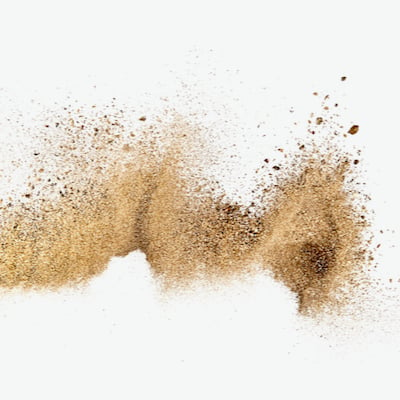
What is sand?
Sand consists of loose grains of material primarily made up of minerals like quartz, mica, and feldspar, as well as small fragments of rocks. Sand paintings are created by pouring colored sand into intricate designs, often for cultural rituals or special celebrations. These designs can take many days to complete and are traditionally brushed away after the ceremony, emphasizing the impermanence of the artwork.
Artworks Related to Sand

Gunther Uecker
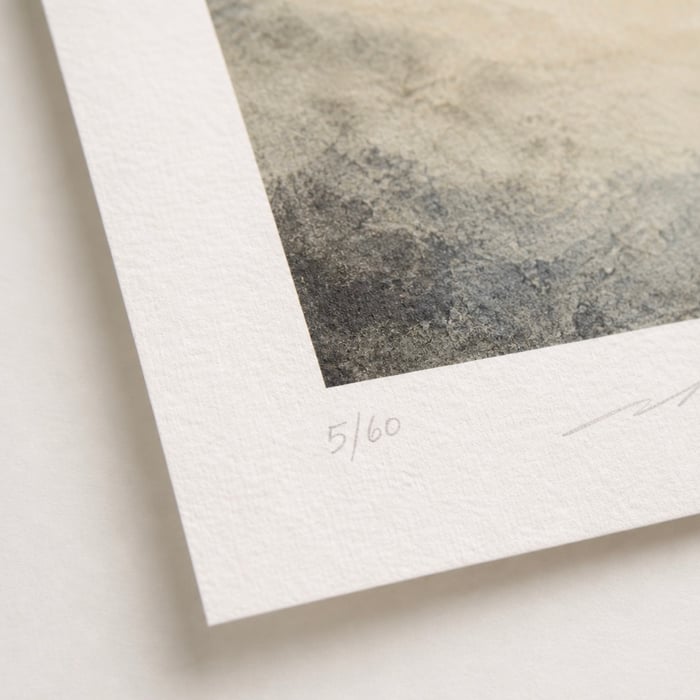
Ouroboros #12, 2018
Limited Edition Print
Sand
EUR 8,000

Gunther Uecker
Ouroboros #9, 2018
Limited Edition Print
Sand
EUR 8,000

Gunther Uecker
Ouroboros #7, 2018
Limited Edition Print
Sand
EUR 8,000
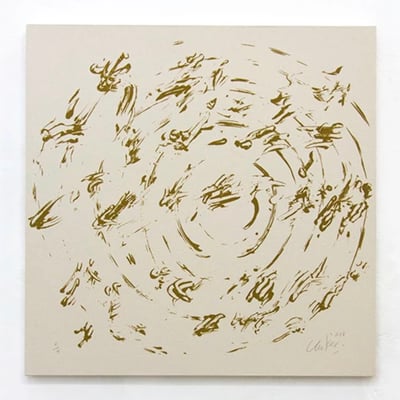
Gunther Uecker
Ouroboros #5, 2018
Limited Edition Print
Sand
EUR 8,000

Gunther Uecker
Ouroboros #3, 2018
Limited Edition Print
Sand
EUR 8,000

Gunther Uecker
Ouroboros #11, 2018
Limited Edition Print
Sand
EUR 8,000

Gunther Uecker
Ouroboros #10, 2018
Limited Edition Print
Sand
EUR 8,000
Related Articles
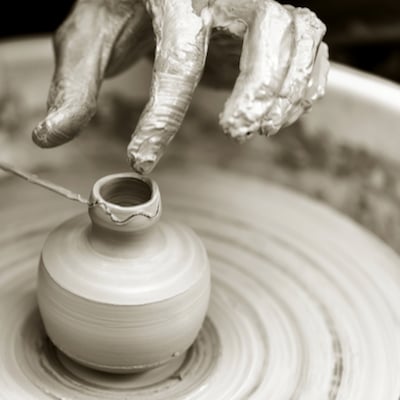
Ceramics is an art form that involves creating objects from clay. The clay is shaped, molded, and formed by hand or with specialized tools, then baked (or fired) in a high-temperature oven called a kiln. Decorative colors and special glazes can be applied to the surface, which are then fired again to finish the piece.

New Topographics is a term coined in 1975 by curator William Jenkins to describe a group of photographers whose work focused on formal black-and-white images of urban and industrial landscapes. Jenkins initially described their aesthetic as banal, but the photographers themselves argued that their compositions were as significant as those of natural landscapes, emphasizing the beauty in everyday, man-made environments.

Carborundum is the trademark name for silicon carbide crystals, an abrasive material commonly used in sandpaper, cutting tools, and grinding wheels. Originally, artists used carborundum for grinding lithography stones. In collagraph printmaking, it is applied to plates to create texture and tone gradients, adding depth and contrast to the prints.
Can't find your Answer?
Thank you! Your question has been sent — we'll get back to you shortly.
