

Tella Estrofelessa and Acrylic
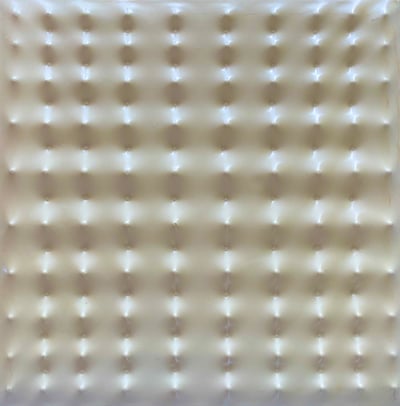
Rosso by Agostino Bonalumi, created in 1999, is a striking example of the artist's exploration of form and dimension through mixed media. Measuring 100 x 100 cm, this piece employs a unique combination of Tela Estrofelessa and acrylic, which allows Bonalumi to push the boundaries of traditional painting. The vivid red surface is subtly sculpted to create three-dimensional undulations, giving the impression that the canvas is both flat and in motion. The interplay of light and shadow across the textured surface evokes a sense of depth and dynamism, characteristic of Bonalumi's signature approach to shaping canvases. Rosso is a testament to his dedication to transforming flat planes into sculptural spaces, challenging viewers to reconsider the boundaries between painting and relief sculpture.
Artwork Copyright © Agostino BonalumiAgostino Bonalumi (Italy, 1935–2013) was a key figure in post-war Italian art, known for his 'extroflexed' canvases that push painting into three dimensions. Associated with the Spatialist movement, his innovative works combined geometric precision with dynamic forms, redefining the boundaries between painting and sculpture.
Artwork Copyright © Agostino BonalumiRosso, 1999
Form
Medium
Size
- Inches
- Centimeters
Edition
Price
Available works →
- Authenticity Guaranteed
- Insured Shipping
- Online Since 2005
●
●Inventory 5483
●Signed
●Comes with gallery invoice and certificate
●Sell Us a Similar Artwork. Learn more.
Tella Estrofelessa and Acrylic
Rosso by Agostino Bonalumi, created in 1999, is a striking example of the artist's exploration of form and dimension through mixed media. Measuring 100 x 100 cm, this piece employs a unique combination of Tela Estrofelessa and acrylic, which allows Bonalumi to push the boundaries of traditional painting. The vivid red surface is subtly sculpted to create three-dimensional undulations, giving the impression that the canvas is both flat and in motion. The interplay of light and shadow across the textured surface evokes a sense of depth and dynamism, characteristic of Bonalumi's signature approach to shaping canvases. Rosso is a testament to his dedication to transforming flat planes into sculptural spaces, challenging viewers to reconsider the boundaries between painting and relief sculpture.
Artwork Copyright © Agostino BonalumiAgostino Bonalumi (Italy, 1935–2013) was a key figure in post-war Italian art, known for his 'extroflexed' canvases that push painting into three dimensions. Associated with the Spatialist movement, his innovative works combined geometric precision with dynamic forms, redefining the boundaries between painting and sculpture.
Artwork Copyright © Agostino Bonalumi- Recently Added
- Price (Low-High)
- Price (High-Low)
- Year (Low-High)
- Year (High-Low)

Agostino Bonalumi
Senza titolo, 1990
Sculpture / Object
Bronze
EUR 3,750

Agostino Bonalumi
Senza titolo, 1993
Limited Edition Print
Mixed Media
Currently Not Available
Available works by Agostino Bonalumi
See all →Agostino Bonalumi
Senza titolo, 1990
Sculpture / Object
Bronze
EUR 3,750
Related Artists

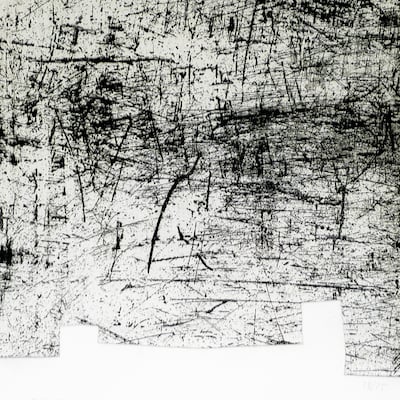
Artwork by Eduardo Chillida
What is abstract art?
Abstract art uses form, shape, line, and color to create a visual experience without attempting to represent external reality. The composition exists independently of the world's visual references, focusing on expressing ideas and emotions through non-representational means.


