

Signed and Numbered and Titled
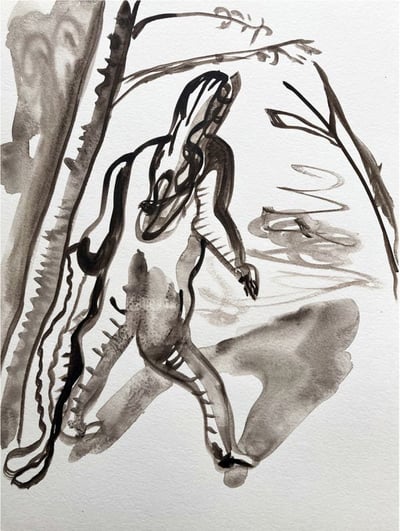
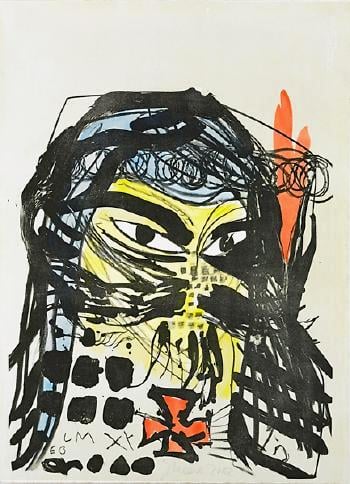
Albert Oehlen’s Meditation on Bureaucratic Tendencies at TZK (2020) is a limited edition lithograph measuring 14.25 x 12 inches. The abstract composition is rendered in bold, fluid black lines against a white background, featuring a chaotic interplay of curves, scribbles, and geometric elements. The work evokes a sense of tension and spontaneity, reflecting Oehlen’s exploration of abstraction and the boundaries of representation. The expressive, non-representational forms suggest a critique or reflection on bureaucratic systems, with the dynamic lines conveying both order and disorder. The piece is signed, titled, and numbered by the artist, marking it as part of a limited series.
Artwork Copyright © Albert OehlenAlbert Oehlen (Germany, 1954) is a contemporary artist known for his dynamic approach to painting, blending abstraction and figuration. A key figure in the Junge Wilde movement, he challenges traditional art norms by integrating digital techniques and unconventional materials. Oehlen's work has been exhibited globally, influencing modern abstract art.
Artwork Copyright © Albert OehlenMeditation on bureaucratic tendencies at TZK, 2020
Form
Medium
Size
- Inches
- Centimeters
Edition
Price
Available works →
- Authenticity Guaranteed
- Insured Shipping
- Online Since 2005
●
●Inventory 13420
●Signed
●Comes with gallery invoice and certificate
●Sell Us a Similar Artwork. Learn more.
Signed and Numbered and Titled
Albert Oehlen’s Meditation on Bureaucratic Tendencies at TZK (2020) is a limited edition lithograph measuring 14.25 x 12 inches. The abstract composition is rendered in bold, fluid black lines against a white background, featuring a chaotic interplay of curves, scribbles, and geometric elements. The work evokes a sense of tension and spontaneity, reflecting Oehlen’s exploration of abstraction and the boundaries of representation. The expressive, non-representational forms suggest a critique or reflection on bureaucratic systems, with the dynamic lines conveying both order and disorder. The piece is signed, titled, and numbered by the artist, marking it as part of a limited series.
Artwork Copyright © Albert OehlenAlbert Oehlen (Germany, 1954) is a contemporary artist known for his dynamic approach to painting, blending abstraction and figuration. A key figure in the Junge Wilde movement, he challenges traditional art norms by integrating digital techniques and unconventional materials. Oehlen's work has been exhibited globally, influencing modern abstract art.
Artwork Copyright © Albert Oehlen- Recently Added
- Price (Low-High)
- Price (High-Low)
- Year (Low-High)
- Year (High-Low)
Albert Oehlen
Cezanne, 2021
Limited Edition Print
Pigment print
EUR 1,000

Albert Oehlen
Meditation on bureaucratic tendencies at TZK, 2020
Limited Edition Print
Lithograph
Currently Not Available
Albert Oehlen
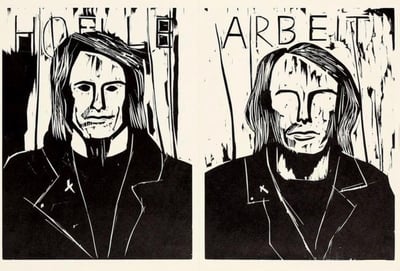
Hoelle/Arbeit, 1989
Limited Edition Print
Woodcut
Currently Not Available
Available works by Albert Oehlen
See all →Albert Oehlen
Cezanne, 2021
Limited Edition Print
Pigment print
EUR 1,000
Related Artists

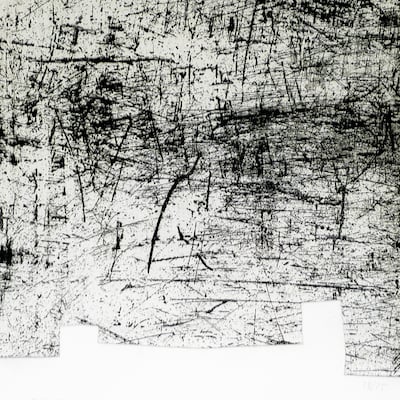
Artwork by Eduardo Chillida
What is abstract art?
Abstract art uses form, shape, line, and color to create a visual experience without attempting to represent external reality. The composition exists independently of the world's visual references, focusing on expressing ideas and emotions through non-representational means.

Albert Oehlen
Meditation on bureaucratic tendencies at TZK, 2020
36.2 x 30.5 cm


