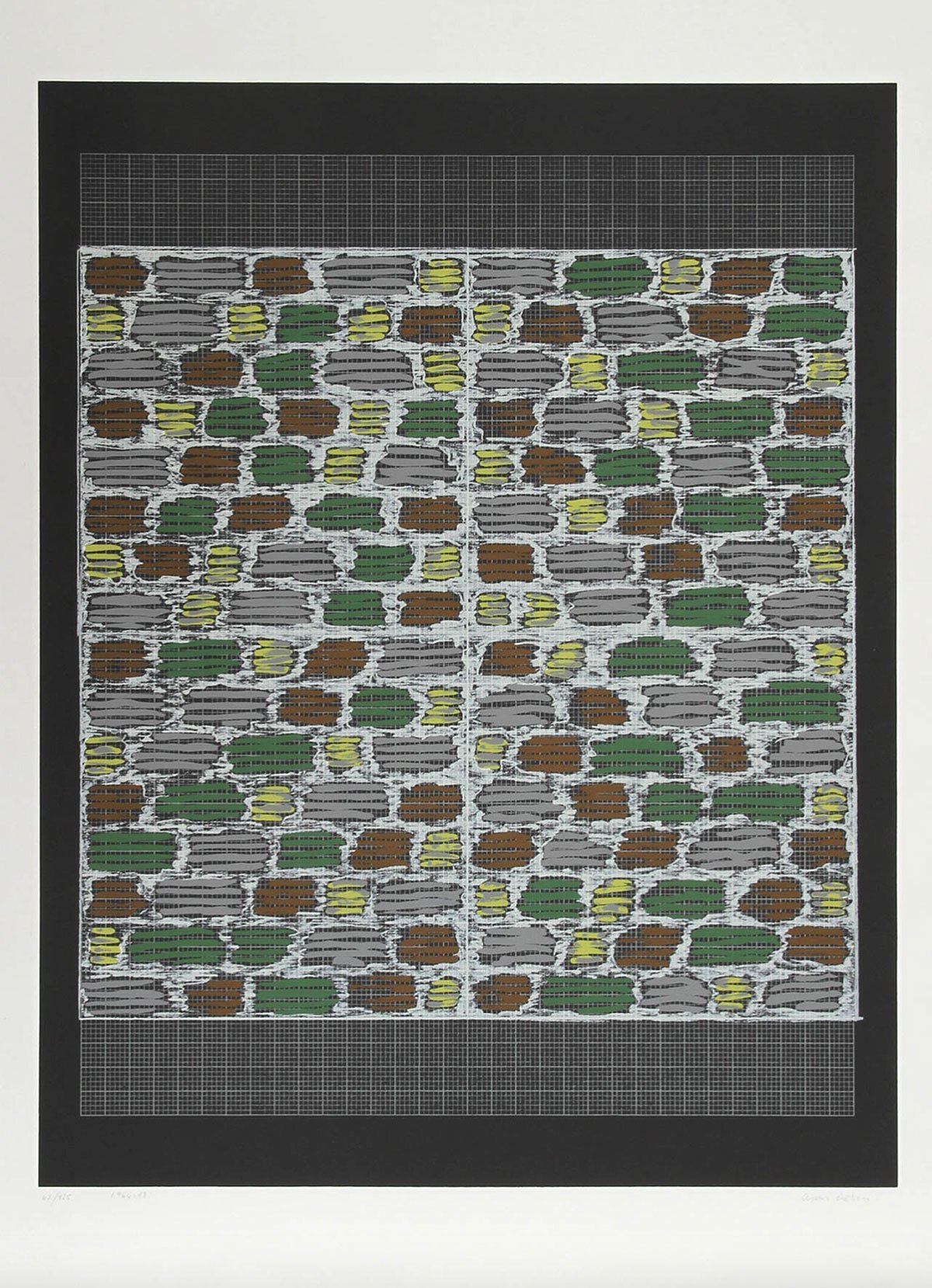
Color Silkscreen on Umbria Italia paper
- Signed, Numbered
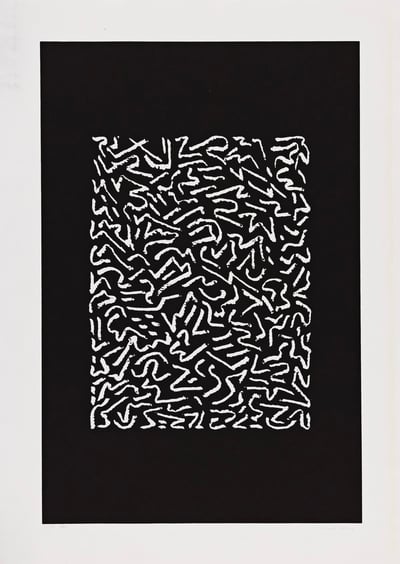
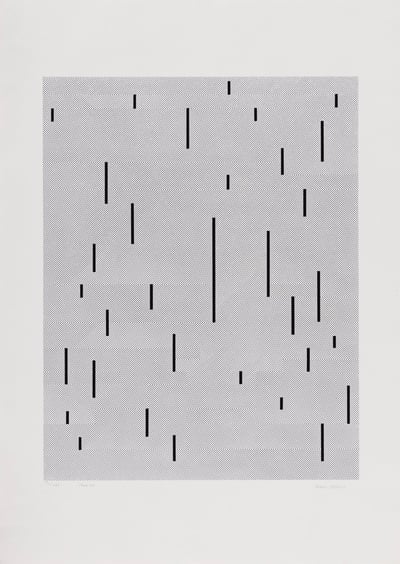
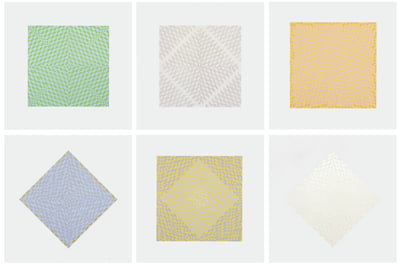
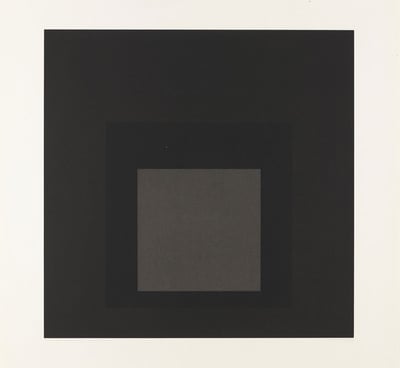
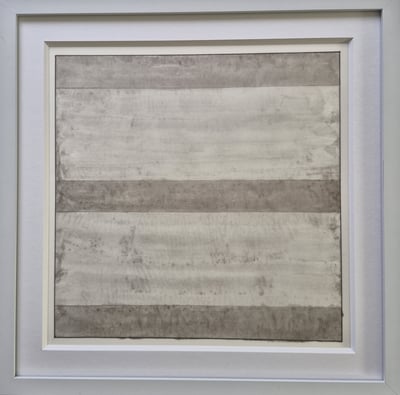
Anni Albers’s Study for Hooked Rug (From Connections) (1983) is a silkscreen print that reflects her exploration of textile patterns and abstract forms. Printed on Umbria Italia paper, the piece features an intricate grid-based composition filled with irregular shapes in earth tones of green, brown, yellow, and gray. The layered, repetitive elements create a visual rhythm reminiscent of woven textiles, illustrating Albers's background in weaving and her interest in the interplay between structure and form. The black border surrounding the pattern adds a sense of depth and frames the artwork, emphasizing the grid’s precision. This limited edition print is signed and numbered, showcasing Albers’s mastery in blending fine art and design principles.
Anni Albers (Germany/USA, 1899–1994) was a visionary textile artist and printmaker who revolutionized modern weaving. A key figure in the Bauhaus movement, she combined geometric abstraction with traditional techniques. Albers’ writings, like On Weaving, and her innovative approach to textiles elevated the medium to a fine art, influencing generations of artists.
Silkscreen Silkscreen is a printmaking method that uses a screen made of silk or other mesh fabric. The screen is treated with a substance that blocks ink in certain areas, allowing ink to pass through only in the desired sections. Each color in the print requires a separate screen.
Color Silkscreen on Umbria Italia paper
- Signed, Numbered
Anni Albers’s Study for Hooked Rug (From Connections) (1983) is a silkscreen print that reflects her exploration of textile patterns and abstract forms. Printed on Umbria Italia paper, the piece features an intricate grid-based composition filled with irregular shapes in earth tones of green, brown, yellow, and gray. The layered, repetitive elements create a visual rhythm reminiscent of woven textiles, illustrating Albers's background in weaving and her interest in the interplay between structure and form. The black border surrounding the pattern adds a sense of depth and frames the artwork, emphasizing the grid’s precision. This limited edition print is signed and numbered, showcasing Albers’s mastery in blending fine art and design principles.
Anni Albers (Germany/USA, 1899–1994) was a visionary textile artist and printmaker who revolutionized modern weaving. A key figure in the Bauhaus movement, she combined geometric abstraction with traditional techniques. Albers’ writings, like On Weaving, and her innovative approach to textiles elevated the medium to a fine art, influencing generations of artists.
You can't predict what a work of art will be like; it is a discovery.
- Anni Albers
Anni (Annelise) Albers is regarded as being a significant influence on the renaissance of abstract weaving as a viable and impressive art-form. Her work mainly consisted of textiles and prints in bold colors with a focus on geometric patterns.
Using experimental materials, including metallic thread and horsehair yarn, Anni Albers was is considered the first artist to combine avant-garde geometric abstractions and weaving, an impressive feat for an artist who chose weaving due to it being one of the few accessible disciplines available to women in the early 20th century.
Interesting to note is the evolution of Albers’ work following her move from Berlin to the United States where she found inspiration from pre-Columbian textiles which she incorporated into her later works. Where she originally focused on using old, largely forgotten techniques to create functional and aesthetically pleasing weavings, her later career saw her focus more on creating prints and drawings, with her growing reputation allowing her the freedom to chose commissions she felt passionate about.
Bauhaus was a school of art, design and architecture established in Weimar, Germany. Architect Wlater Gropius established it in 1919. Bauhaus used a method for teaching within a community of artists working together and incorporating art in the fundamentals of daily life.