

Anni Albers
© Anni Albers. All rights reserved.
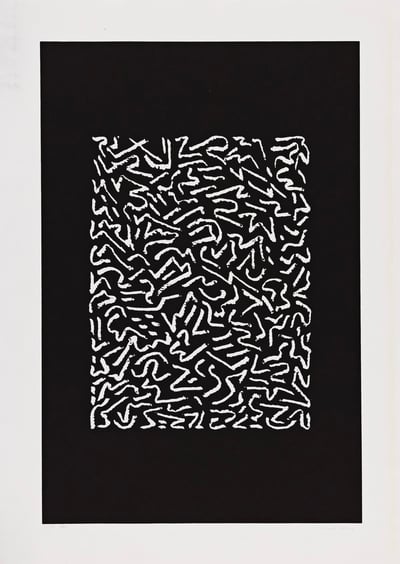
Anni Albers
Untitled 8 of 9 (from Connections), 1925/1983
Limited Edition Print
Lithograph
Inquire For Price
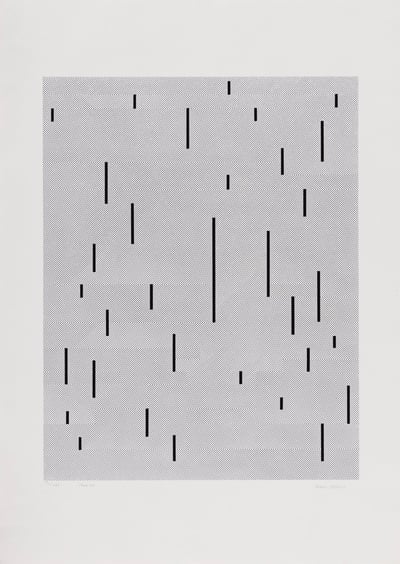
Anni Albers
Untitled 6 of 9 (from Connections), 1925/1983
Limited Edition Print
Lithograph
USD 3,700

Anni Albers
Untitled 5 of 9 (from Connections), 1925/1983
Limited Edition Print
Lithograph
Inquire For Price

Anni Albers
Untitled 4 of 9 (from Connections), 1925/1983
Limited Edition Print
Lithograph
Inquire For Price

Anni Albers
Study for Hooked Rug (From Connections), 1983
Limited Edition Print
Silkscreen
USD 3,700

Anni Albers
Untitled (From Connections), 1983
Limited Edition Print
Silkscreen
USD 3,500 - 5,000
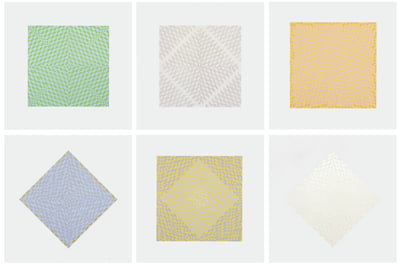
Anni Albers
DO. I - VI, 1973
Limited Edition Print
Screen-print
Currently Not Available
- Anni Albers
Using experimental materials, including metallic thread and horsehair yarn, Anni Albers was is considered the first artist to combine avant-garde geometric abstractions and weaving, an impressive feat for an artist who chose weaving due to it being one of the few accessible disciplines available to women in the early 20th century.
Interesting to note is the evolution of Albers’ work following her move from Berlin to the United States where she found inspiration from pre-Columbian textiles which she incorporated into her later works. Where she originally focused on using old, largely forgotten techniques to create functional and aesthetically pleasing weavings, her later career saw her focus more on creating prints and drawings, with her growing reputation allowing her the freedom to chose commissions she felt passionate about.
Related Artists
Related Articles
Popular, Artists - January 27, 2025
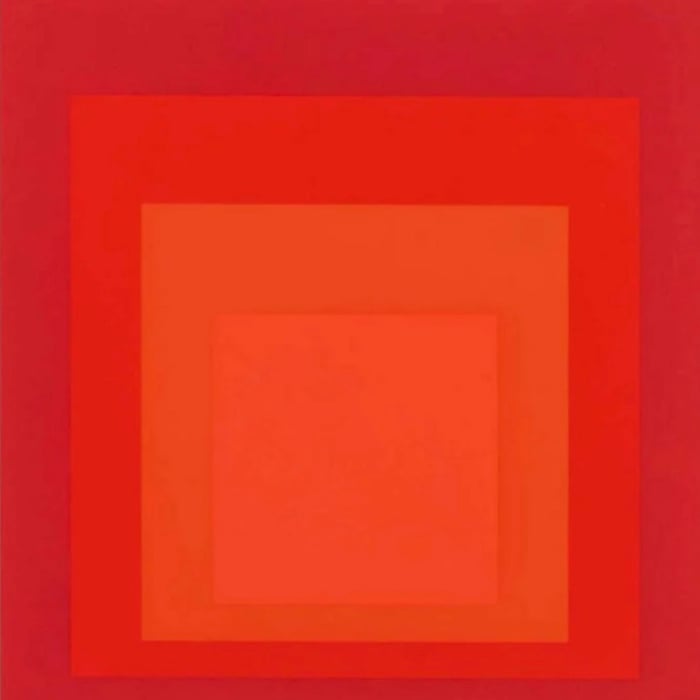
Josef Albers: Master of Color Interaction and Perception
Explore Josef Albers' groundbreaking work in color theory and perception. Discover how 'Homage to the Square' redefined art and continues to inspire today.Read More

 Artwork by Max Bill
What is Bauhaus?
Bauhaus was a school of art, design and architecture established in Weimar, Germany. Architect Wlater Gropius established it in 1919. Bauhaus used a method for teaching within a community of artists working together and incorporating art in the fundamentals of daily life.
Explore »

