Etching, handsigned and numbered
- Papersize 68,5 x 50 cm
- Printsize: 40 x 30,5
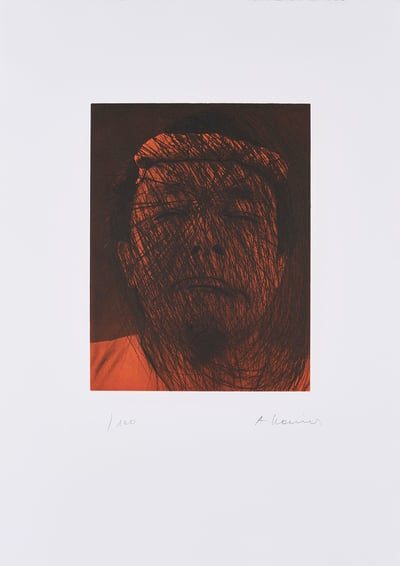
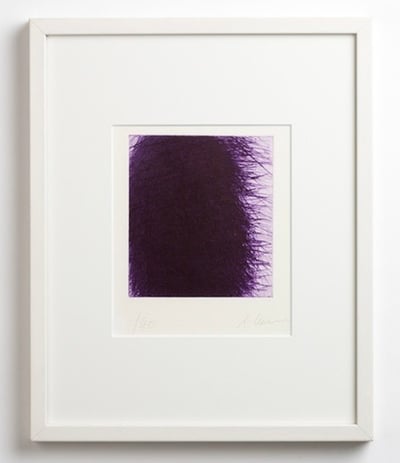
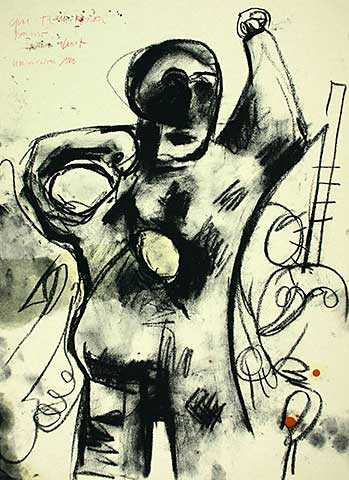
This Untitled etching by Arnulf Rainer, created in 1976, is a striking example of his exploration of gestural abstraction and psychological intensity. The work depicts a human figure almost entirely obscured by a dense, chaotic web of dark, erratic lines that surround and define the figure’s form. These expressive marks appear scratched or etched across the surface, conveying a sense of turmoil or inner conflict. The figure’s outline is barely discernible, suggesting a fusion between presence and absence, where identity is both constructed and obscured by the artist’s vigorous lines. Limited to an edition of 25, this etching exemplifies Rainer’s characteristic approach of layering expressive marks over photographic or sketched forms to explore themes of self, existence, and the human psyche.
Arnulf Rainer (Austria, 1929) is a pioneering artist known for his abstract informal art. He co-founded the Hundsgruppe in 1950 and developed his signature 'overpaintings,' where he layered paint over existing images, exploring themes of creation and destruction. Rainer's work often delves into the subconscious, reflecting his interest in dreams and the mystical.
EtchingEtching is a technique where a design is created on a metal surface by using a strong acid or mordant to eat away the unprotected parts of the metal, leaving the desired pattern in relief (intaglio). In modern art and manufacturing, different chemicals may be used depending on the material being etched.
Etching, handsigned and numbered
- Papersize 68,5 x 50 cm
- Printsize: 40 x 30,5
This Untitled etching by Arnulf Rainer, created in 1976, is a striking example of his exploration of gestural abstraction and psychological intensity. The work depicts a human figure almost entirely obscured by a dense, chaotic web of dark, erratic lines that surround and define the figure’s form. These expressive marks appear scratched or etched across the surface, conveying a sense of turmoil or inner conflict. The figure’s outline is barely discernible, suggesting a fusion between presence and absence, where identity is both constructed and obscured by the artist’s vigorous lines. Limited to an edition of 25, this etching exemplifies Rainer’s characteristic approach of layering expressive marks over photographic or sketched forms to explore themes of self, existence, and the human psyche.
Arnulf Rainer (Austria, 1929) is a pioneering artist known for his abstract informal art. He co-founded the Hundsgruppe in 1950 and developed his signature 'overpaintings,' where he layered paint over existing images, exploring themes of creation and destruction. Rainer's work often delves into the subconscious, reflecting his interest in dreams and the mystical.
Only an 'almost,' a 'nearly,' is possible.
- Arnulf Rainer
Renowned for his abstractappropriation art, Arnulf Rainer is a painter and founder of the Hundgruppe (dog group) alongside fellow artists Brauer and Mikl. Rainer has recevied acclaim for his technique of ‘overpainting’ which involves him taking a pre-existing work, and painting over it, usually with gestural strokes and a heavy impasto; Wine Crucifix is one of his most notable ‘overpaintings’ - originally painted in 1957 by the artist, he decided to rework it in 1978 noting that the ‘quality and truth of the picture only grew as it became darker and darker’. Rainer was heavily inspired by the depths of the human mind and explored his own subconscious through painting with the technique of Automatism, popular among Surrealist painters – he also experimented with painting with his feet and fingers as well as exploring the effect of hallucinogenic drugs on his creativity.
Gestural art is a term that describes painting with freely sweeping brushstrokes. The primary goal of gestural art is to allow the artist to physically express emotional impulses. The varied, yet expressive paint marks are intended to convey the artist's inner thoughts and emotions, which viewers are believed to understand through the dynamic and spontaneous application of paint.