

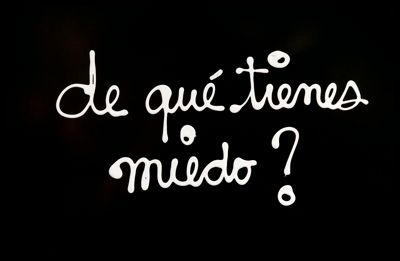
White handwritten script spills across a stark black ground, posing the disarmingly simple question: 'What are you afraid of?' With the directness that has defined his practice since the 1960s Fluxus movement, Ben Vautier transforms text into a confrontational artwork that demands the viewer's personal engagement. The casual, intimate cursive belies the existential weight of the question. Part of a 2006 trio of Spanish-language screenprints, this work demonstrates Ben's enduring ability to collapse the distance between art object and lived experience with a single phrase.
Artwork Copyright © Ben VautierBen Vautier (France, 1935) is an avant-garde artist known for his text-based art, provocative performances, and involvement in the Fluxus movement. His works often incorporate handwritten messages that challenge art conventions, social norms, and individual identity, making him a unique and influential figure in contemporary art.
Artwork Copyright © Ben VautierDe qué tienes miedo?, 2006
Form
Medium
Size
- Inches
- Centimeters
Edition
Price
- USD
- EUR
- GBP
- CHF
- Authenticity Guaranteed
- Insured Shipping
- Online Since 2005
●Inventory 16828
●Signed
●Comes with gallery invoice and certificate
●Sell Us a Similar Artwork. Learn more.
White handwritten script spills across a stark black ground, posing the disarmingly simple question: 'What are you afraid of?' With the directness that has defined his practice since the 1960s Fluxus movement, Ben Vautier transforms text into a confrontational artwork that demands the viewer's personal engagement. The casual, intimate cursive belies the existential weight of the question. Part of a 2006 trio of Spanish-language screenprints, this work demonstrates Ben's enduring ability to collapse the distance between art object and lived experience with a single phrase.
Artwork Copyright © Ben VautierBen Vautier (France, 1935) is an avant-garde artist known for his text-based art, provocative performances, and involvement in the Fluxus movement. His works often incorporate handwritten messages that challenge art conventions, social norms, and individual identity, making him a unique and influential figure in contemporary art.
Artwork Copyright © Ben VautierAvailability
Size
Form
Medium
SORT BY
Ben Vautier
De qué tienes miedo?, 2006
Limited Edition Print
Screen-print
EUR 2,500

Ben Vautier
Es difícil amar, 2006
Limited Edition Print
Screen-print
EUR 2,500
Ben Vautier
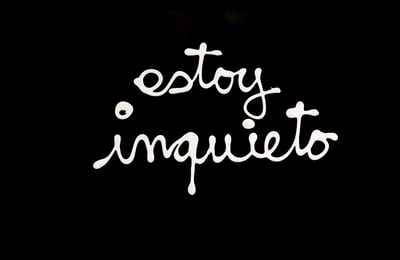
Estoy inquieto, 2006
Limited Edition Print
Screen-print
EUR 2,500

Ben Vautier
Tout est survie , 1994
Painting
Acrylic on canvas
EUR 17,900

Ben Vautier
Regardez ailleurs, c. 1980
Limited Edition Print
Lithograph
EUR 1,750

Ben Vautier
N’importe qui peut avoir une idée, c. 1980
Limited Edition Print
Lithograph
Currently Not Available
Related Artists



Artwork by Laure Prouvost
What is Lettrism?
Lettrism is an art form that uses letters, words, and symbols to create artwork. The movement was established in Paris in the 1940s and later gained popularity in the 1950s in America. Lettrisme is the French spelling of the movement's name, derived from the French word for letter.


Ben Vautier
De qué tienes miedo?, 2006
50 x 70 cm


