

Published by Georges Fall
- Printed by Artcay
Ben Vautier’s Regardez ailleurs is a minimalist yet provocative lithograph, featuring the handwritten phrase regardez ailleurs (meaning look elsewhere in French). Known for his conceptual approach to art, Vautier’s piece engages viewers directly, urging them to divert their attention to other things beyond the artwork itself. The simplicity of the black, cursive script on a white background enhances the immediacy and directness of the message. Vautier, often associated with the Fluxus movement, uses text as a tool to blur the lines between art and language, challenging traditional notions of art as a purely visual experience. This print, published by Georges Fall and printed by Artcay, reflects Vautier’s playful yet critical commentary on perception and interpretation, inviting the viewer to question what it means to truly see.
Artwork Copyright © Ben VautierBen Vautier (France, 1935) is an avant-garde artist known for his text-based art, provocative performances, and involvement in the Fluxus movement. His works often incorporate handwritten messages that challenge art conventions, social norms, and individual identity, making him a unique and influential figure in contemporary art.
Artwork Copyright © Ben VautierRegardez ailleurs, c. 1980
Form
Medium
Size
- Inches
- Centimeters
Edition
Price
- USD
- EUR
- GBP
- CHF
- Authenticity Guaranteed
- Insured Shipping
- Online Since 2005
●Inventory 13483
●Signed
●Comes with gallery invoice and certificate
●Sell Us a Similar Artwork. Learn more.
Published by Georges Fall
- Printed by Artcay
Ben Vautier’s Regardez ailleurs is a minimalist yet provocative lithograph, featuring the handwritten phrase regardez ailleurs (meaning look elsewhere in French). Known for his conceptual approach to art, Vautier’s piece engages viewers directly, urging them to divert their attention to other things beyond the artwork itself. The simplicity of the black, cursive script on a white background enhances the immediacy and directness of the message. Vautier, often associated with the Fluxus movement, uses text as a tool to blur the lines between art and language, challenging traditional notions of art as a purely visual experience. This print, published by Georges Fall and printed by Artcay, reflects Vautier’s playful yet critical commentary on perception and interpretation, inviting the viewer to question what it means to truly see.
Artwork Copyright © Ben VautierBen Vautier (France, 1935) is an avant-garde artist known for his text-based art, provocative performances, and involvement in the Fluxus movement. His works often incorporate handwritten messages that challenge art conventions, social norms, and individual identity, making him a unique and influential figure in contemporary art.
Artwork Copyright © Ben VautierAvailability
Size
Form
Medium
SORT BY
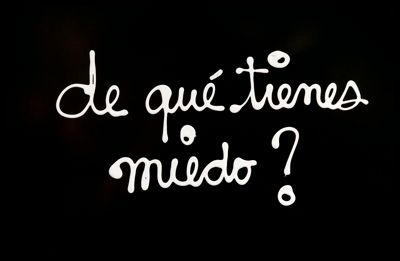
Ben Vautier
De qué tienes miedo?, 2006
Limited Edition Print
Screen-print
EUR 2,500

Ben Vautier
Es difícil amar, 2006
Limited Edition Print
Screen-print
EUR 2,500
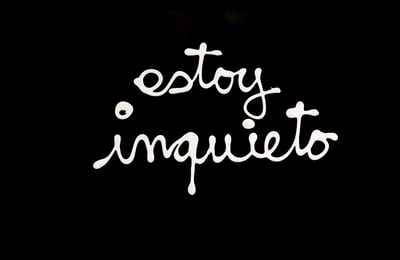
Ben Vautier
Estoy inquieto, 2006
Limited Edition Print
Screen-print
EUR 2,500

Ben Vautier
Tout est survie , 1994
Painting
Acrylic on canvas
EUR 17,900

Ben Vautier
Regardez ailleurs, c. 1980
Limited Edition Print
Lithograph
EUR 1,750

Ben Vautier
N’importe qui peut avoir une idée, c. 1980
Limited Edition Print
Lithograph
Currently Not Available
Related Artists



Artwork by Laure Prouvost
What is Lettrism?
Lettrism is an art form that uses letters, words, and symbols to create artwork. The movement was established in Paris in the 1940s and later gained popularity in the 1950s in America. Lettrisme is the French spelling of the movement's name, derived from the French word for letter.


Ben Vautier
Regardez ailleurs, c. 1980
54 x 66 cm


