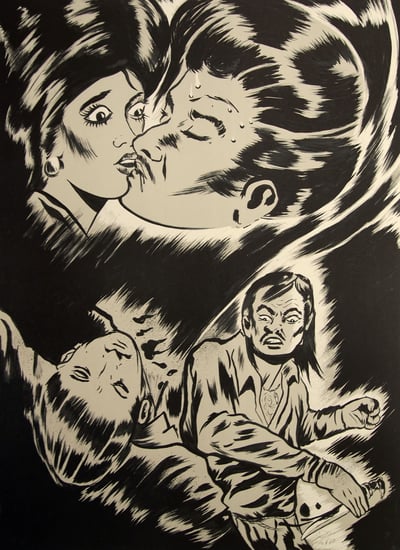
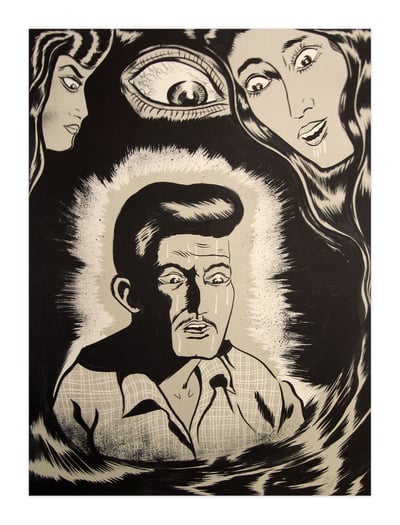
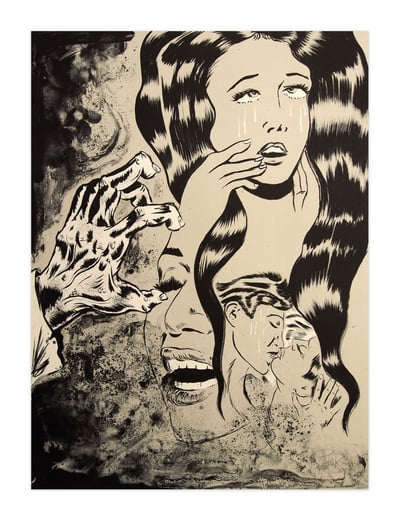
// Dr. Lakra's 2009 lithograph, Beso, presents a dynamic and intense scene in his signature tattoo-inspired, graphic style. The composition features a close-up of two figures locked in a passionate kiss, rendered with exaggerated expressions and intense shading that heightens the drama. Surrounding this central moment are smaller vignettes of figures, each depicted with a raw and almost unsettling intensity. The use of bold black and white contrasts gives the piece a sense of movement and emotion, capturing the viewer’s attention and evoking elements of both classic comic art and traditional tattoo aesthetics. Known for blending popular culture with darker themes, Dr. Lakra uses Beso to explore passion, tension, and human connection in a stylized, almost surreal way. This piece is a rare H.C. edition, adding to its collectibility and unique appeal.
Dr. Lakra (Mexico, 1972), born Jerónimo López Ramírez, is a contemporary artist renowned for his tattoo-inspired art. He transforms vintage illustrations, anatomical prints, and found objects by overlaying them with bold, graphic designs. His works explore themes of identity, culture, and the body, blending traditional tattoo aesthetics with fine art.
Lithograph Lithography is a printing method based on the principle that water and oil do not mix. It can be used to print artwork or text onto paper or other suitable materials. Traditionally, an image was drawn with wax, fat, or oil onto a lithographic limestone surface or plate. Today, metal plates and other surfaces are also used in lithographic printing.
// Dr. Lakra's 2009 lithograph, Beso, presents a dynamic and intense scene in his signature tattoo-inspired, graphic style. The composition features a close-up of two figures locked in a passionate kiss, rendered with exaggerated expressions and intense shading that heightens the drama. Surrounding this central moment are smaller vignettes of figures, each depicted with a raw and almost unsettling intensity. The use of bold black and white contrasts gives the piece a sense of movement and emotion, capturing the viewer’s attention and evoking elements of both classic comic art and traditional tattoo aesthetics. Known for blending popular culture with darker themes, Dr. Lakra uses Beso to explore passion, tension, and human connection in a stylized, almost surreal way. This piece is a rare H.C. edition, adding to its collectibility and unique appeal.
Dr. Lakra (Mexico, 1972), born Jerónimo López Ramírez, is a contemporary artist renowned for his tattoo-inspired art. He transforms vintage illustrations, anatomical prints, and found objects by overlaying them with bold, graphic designs. His works explore themes of identity, culture, and the body, blending traditional tattoo aesthetics with fine art.
In this modern society, people are focusing on the material, not the spiritual.
- Dr. Lakra
Dr. Lakra (b. 1972, Mexico) is the pseudonym of Jerónimo López Ramírez, a Mexican artist renowned for his distinctive style that blends tattoo art with traditional and contemporary iconography. Originally a tattoo artist, Dr. Lakra’s work has expanded into various mediums, including drawing, painting, and sculpture, where he often reinterprets classic images from popular culture, religious art, and indigenous Mexican traditions. His art is known for its provocative, humorous, and sometimes macabre elements, as he frequently embellishes vintage photographs, magazine covers, and found objects with tattoo-like designs. Dr. Lakra’s work explores themes of identity, mortality, and cultural hybridity, challenging conventional ideas of beauty and the boundaries between high and low art. His work has been exhibited internationally, including at the Tate Modern in London and the Museum of Modern Art in New York, making him a prominent figure in the global contemporary art scene
Neo-Figurative Art is a collective term that refers to the revival of figurative art in America and Europe during the 1960s, following a period dominated by abstraction. Michel Ragon, a French art critic, argued that this resurgence of figuration occurred during a critical time of social and political upheaval in both regions.