Edition of 50 - Hand-signed by artist - Published by Poligrafa Obra Grafica,Barcelona, Spain, on Guarro Paper - In excellent condition
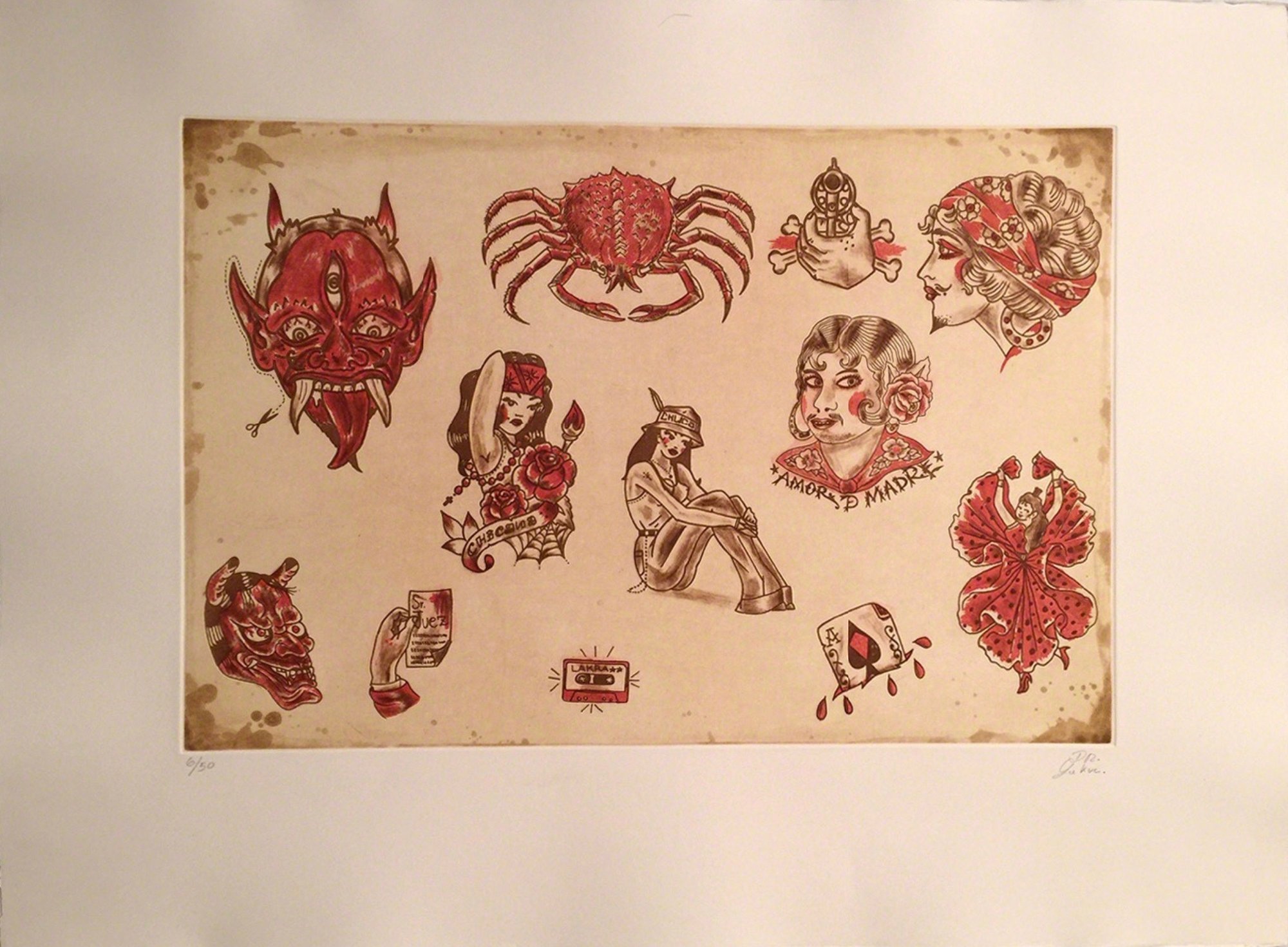
Untitled #8 by Dr. Lakra, an etching from 2008, presents an engaging collection of tattoo-inspired imagery on Guarro paper, designed with a nostalgic vintage feel. This limited edition print, published by Poligrafa Obra Grafica in Barcelona, features a variety of symbolic figures meticulously drawn in sepia and red tones. The composition includes a devilish mask, a crab, a skull with a crown, and classic tattoo motifs like a woman with “Amor de Madre” (Mother’s Love) inscribed, alongside playing cards, a cassette tape, and a bleeding heart. The arrangement suggests a playful yet dark homage to traditional tattoo art, highlighting themes of love, danger, and nostalgia. Dr. Lakra’s work continues to merge cultural references with a contemporary edge, creating a piece that invites reflection on iconography and subculture.
Dr. Lakra (Mexico, 1972), born Jerónimo López Ramírez, is a contemporary artist renowned for his tattoo-inspired art. He transforms vintage illustrations, anatomical prints, and found objects by overlaying them with bold, graphic designs. His works explore themes of identity, culture, and the body, blending traditional tattoo aesthetics with fine art.
EtchingEtching is a technique where a design is created on a metal surface by using a strong acid or mordant to eat away the unprotected parts of the metal, leaving the desired pattern in relief (intaglio). In modern art and manufacturing, different chemicals may be used depending on the material being etched.
Edition of 50 - Hand-signed by artist - Published by Poligrafa Obra Grafica,Barcelona, Spain, on Guarro Paper - In excellent condition
Untitled #8 by Dr. Lakra, an etching from 2008, presents an engaging collection of tattoo-inspired imagery on Guarro paper, designed with a nostalgic vintage feel. This limited edition print, published by Poligrafa Obra Grafica in Barcelona, features a variety of symbolic figures meticulously drawn in sepia and red tones. The composition includes a devilish mask, a crab, a skull with a crown, and classic tattoo motifs like a woman with “Amor de Madre” (Mother’s Love) inscribed, alongside playing cards, a cassette tape, and a bleeding heart. The arrangement suggests a playful yet dark homage to traditional tattoo art, highlighting themes of love, danger, and nostalgia. Dr. Lakra’s work continues to merge cultural references with a contemporary edge, creating a piece that invites reflection on iconography and subculture.
Dr. Lakra (Mexico, 1972), born Jerónimo López Ramírez, is a contemporary artist renowned for his tattoo-inspired art. He transforms vintage illustrations, anatomical prints, and found objects by overlaying them with bold, graphic designs. His works explore themes of identity, culture, and the body, blending traditional tattoo aesthetics with fine art.
In this modern society, people are focusing on the material, not the spiritual.
- Dr. Lakra
Dr. Lakra (b. 1972, Mexico) is the pseudonym of Jerónimo López Ramírez, a Mexican artist renowned for his distinctive style that blends tattoo art with traditional and contemporary iconography. Originally a tattoo artist, Dr. Lakra’s work has expanded into various mediums, including drawing, painting, and sculpture, where he often reinterprets classic images from popular culture, religious art, and indigenous Mexican traditions. His art is known for its provocative, humorous, and sometimes macabre elements, as he frequently embellishes vintage photographs, magazine covers, and found objects with tattoo-like designs. Dr. Lakra’s work explores themes of identity, mortality, and cultural hybridity, challenging conventional ideas of beauty and the boundaries between high and low art. His work has been exhibited internationally, including at the Tate Modern in London and the Museum of Modern Art in New York, making him a prominent figure in the global contemporary art scene
Sometimes referred to as Conceptualism, this is an art form where the idea(s) or concept(s) behind the work take precedence over material concerns and traditional aesthetics. Many conceptual artworks can be created by anyone simply by following written instructions. The concept or idea is the most essential aspect of the artwork.