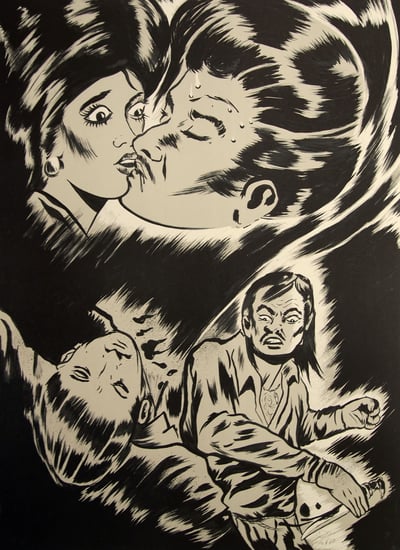
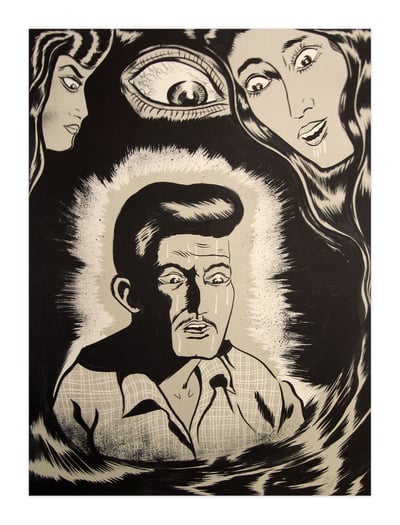
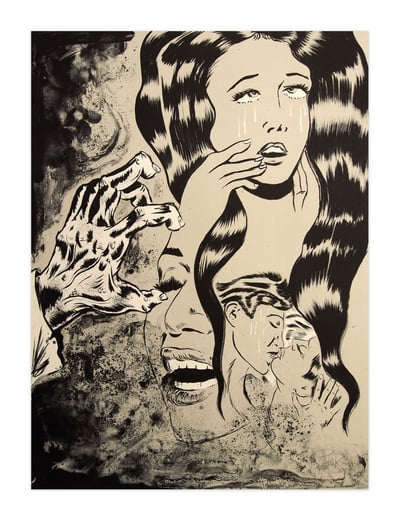
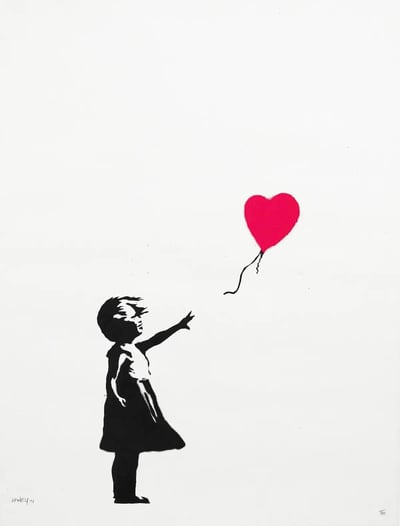
Edition of 50 - Signed and numbered in pencil by the artist - Published by Poligrafa Obra Grafica,Barcelona, Spain, on Guarro Paper - In excellent condition
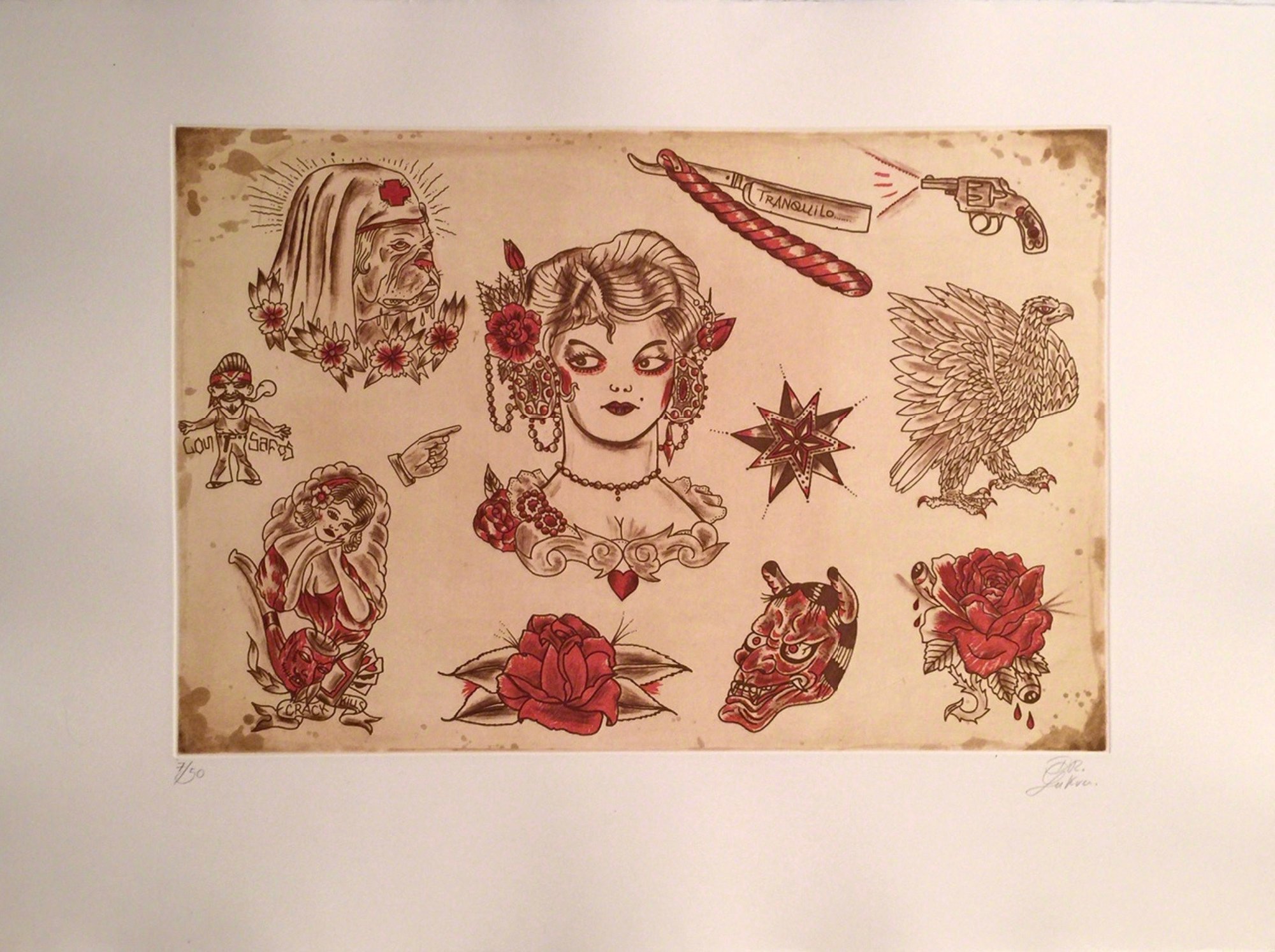
Untitled #5 by Dr. Lakra, an etching from 2008, showcases a vibrant array of tattoo-inspired symbols on aged Guarro paper, reflecting a vintage aesthetic. This limited edition print, signed and numbered, was published by Poligrafa Obra Grafica in Barcelona. The composition features a central female portrait adorned with floral elements, surrounded by iconic images: a rose, a revolver with a whip, a vulture, a skull with a dagger, and a compass star. The sepia and red tones lend a timeless, gritty feel, reminiscent of classic tattoo flash art. Each element is rendered with intricate detail, conveying themes of mortality, danger, and femininity, characteristic of Dr. Lakra's fascination with traditional iconography and subversive symbolism. The piece invites viewers to reflect on cultural motifs embedded in tattoo art.
Dr. Lakra (Mexico, 1972), born Jerónimo López Ramírez, is a contemporary artist renowned for his tattoo-inspired art. He transforms vintage illustrations, anatomical prints, and found objects by overlaying them with bold, graphic designs. His works explore themes of identity, culture, and the body, blending traditional tattoo aesthetics with fine art.
EtchingEtching is a technique where a design is created on a metal surface by using a strong acid or mordant to eat away the unprotected parts of the metal, leaving the desired pattern in relief (intaglio). In modern art and manufacturing, different chemicals may be used depending on the material being etched.
Edition of 50 - Signed and numbered in pencil by the artist - Published by Poligrafa Obra Grafica,Barcelona, Spain, on Guarro Paper - In excellent condition
Untitled #5 by Dr. Lakra, an etching from 2008, showcases a vibrant array of tattoo-inspired symbols on aged Guarro paper, reflecting a vintage aesthetic. This limited edition print, signed and numbered, was published by Poligrafa Obra Grafica in Barcelona. The composition features a central female portrait adorned with floral elements, surrounded by iconic images: a rose, a revolver with a whip, a vulture, a skull with a dagger, and a compass star. The sepia and red tones lend a timeless, gritty feel, reminiscent of classic tattoo flash art. Each element is rendered with intricate detail, conveying themes of mortality, danger, and femininity, characteristic of Dr. Lakra's fascination with traditional iconography and subversive symbolism. The piece invites viewers to reflect on cultural motifs embedded in tattoo art.
Dr. Lakra (Mexico, 1972), born Jerónimo López Ramírez, is a contemporary artist renowned for his tattoo-inspired art. He transforms vintage illustrations, anatomical prints, and found objects by overlaying them with bold, graphic designs. His works explore themes of identity, culture, and the body, blending traditional tattoo aesthetics with fine art.
In this modern society, people are focusing on the material, not the spiritual.
- Dr. Lakra
Dr. Lakra (b. 1972, Mexico) is the pseudonym of Jerónimo López Ramírez, a Mexican artist renowned for his distinctive style that blends tattoo art with traditional and contemporary iconography. Originally a tattoo artist, Dr. Lakra’s work has expanded into various mediums, including drawing, painting, and sculpture, where he often reinterprets classic images from popular culture, religious art, and indigenous Mexican traditions. His art is known for its provocative, humorous, and sometimes macabre elements, as he frequently embellishes vintage photographs, magazine covers, and found objects with tattoo-like designs. Dr. Lakra’s work explores themes of identity, mortality, and cultural hybridity, challenging conventional ideas of beauty and the boundaries between high and low art. His work has been exhibited internationally, including at the Tate Modern in London and the Museum of Modern Art in New York, making him a prominent figure in the global contemporary art scene
Appropriation in art involves using pre-existing images or objects with little or no modification. This technique has played a significant role across various art forms, including visual arts, music, performance, and literature. In visual arts, appropriation refers to the practice of adopting, sampling, recycling, or borrowing elements—or even entire forms—of existing visual culture, integrating them into new works to create meaning or critique.