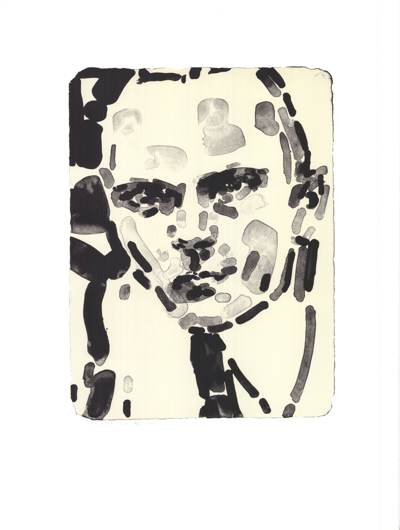
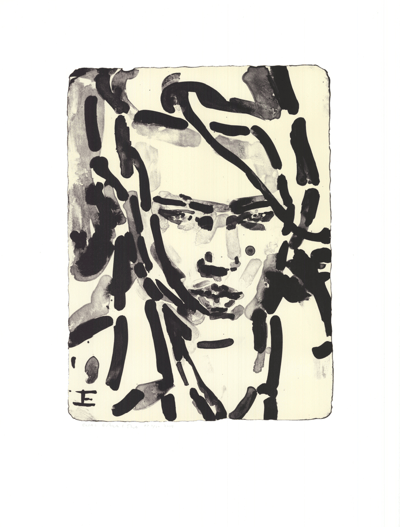
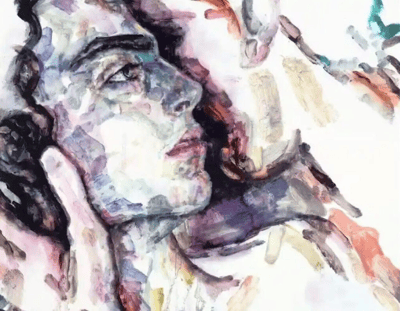
Elio, Oliver (Call Me by Your Name) (2023) by Elizabeth Peyton is a silkscreen print on Arches 88 paper depicting an expressive portrait, blending fluid brushstrokes with delicate facial detail. Peyton’s signature style merges romanticism with contemporary intimacy, and here she channels the emotional atmosphere of the film “Call Me by Your Name.” The figure, likely Elio, is shown in soft focus, rendered in pastel tones of violet, pink, and peach against a white backdrop. The ethereal texture evokes tenderness and vulnerability, consistent with Peyton’s enduring exploration of youthful beauty and longing.
Elizabeth Peyton (USA, 1965) is a contemporary painter celebrated for her intimate portraits of cultural icons, friends, and historical figures. Her work, characterized by its vibrant color palette and delicate brushstrokes, bridges personal and collective memory. Peyton’s depictions of figures like Kurt Cobain and Queen Elizabeth II have redefined portraiture in modern art.
Silkscreen Silkscreen is a printmaking method that uses a screen made of silk or other mesh fabric. The screen is treated with a substance that blocks ink in certain areas, allowing ink to pass through only in the desired sections. Each color in the print requires a separate screen.
Elio, Oliver (Call Me by Your Name) (2023) by Elizabeth Peyton is a silkscreen print on Arches 88 paper depicting an expressive portrait, blending fluid brushstrokes with delicate facial detail. Peyton’s signature style merges romanticism with contemporary intimacy, and here she channels the emotional atmosphere of the film “Call Me by Your Name.” The figure, likely Elio, is shown in soft focus, rendered in pastel tones of violet, pink, and peach against a white backdrop. The ethereal texture evokes tenderness and vulnerability, consistent with Peyton’s enduring exploration of youthful beauty and longing.
Elizabeth Peyton (USA, 1965) is a contemporary painter celebrated for her intimate portraits of cultural icons, friends, and historical figures. Her work, characterized by its vibrant color palette and delicate brushstrokes, bridges personal and collective memory. Peyton’s depictions of figures like Kurt Cobain and Queen Elizabeth II have redefined portraiture in modern art.
You really need faith in yourself to make art and to stand up for what you believe in.
- Elizabeth Peyton
Elizabeth Peyton is an American painter who specializes in oils and has been popular since the middle of the 1990s. Her contemporary art features idealized and stylized renditions of her friends and paramours as well as monarchs from Europe and pop culture icons. The vast majority of her works have been small-scale portraits, and she claims that her inspiration comes from the work of Robert Mapplethorpe, Alfred Stieglitz and Nadar, all of whom took photographs of those close to them. Her oil works often have glazes that she allows to drip across the work, although she also has produced works in pencil, etching and watercolor. Many of her figures have feminine aspects but are generally ambiguous sexually. She uses photographs as the basis for her paintings and then paints from those. Elizabeth Peyton has also made prints -- monotypes, woodcuts and lithographs -- experimenting with a variety of techniques and different papers for the final product.
Neo-Figurative Art is a collective term that refers to the revival of figurative art in America and Europe during the 1960s, following a period dominated by abstraction. Michel Ragon, a French art critic, argued that this resurgence of figuration occurred during a critical time of social and political upheaval in both regions.