Signed and numbered on colophon - Dimensions of the image: 17.8 × 26.7 cm
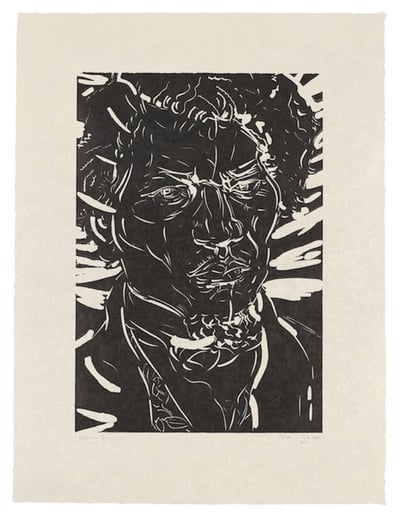
Trout by Eric Fischl is a 1990 linocut print, part of a limited edition of 100, capturing a stark and evocative scene in black and white. The print depicts a nude figure, holding a freshly caught trout, wading in shallow water with an expressive, almost contemplative gaze. Fischl’s use of bold, contrasting lines emphasizes the raw and unembellished nature of the scene, evoking themes of vulnerability, introspection, and connection to nature. The monochromatic palette and strong linework lend the piece a timeless quality, inviting viewers to ponder the emotional depth within this seemingly simple moment.
Eric Fischl (USA, 1948) is a leading contemporary painter known for his psychologically charged figurative works. Often depicting suburban settings, his art explores themes of intimacy, dysfunction, and human vulnerability, blending realism with a cinematic, narrative quality.
LinocutLinocut is a printmaking technique similar to woodcut, where a sheet of linoleum is used as the relief surface. The design is carved into the linoleum using a V-shaped gouge or chisel, creating raised areas that form a mirror image of the final print. Ink is applied to the raised areas with a roller, and the linoleum sheet is then pressed onto fabric or paper. The printing can be done by hand or with a press.
Signed and numbered on colophon - Dimensions of the image: 17.8 × 26.7 cm
Trout by Eric Fischl is a 1990 linocut print, part of a limited edition of 100, capturing a stark and evocative scene in black and white. The print depicts a nude figure, holding a freshly caught trout, wading in shallow water with an expressive, almost contemplative gaze. Fischl’s use of bold, contrasting lines emphasizes the raw and unembellished nature of the scene, evoking themes of vulnerability, introspection, and connection to nature. The monochromatic palette and strong linework lend the piece a timeless quality, inviting viewers to ponder the emotional depth within this seemingly simple moment.
Eric Fischl (USA, 1948) is a leading contemporary painter known for his psychologically charged figurative works. Often depicting suburban settings, his art explores themes of intimacy, dysfunction, and human vulnerability, blending realism with a cinematic, narrative quality.
Highly acclaimed for his depictions of American suburbia and the taboo undercurrents that run throughout, Eric Fischl is a painter, draughtsman and sculptor. Fischl’s subject matter is often highly controversial and tackles themes such as adolescent sexuality and voyeurism – Bad Boy and Birthday Boy both portray young boys observing older women appearing in provocative positions upon a bed. Creating in the style of neo-expressionism and often likened to such artists as Degas, Fischl is unafraid of controversy; he has stated: ‘I vowed that I would never let the unspeakable also be unshowable. I would paint what could not be said.’ His 9/11 memorial sculpture, Tumbling Woman was a stark and moving tribute to the victims who jumped from the buildings after the planes hit – this sculpture was met with outrage and removed from its site within a week of its installation, of this, Fischl has said: ‘It’s meant to touch, in a way, to connect you on the inside, so you don’t feel so alone and vulnerable’ - further exemplifying his need to evoke emotion and reflection with his art. (Artist website)
Contemporary art refers to avant-garde or innovative art created in the recent past or present day. The exact starting point of contemporary art varies depending on the institution, often tied to the founding year of museums or galleries that showcase the style. Contemporary art is characterized by its focus on current ideas, diverse media, and the exploration of new concepts and techniques.