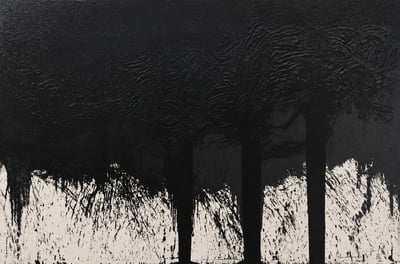
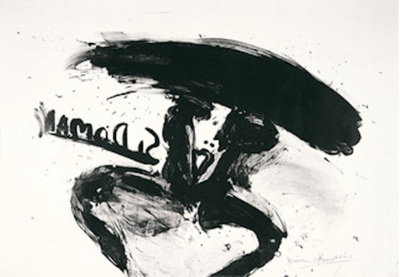
Unique work (print on hand painted paper) 1 etching in: "Hermann Nitsch - Das Sechstagespiel des Orgien Mysterien Theaters Prinzendorf 3 - 9 August 1998". Etching and vernis mou on handcoloured vélin. Signed and numbered as well as with the printer's dry stamp. - With traces of studio work on verso due to the technique. In good condition. - One of 100 unique copies from the special edition.
Hermann Nitsch's Das Sechstagespiel des Orgien Mysterien Theaters (1998) is a complex limited edition print that reflects his intense explorations of ritualistic and expressive themes. This etching, created on hand-painted paper, is part of a special edition of 100 unique pieces, each incorporating individual hand-coloring and subtle studio marks. The artwork’s layered composition, defined by dark, grid-like structures over an expressive background of reds and greens, embodies a visceral, almost chaotic energy. These intersecting lines and gestural marks evoke a sense of confinement and intensity, resonating with Nitsch's fascination with the intersections of art, performance, and ritual. Signed, numbered, and stamped with the printer's mark, this piece is both a standalone artwork and part of the broader thematic work Nitsch developed in his Orgien Mysterien Theater.
Hermann Nitsch (Austria, 1938–2022) was a pivotal figure in Viennese Actionism, renowned for his provocative performances that integrated painting, music, and ritualistic elements. His 'Orgien Mysterien Theater' challenged artistic boundaries, employing visceral materials like blood and animal entrails to evoke intense sensory experiences. Nitsch's work continues to influence contemporary performance art.
EtchingEtching is a technique where a design is created on a metal surface by using a strong acid or mordant to eat away the unprotected parts of the metal, leaving the desired pattern in relief (intaglio). In modern art and manufacturing, different chemicals may be used depending on the material being etched.
Size
Inches
Centimeters
29 X 23 cm
Edition
Edition of 43/100
Price
USD
EUR
GBP
CHF
1,750EUR
?
+ VAT/import Duties (if applicable)
Authenticity Guaranteed
Insured Shipping
Online Since 2005
Share
●Inventory 10768
●Signed
●Comes with gallery invoice and certificate
●Any questions?
Unique work (print on hand painted paper) 1 etching in: "Hermann Nitsch - Das Sechstagespiel des Orgien Mysterien Theaters Prinzendorf 3 - 9 August 1998". Etching and vernis mou on handcoloured vélin. Signed and numbered as well as with the printer's dry stamp. - With traces of studio work on verso due to the technique. In good condition. - One of 100 unique copies from the special edition.
Hermann Nitsch's Das Sechstagespiel des Orgien Mysterien Theaters (1998) is a complex limited edition print that reflects his intense explorations of ritualistic and expressive themes. This etching, created on hand-painted paper, is part of a special edition of 100 unique pieces, each incorporating individual hand-coloring and subtle studio marks. The artwork’s layered composition, defined by dark, grid-like structures over an expressive background of reds and greens, embodies a visceral, almost chaotic energy. These intersecting lines and gestural marks evoke a sense of confinement and intensity, resonating with Nitsch's fascination with the intersections of art, performance, and ritual. Signed, numbered, and stamped with the printer's mark, this piece is both a standalone artwork and part of the broader thematic work Nitsch developed in his Orgien Mysterien Theater.
Hermann Nitsch (Austria, 1938–2022) was a pivotal figure in Viennese Actionism, renowned for his provocative performances that integrated painting, music, and ritualistic elements. His 'Orgien Mysterien Theater' challenged artistic boundaries, employing visceral materials like blood and animal entrails to evoke intense sensory experiences. Nitsch's work continues to influence contemporary performance art.
I try to show the people how it’s possible to live intensively.
- Hermann Nitsch
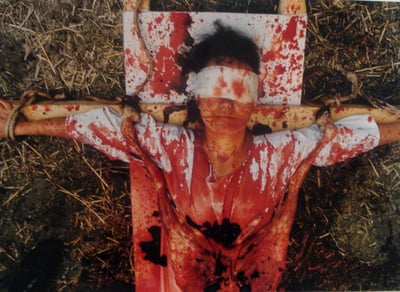
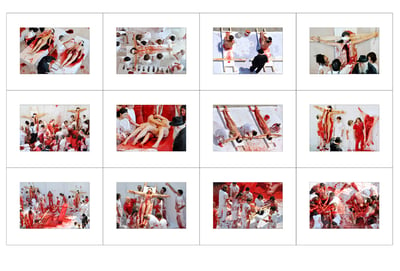
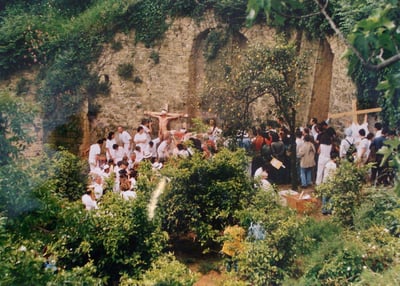
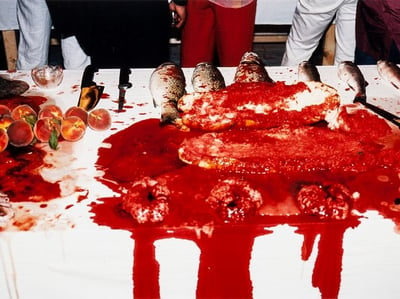
Hermann Nitsch was a multimedia artist from Austria. His work in multimedia involves depicting human excesses of many kinds, including abstract splatter pieces and performance art. Hermann Nitsch is most noted for his performance work Theater of Orgies and Mysteries (1962-1998) which included almost one hundred staged presentations.He has many abstract paintings which share the title Splatter Painting and are identified with the year of their creation. These are mostly combinations of oil and acrylic on canvas. Each has a predominant, focused area of paint and varied amounts of spills, drips and runs rolling down the canvas from the largest area. Typically painted in one range of color, such as all red, these paintings are intended to convey the intensity of the performances that generated them. They are backdrops to his live Aktion (or action) events held during the course of his Theater of Orgies and Mysteries staged events. During Hermann Nitsch's theatrical performances, he was known for incorporating themes of sacrifice and ritual while enacting brutal scenes of symbolic crucifixion, animal sacrifice, blood drinking, and a plethora of pagan rituals enlivened by robed processions, nudity, drunken excesses and the addition of viscera and entrails to the props and activities. Hermann Nitsch was called “the Pope of Aktionism” in Vienna. The movement sought to shun traditional painting and sculpture as being illusions rather than reality. In doing so, participants hoped to create art that existed in real time, using violence and the corporeal world as themes and subject matter. Hermann Nitsch and artists who embraced the ideals of Aktionism were both hated and praised for their performance art. Viewed by many as part of a cult, other artists in this movement included Rudolf Schwartzkogler, Gunter Brus and Otto Muhl. (Artist website)
Viennese Actionism was a short-lived but intense art movement in the 20th century, emerging as part of the broader action art efforts of the 1960s. Known for its violent and provocative performances, the movement sought to break traditional art boundaries. Key figures in this movement included Arnulf Rainer and Hermann Nitsch.