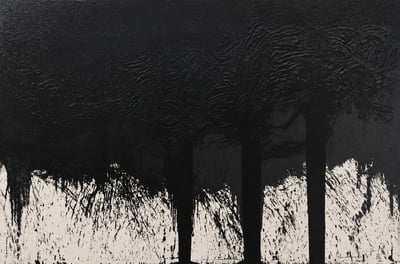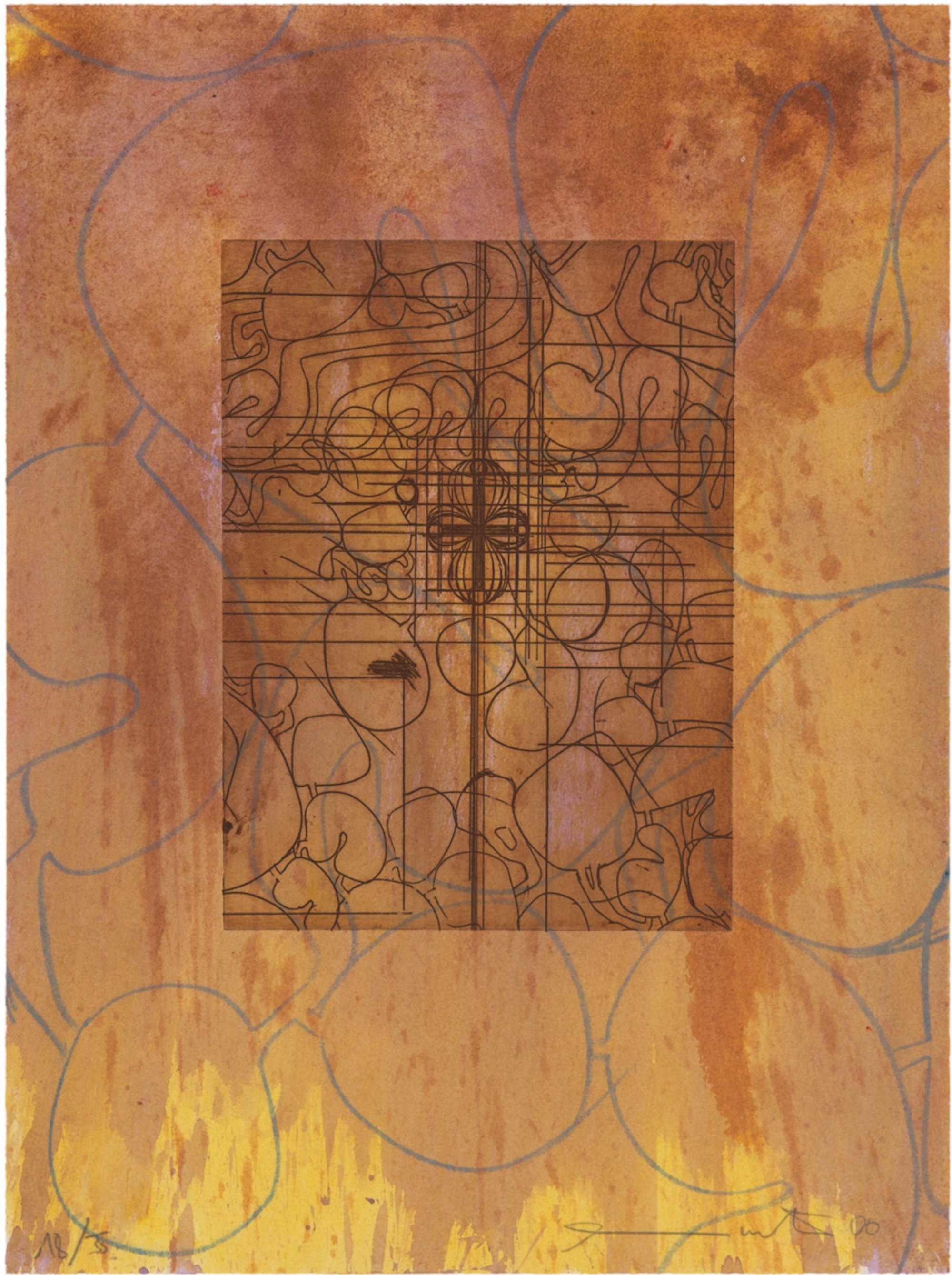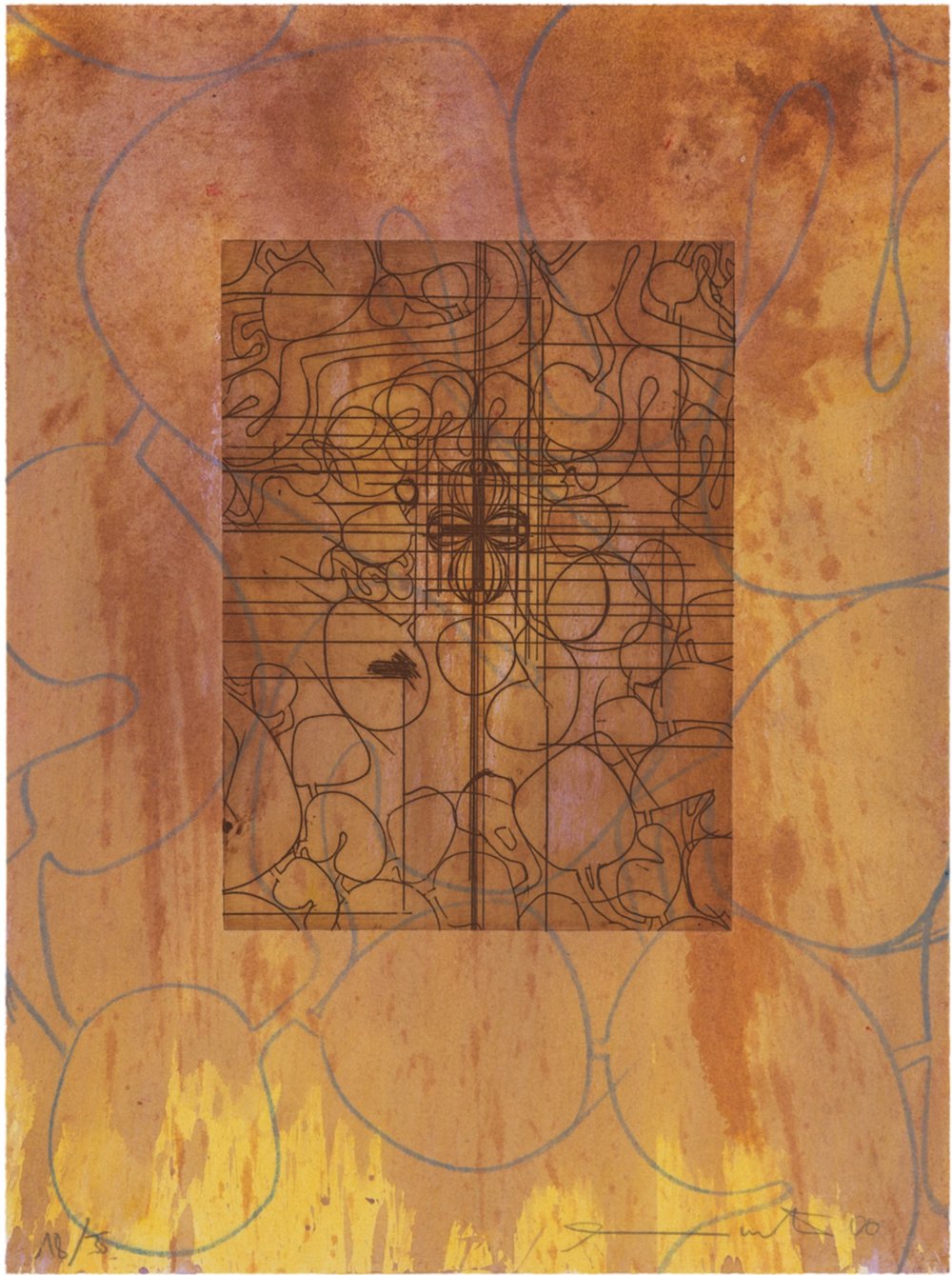
Untitled (Organic Maze) by Hermann Nitsch, created in 2006, is a mixed-media limited edition print that embodies the artist’s visceral and expressive style. The composition features a central grid-like structure overlaid with organic, maze-like patterns in dark tones, contrasted against a textured background of warm ochres, yellows, and oranges. The interplay between the structured and chaotic elements evokes themes of order and entropy, inviting contemplation of the organic versus the constructed. Measuring 51 x 38 cm, this unique work from an edition of 35 is signed, showcasing Nitsch’s exploration of the raw and elemental aspects of art.
Hermann Nitsch (Austria, 1938–2022) was a pivotal figure in Viennese Actionism, renowned for his provocative performances that integrated painting, music, and ritualistic elements. His 'Orgien Mysterien Theater' challenged artistic boundaries, employing visceral materials like blood and animal entrails to evoke intense sensory experiences. Nitsch's work continues to influence contemporary performance art.
Mixed MediaMixed media refers to artwork that incorporates more than one medium within a single piece. Unlike multimedia art, which combines distinct forms of visual art and often includes elements like sound, video, or digital media, mixed media focuses on combining traditional art materials, such as paint, ink, and collage. Mixed media art allows artists to achieve a wide range of effects and textures by layering and blending different materials.
Untitled (Organic Maze) by Hermann Nitsch, created in 2006, is a mixed-media limited edition print that embodies the artist’s visceral and expressive style. The composition features a central grid-like structure overlaid with organic, maze-like patterns in dark tones, contrasted against a textured background of warm ochres, yellows, and oranges. The interplay between the structured and chaotic elements evokes themes of order and entropy, inviting contemplation of the organic versus the constructed. Measuring 51 x 38 cm, this unique work from an edition of 35 is signed, showcasing Nitsch’s exploration of the raw and elemental aspects of art.
Hermann Nitsch (Austria, 1938–2022) was a pivotal figure in Viennese Actionism, renowned for his provocative performances that integrated painting, music, and ritualistic elements. His 'Orgien Mysterien Theater' challenged artistic boundaries, employing visceral materials like blood and animal entrails to evoke intense sensory experiences. Nitsch's work continues to influence contemporary performance art.
I try to show the people how it’s possible to live intensively.
- Hermann Nitsch
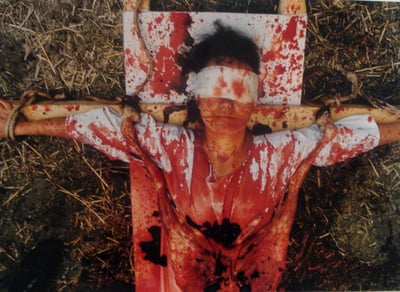
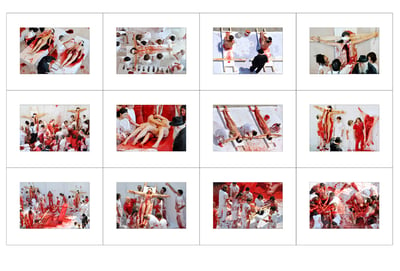
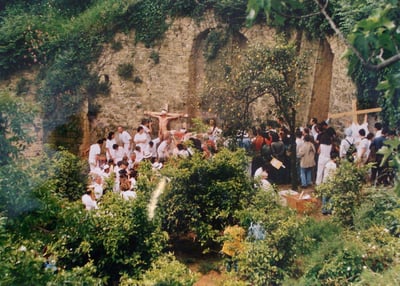
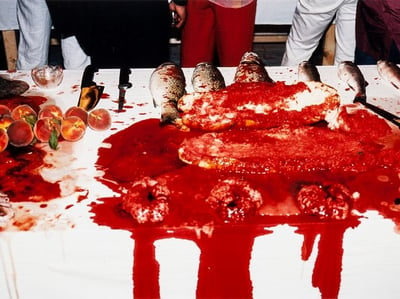
Hermann Nitsch was a multimedia artist from Austria. His work in multimedia involves depicting human excesses of many kinds, including abstract splatter pieces and performance art. Hermann Nitsch is most noted for his performance work Theater of Orgies and Mysteries (1962-1998) which included almost one hundred staged presentations.He has many abstract paintings which share the title Splatter Painting and are identified with the year of their creation. These are mostly combinations of oil and acrylic on canvas. Each has a predominant, focused area of paint and varied amounts of spills, drips and runs rolling down the canvas from the largest area. Typically painted in one range of color, such as all red, these paintings are intended to convey the intensity of the performances that generated them. They are backdrops to his live Aktion (or action) events held during the course of his Theater of Orgies and Mysteries staged events. During Hermann Nitsch's theatrical performances, he was known for incorporating themes of sacrifice and ritual while enacting brutal scenes of symbolic crucifixion, animal sacrifice, blood drinking, and a plethora of pagan rituals enlivened by robed processions, nudity, drunken excesses and the addition of viscera and entrails to the props and activities. Hermann Nitsch was called “the Pope of Aktionism” in Vienna. The movement sought to shun traditional painting and sculpture as being illusions rather than reality. In doing so, participants hoped to create art that existed in real time, using violence and the corporeal world as themes and subject matter. Hermann Nitsch and artists who embraced the ideals of Aktionism were both hated and praised for their performance art. Viewed by many as part of a cult, other artists in this movement included Rudolf Schwartzkogler, Gunter Brus and Otto Muhl. (Artist website)
Shock Art is an art movement that uses disturbing images, scents, or sounds to provoke a strong, often shocked, reaction from viewers. It is often regarded as a form of social commentary, with critics and supporters debating whether its impact is positive or negative. Shock Art frequently employs taboo, obscene, or outrageous elements to challenge societal norms and provoke critical thought.