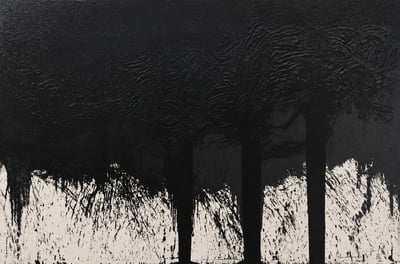
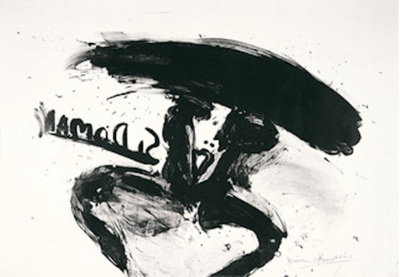
Untitled (Dual Forces) by Hermann Nitsch, created in 2006, is a powerful lithograph showcasing the artist’s expressive and visceral approach. The composition is dominated by dynamic splashes of blue and orange, representing opposing forces or energies in motion. Fine black linework overlays the colorful background, forming intricate, organic patterns that evoke a sense of chaos and interconnectedness. Measuring 80 x 60 cm, this unique work exemplifies Nitsch’s exploration of elemental themes, balancing structure and disorder in a way that invites personal interpretation and emotional resonance.
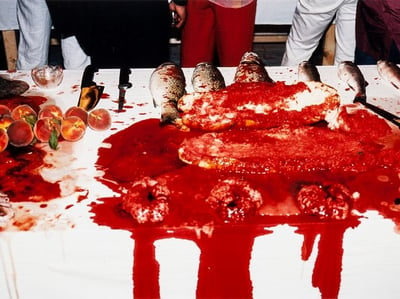
Hermann Nitsch (Austria, 1938–2022) was a pivotal figure in Viennese Actionism, renowned for his provocative performances that integrated painting, music, and ritualistic elements. His 'Orgien Mysterien Theater' challenged artistic boundaries, employing visceral materials like blood and animal entrails to evoke intense sensory experiences. Nitsch's work continues to influence contemporary performance art.
Lithograph Lithography is a printing method based on the principle that water and oil do not mix. It can be used to print artwork or text onto paper or other suitable materials. Traditionally, an image was drawn with wax, fat, or oil onto a lithographic limestone surface or plate. Today, metal plates and other surfaces are also used in lithographic printing.
Untitled (Dual Forces) by Hermann Nitsch, created in 2006, is a powerful lithograph showcasing the artist’s expressive and visceral approach. The composition is dominated by dynamic splashes of blue and orange, representing opposing forces or energies in motion. Fine black linework overlays the colorful background, forming intricate, organic patterns that evoke a sense of chaos and interconnectedness. Measuring 80 x 60 cm, this unique work exemplifies Nitsch’s exploration of elemental themes, balancing structure and disorder in a way that invites personal interpretation and emotional resonance.
Hermann Nitsch (Austria, 1938–2022) was a pivotal figure in Viennese Actionism, renowned for his provocative performances that integrated painting, music, and ritualistic elements. His 'Orgien Mysterien Theater' challenged artistic boundaries, employing visceral materials like blood and animal entrails to evoke intense sensory experiences. Nitsch's work continues to influence contemporary performance art.
I try to show the people how it’s possible to live intensively.
- Hermann Nitsch
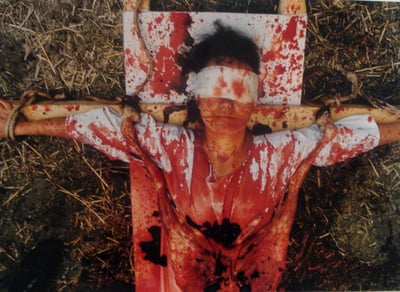
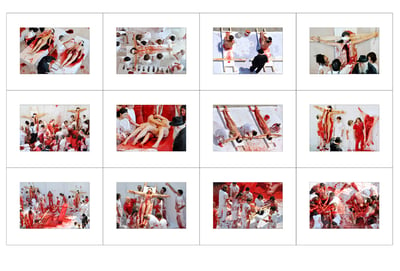
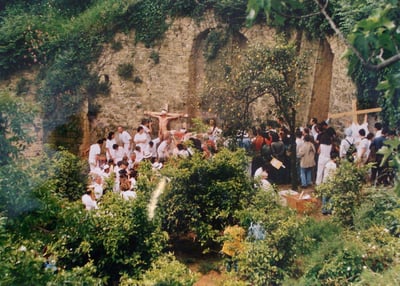
Hermann Nitsch was a multimedia artist from Austria. His work in multimedia involves depicting human excesses of many kinds, including abstract splatter pieces and performance art. Hermann Nitsch is most noted for his performance work Theater of Orgies and Mysteries (1962-1998) which included almost one hundred staged presentations.He has many abstract paintings which share the title Splatter Painting and are identified with the year of their creation. These are mostly combinations of oil and acrylic on canvas. Each has a predominant, focused area of paint and varied amounts of spills, drips and runs rolling down the canvas from the largest area. Typically painted in one range of color, such as all red, these paintings are intended to convey the intensity of the performances that generated them. They are backdrops to his live Aktion (or action) events held during the course of his Theater of Orgies and Mysteries staged events. During Hermann Nitsch's theatrical performances, he was known for incorporating themes of sacrifice and ritual while enacting brutal scenes of symbolic crucifixion, animal sacrifice, blood drinking, and a plethora of pagan rituals enlivened by robed processions, nudity, drunken excesses and the addition of viscera and entrails to the props and activities. Hermann Nitsch was called “the Pope of Aktionism” in Vienna. The movement sought to shun traditional painting and sculpture as being illusions rather than reality. In doing so, participants hoped to create art that existed in real time, using violence and the corporeal world as themes and subject matter. Hermann Nitsch and artists who embraced the ideals of Aktionism were both hated and praised for their performance art. Viewed by many as part of a cult, other artists in this movement included Rudolf Schwartzkogler, Gunter Brus and Otto Muhl. (Artist website)
Activist Art is a form of art created to address social and political issues. It often involves public engagement and works closely with communities to raise awareness or inspire change. While it can include elements of performance art, it is not limited to this form. Examples include creating and distributing social protest posters or organizing community-based art projects that highlight specific causes.