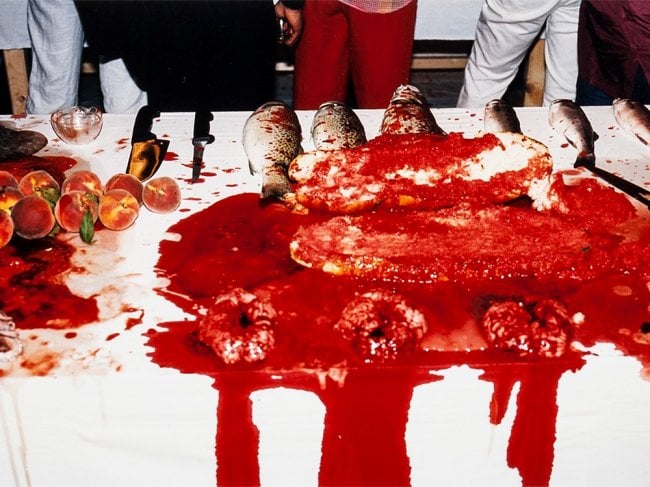
C-print on Kodak Professional paper - signed and numbered on the back
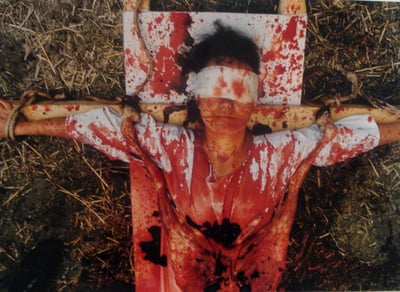
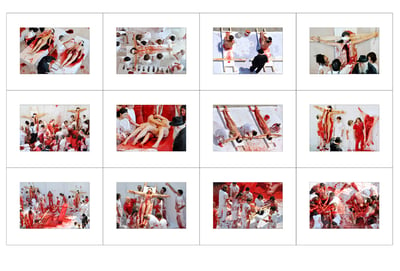
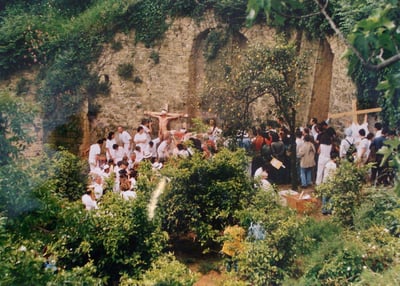
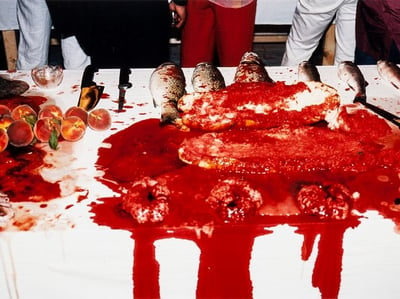
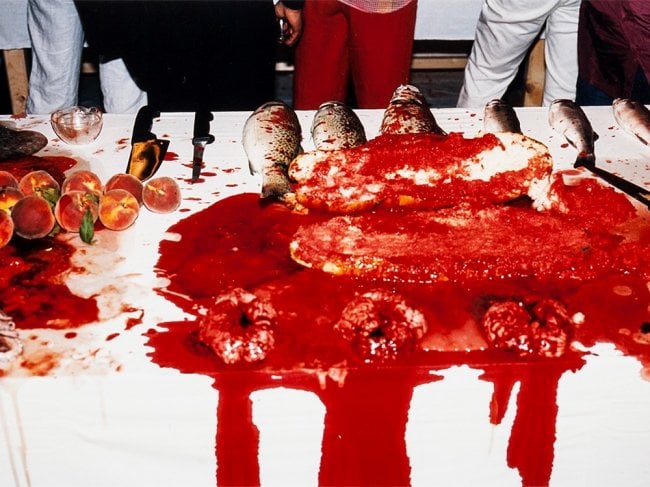
Performance 2003 by Hermann Nitsch is a visceral photographic capture that exemplifies his provocative and challenging approach to art. Known for his association with the Viennese Actionism movement, Nitsch's work often confronts themes of life, death, sacrifice, and ritual. This photograph, part of a series documenting his performances, depicts a table covered in raw, visceral materials—fish, organs, and a profusion of red fluids resembling blood, spilling over the tablecloth. The imagery evokes sacrificial rites and visceral intensity, challenging viewers to confront primal and uncomfortable aspects of human existence. Nitsch's work invites contemplation on ritual, corporeality, and the boundaries of art.
Hermann Nitsch (Austria, 1938–2022) was a pivotal figure in Viennese Actionism, renowned for his provocative performances that integrated painting, music, and ritualistic elements. His 'Orgien Mysterien Theater' challenged artistic boundaries, employing visceral materials like blood and animal entrails to evoke intense sensory experiences. Nitsch's work continues to influence contemporary performance art.
PhotographA photograph is an image captured with a camera. Traditionally, photographs were made by exposing film and then developing the image on light-sensitive paper using chemicals. Today, photographs can also be captured digitally and printed or displayed electronically. The process requires a camera, whether film or digital, and a photographer.
C-print on Kodak Professional paper - signed and numbered on the back
Performance 2003 by Hermann Nitsch is a visceral photographic capture that exemplifies his provocative and challenging approach to art. Known for his association with the Viennese Actionism movement, Nitsch's work often confronts themes of life, death, sacrifice, and ritual. This photograph, part of a series documenting his performances, depicts a table covered in raw, visceral materials—fish, organs, and a profusion of red fluids resembling blood, spilling over the tablecloth. The imagery evokes sacrificial rites and visceral intensity, challenging viewers to confront primal and uncomfortable aspects of human existence. Nitsch's work invites contemplation on ritual, corporeality, and the boundaries of art.
Hermann Nitsch (Austria, 1938–2022) was a pivotal figure in Viennese Actionism, renowned for his provocative performances that integrated painting, music, and ritualistic elements. His 'Orgien Mysterien Theater' challenged artistic boundaries, employing visceral materials like blood and animal entrails to evoke intense sensory experiences. Nitsch's work continues to influence contemporary performance art.
I try to show the people how it’s possible to live intensively.
- Hermann Nitsch
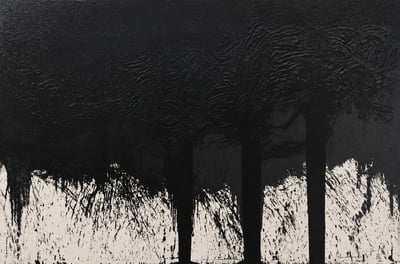
Hermann Nitsch was a multimedia artist from Austria. His work in multimedia involves depicting human excesses of many kinds, including abstract splatter pieces and performance art. Hermann Nitsch is most noted for his performance work Theater of Orgies and Mysteries (1962-1998) which included almost one hundred staged presentations.He has many abstract paintings which share the title Splatter Painting and are identified with the year of their creation. These are mostly combinations of oil and acrylic on canvas. Each has a predominant, focused area of paint and varied amounts of spills, drips and runs rolling down the canvas from the largest area. Typically painted in one range of color, such as all red, these paintings are intended to convey the intensity of the performances that generated them. They are backdrops to his live Aktion (or action) events held during the course of his Theater of Orgies and Mysteries staged events. During Hermann Nitsch's theatrical performances, he was known for incorporating themes of sacrifice and ritual while enacting brutal scenes of symbolic crucifixion, animal sacrifice, blood drinking, and a plethora of pagan rituals enlivened by robed processions, nudity, drunken excesses and the addition of viscera and entrails to the props and activities. Hermann Nitsch was called “the Pope of Aktionism” in Vienna. The movement sought to shun traditional painting and sculpture as being illusions rather than reality. In doing so, participants hoped to create art that existed in real time, using violence and the corporeal world as themes and subject matter. Hermann Nitsch and artists who embraced the ideals of Aktionism were both hated and praised for their performance art. Viewed by many as part of a cult, other artists in this movement included Rudolf Schwartzkogler, Gunter Brus and Otto Muhl. (Artist website)
Body art involves creating art directly on or with the human body. Common forms include body piercings and tattoos, but it also encompasses practices like branding, scarification, scalping, body painting, full-body tattoos, body shaping, and sub-dermal implants. Body art can also refer to a subcategory of performance art where the artist's body is central to the artwork.