Dated, titled and signed,
- Image 13.5 x 8.6 cm; 5 1/4 x 3 1/4 in
- Sheet 29.5 x 22 cm; 11 1/2 x 8 3/4 in
- Print on Japan paper in reprint
James Ensor’s 'L'Acacia' is an 1888 drypoint etching, showcasing a delicate, contemplative scene dominated by a large, bare acacia tree. The skeletal branches extend across much of the composition, drawing attention to the contrast between the tree's stark silhouette and the softer, more distant elements of the background, where faint outlines of a structure—possibly a building or castle—can be discerned. The etching's minimalist quality, with its fine, detailed lines and subtle tonal shifts, evokes a sense of solitude and quiet reflection. Ensor's choice of a solitary tree as the central focus offers a meditation on nature's stark beauty and the passage of time, elements that are often present in his more introspective works.
James Ensor (Belgium, 1860–1949) was a groundbreaking Symbolist painter known for his satirical and macabre works. His use of masks, skeletons, and vibrant colors reflected themes of death, hypocrisy, and the grotesque, influencing early modern art and Expressionism.
DrypointDrypoint is an intaglio printmaking technique where an image is incised onto a plate using a sharp, pointed tool, typically a needle made of metal or diamond. Traditionally, copper plates were used, but today zinc, plexiglass, or acetate are also common. Drypoint is easier for drawing artists to master compared to engraving, as the needle technique resembles drawing with a pencil rather than the more complex burin used in engraving.
Dated, titled and signed,
- Image 13.5 x 8.6 cm; 5 1/4 x 3 1/4 in
- Sheet 29.5 x 22 cm; 11 1/2 x 8 3/4 in
- Print on Japan paper in reprint
James Ensor’s 'L'Acacia' is an 1888 drypoint etching, showcasing a delicate, contemplative scene dominated by a large, bare acacia tree. The skeletal branches extend across much of the composition, drawing attention to the contrast between the tree's stark silhouette and the softer, more distant elements of the background, where faint outlines of a structure—possibly a building or castle—can be discerned. The etching's minimalist quality, with its fine, detailed lines and subtle tonal shifts, evokes a sense of solitude and quiet reflection. Ensor's choice of a solitary tree as the central focus offers a meditation on nature's stark beauty and the passage of time, elements that are often present in his more introspective works.
James Ensor (Belgium, 1860–1949) was a groundbreaking Symbolist painter known for his satirical and macabre works. His use of masks, skeletons, and vibrant colors reflected themes of death, hypocrisy, and the grotesque, influencing early modern art and Expressionism.
James Ensor (b. 1860 Belgium, d. 1949 Belgium) was a pioneering Belgian artist whose work bridged the Symbolist and Expressionist movements. Best known for his macabre and fantastical scenes, Ensor often depicted masked figures, skeletons, and bizarre creatures, reflecting his fascination with death, satire, and the absurdity of human existence. He primarily worked in oil painting but also explored etching and drawing.
Ensor’s unique style combined vibrant, almost garish colors with a loose, dynamic brushwork that challenged traditional aesthetics. His works, such as The Entry of Christ into Brussels in 1889, had a significant influence on later avant-garde movements, including Surrealism and German Expressionism. Rooted in the cultural milieu of his hometown, Ostend, and informed by his skepticism of societal norms, Ensor remains a key figure in the transition from 19th-century realism to the expressive experimentation of the 20th century.
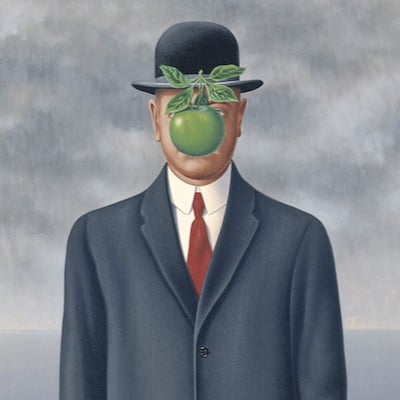
Surrealism began in the 1920s as an art and literary movement with the goal of revealing the unconscious mind and unleashing the imagination by exploring unusual and dream-like imagery. Influenced by Sigmund Freud’s theories of psychoanalysis, Surrealist artists and writers sought to bring the unconscious into rational life, blurring the lines between reality and dreams. The movement aimed to challenge conventional perceptions and express the irrational aspects of the human experience.