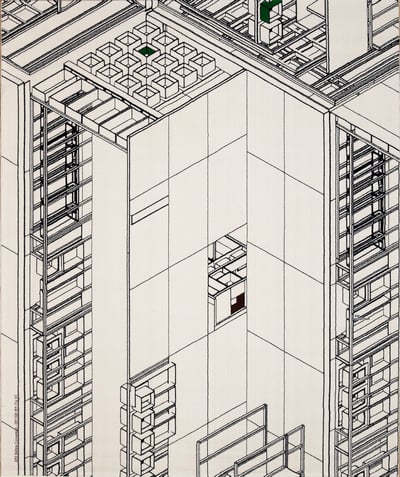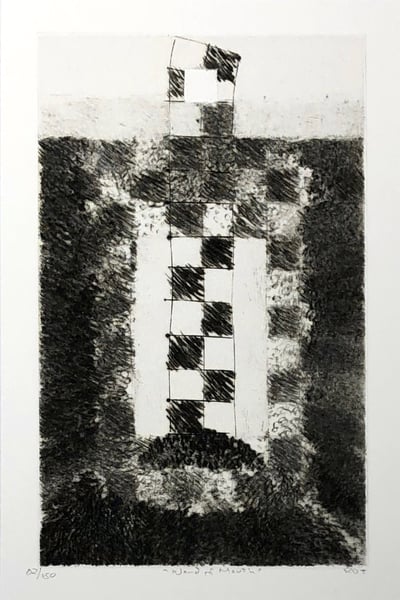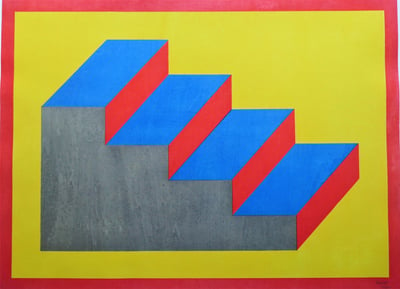
Construction Module Tate Modern M8-D53-14022005 C by Jan De Cock is a minimalist wooden sculpture created in 2005, crafted from wooden fiber boards. This modular structure features clean lines, simple geometric forms, and an industrial aesthetic. Resembling a functional piece of furniture or a storage unit, it blurs the boundaries between sculpture and practical design. The boxy construction and unembellished surfaces evoke themes of utility and spatial presence, inviting viewers to consider the interaction between art, architecture, and everyday objects. De Cock’s work often explores modularity and repetition, reflecting on how structures occupy space and the role of minimalism in contemporary art.
Jan De Cock (Belgium, 1976) is a contemporary visual artist known for his large-scale, site-specific installations that explore the relationship between art, architecture, and space. His work often references modernist aesthetics and challenges traditional notions of sculpture. De Cock founded The Brussels Art_ Institute, a multidisciplinary workspace fostering collaboration between artists and educational institutions.
WoodWood is one of the most ancient and versatile materials used in creating art. It has served as a base for paintings, brush handles, pens, and pencils, as well as for easels, wood engraving, woodcut, woodblock printing, and sculpting. Various types of wood, such as oak, maple, and pine, are commonly used in these artistic applications.
Construction Module Tate Modern M8-D53-14022005 C by Jan De Cock is a minimalist wooden sculpture created in 2005, crafted from wooden fiber boards. This modular structure features clean lines, simple geometric forms, and an industrial aesthetic. Resembling a functional piece of furniture or a storage unit, it blurs the boundaries between sculpture and practical design. The boxy construction and unembellished surfaces evoke themes of utility and spatial presence, inviting viewers to consider the interaction between art, architecture, and everyday objects. De Cock’s work often explores modularity and repetition, reflecting on how structures occupy space and the role of minimalism in contemporary art.
Jan De Cock (Belgium, 1976) is a contemporary visual artist known for his large-scale, site-specific installations that explore the relationship between art, architecture, and space. His work often references modernist aesthetics and challenges traditional notions of sculpture. De Cock founded The Brussels Art_ Institute, a multidisciplinary workspace fostering collaboration between artists and educational institutions.
To me, Modernism is the most important period in art history.
- Jan De Cock
As a visual artist, Jan De Cock creates installations where the creation itself is part of the exhibition. Many of his works include performance and feature his own photography. He uses 20th century abstract art techniques to explore the effects of modern design and mass production on the world of art. A number of his works use the word Denkmal in the title, which means “monument” in German. However in his native language of Dutch, Denkmal has a different meaning: denk “to think” and mal “to mold”. Therefore his works are said to spark different ways to think and look at his subjects instead of having a singular meaning. Jan De Cock is considered a modernist artist, and his works explore the ways an artist can relate to the modernist approach. He lives and works in Belgium where he is only the second Belgian artist to present an exhibition at the Tate Modern in London. (Artist website)
Sometimes referred to as Conceptualism, this is an art form where the idea(s) or concept(s) behind the work take precedence over material concerns and traditional aesthetics. Many conceptual artworks can be created by anyone simply by following written instructions. The concept or idea is the most essential aspect of the artwork.