

With certificate signed by the artist
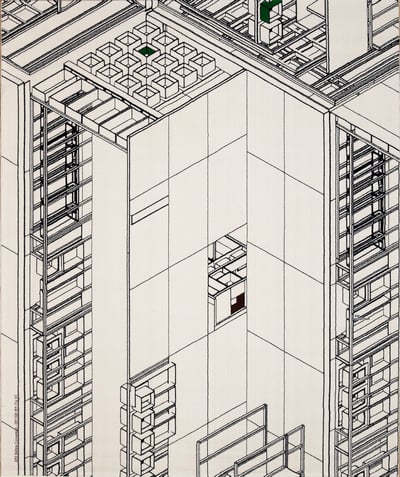
D53 Before Conversation Fig.252 by Jan De Cock, created in 2006, is a tapestry that showcases a minimalist approach to architectural abstraction. This composition features a scattered arrangement of black geometric shapes across a light background, with clusters that evoke elements of modernist architecture. The isolated shapes, including lines and rectangular forms, appear to float in open space, contributing to a fragmented, almost deconstructed aesthetic. The lower right area includes a more defined structure resembling a building's interior section, adding contrast to the overall dispersal. De Cock’s work often reflects themes of spatial exploration and architectural perception, inviting viewers to interpret the disjointed patterns as components of an imagined, abstract space. The minimalist design emphasizes the tension between absence and presence, suggesting architectural forms without fully defining them.
Artwork Copyright © Jan De CockJan De Cock (Belgium, 1976) is a contemporary visual artist known for his large-scale, site-specific installations that explore the relationship between art, architecture, and space. His work often references modernist aesthetics and challenges traditional notions of sculpture. De Cock founded The Brussels Art_ Institute, a multidisciplinary workspace fostering collaboration between artists and educational institutions.
Artwork Copyright © Jan De CockD53 Before Conversation - Fig252, 2006
Form
Medium
Size
- Inches
- Centimeters
Edition
Price
- USD
- EUR
- GBP
- CHF
- Authenticity Guaranteed
- Insured Shipping
- Online Since 2005
●Inventory 3478
●Signed
●Comes with gallery invoice and certificate
●Sell Us a Similar Artwork. Learn more.
With certificate signed by the artist
D53 Before Conversation Fig.252 by Jan De Cock, created in 2006, is a tapestry that showcases a minimalist approach to architectural abstraction. This composition features a scattered arrangement of black geometric shapes across a light background, with clusters that evoke elements of modernist architecture. The isolated shapes, including lines and rectangular forms, appear to float in open space, contributing to a fragmented, almost deconstructed aesthetic. The lower right area includes a more defined structure resembling a building's interior section, adding contrast to the overall dispersal. De Cock’s work often reflects themes of spatial exploration and architectural perception, inviting viewers to interpret the disjointed patterns as components of an imagined, abstract space. The minimalist design emphasizes the tension between absence and presence, suggesting architectural forms without fully defining them.
Artwork Copyright © Jan De CockJan De Cock (Belgium, 1976) is a contemporary visual artist known for his large-scale, site-specific installations that explore the relationship between art, architecture, and space. His work often references modernist aesthetics and challenges traditional notions of sculpture. De Cock founded The Brussels Art_ Institute, a multidisciplinary workspace fostering collaboration between artists and educational institutions.
Artwork Copyright © Jan De CockAvailability
Form
Medium
SORT BY

Jan De Cock
Nature morte with monument, 2013
Sculpture / Object
Mixed Media
EUR 19,500

Jan De Cock
Nature morte with broken necklace, 2013
Sculpture / Object
Mixed Media
EUR 19,500
Jan De Cock
D53 Before Conversation Fig.154, 2006
Tapestry
Tapestry
EUR 11,000

Jan De Cock
D53 Before Converdation Fig.271, 2006
Tapestry
Tapestry
EUR 7,500

Jan De Cock
D53 Before Conversation Fig.267, 2006
Tapestry
Tapestry
EUR 7,500

Jan De Cock
D53 Before Conversation - fig323, 2006
Tapestry
Tapestry
EUR 6,500

Jan De Cock
D53 Before Conversation - Fig275, 2006
Tapestry
Tapestry
EUR 6,500

Jan De Cock
D53 Before Conversation - Fig252, 2006
Tapestry
Tapestry
EUR 6,500
Related Artists
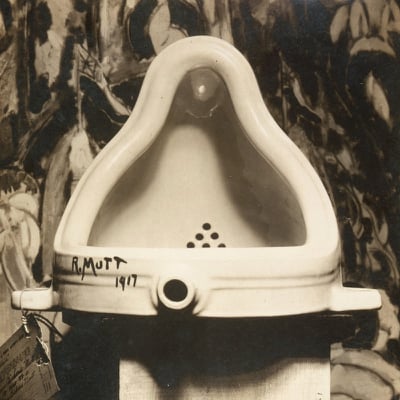
Artwork by Marcel Duchamp
What is Found Object?
A found object is a term used to describe a man-made or natural object, or a fragment of one, that an artist discovers or purchases and keeps for inspiration or as a work of art. The artist may also modify the object or incorporate it into a collage or assemblage, transforming it into a new piece of art.

Jan De Cock
D53 Before Conversation - Fig252, 2006
243 x 200 cm


