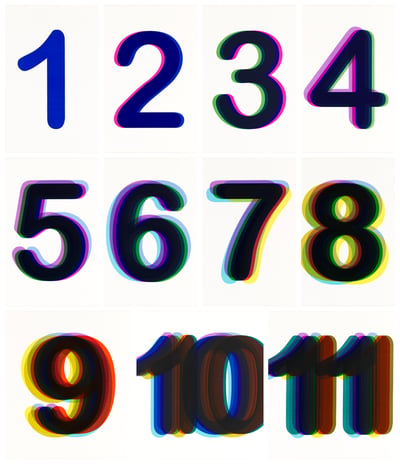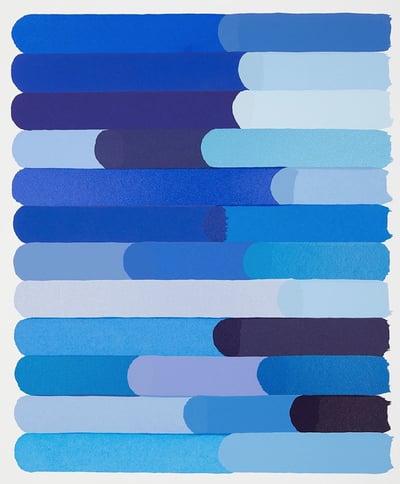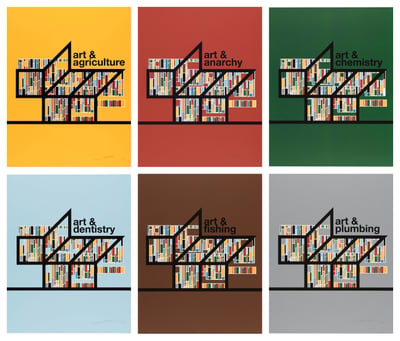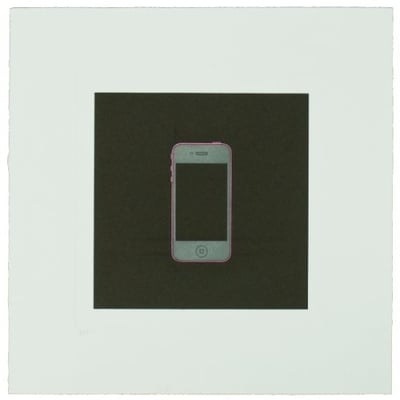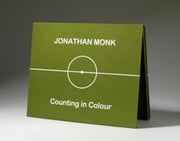
COUNTING IN COLOUR by Jonathan Monk is a limited edition portfolio from 2010, comprising 11 vibrant lithographs, produced in an edition of 32. Each lithograph presents a single numeral from 1 to 11, rendered in bold, overlapping colors. As the numbers progress, they become layered with an increasing spectrum of hues, creating a dynamic visual rhythm that emphasizes color theory and perception. The juxtaposition of vivid colors creates optical effects, blending and shifting as viewers move from one number to the next. Monk’s playful approach transforms the act of counting into a visual experience, inviting reflections on simplicity, repetition, and the impact of color.
Jonathan Monk (UK, 1969) is a conceptual artist whose work reinterprets and challenges art history with wit and irony. Using diverse media, including photography, sculpture, and performance, he engages in playful dialogues with iconic artists and movements. Monk’s works blur originality and appropriation, inviting viewers to question the boundaries of contemporary art.
Portfolio with 11 lithographsLithography is a printing method based on the principle that water and oil do not mix. It can be used to print artwork or text onto paper or other suitable materials. Traditionally, an image was drawn with wax, fat, or oil onto a lithographic limestone surface or plate. Today, metal plates and other surfaces are also used in lithographic printing.
Size
Inches
Centimeters
47 X 57.5 cm
Edition
Edition of 32
Price
USD
EUR
GBP
CHF
3,200EUR
?
+ VAT/import Duties (if applicable)
Authenticity Guaranteed
Insured Shipping
Online Since 2005
Share
●Inventory 3028
●Signed
●Comes with gallery invoice and certificate
●Any questions?
Portfolio with 11 lithographs
COUNTING IN COLOUR by Jonathan Monk is a limited edition portfolio from 2010, comprising 11 vibrant lithographs, produced in an edition of 32. Each lithograph presents a single numeral from 1 to 11, rendered in bold, overlapping colors. As the numbers progress, they become layered with an increasing spectrum of hues, creating a dynamic visual rhythm that emphasizes color theory and perception. The juxtaposition of vivid colors creates optical effects, blending and shifting as viewers move from one number to the next. Monk’s playful approach transforms the act of counting into a visual experience, inviting reflections on simplicity, repetition, and the impact of color.
Jonathan Monk (UK, 1969) is a conceptual artist whose work reinterprets and challenges art history with wit and irony. Using diverse media, including photography, sculpture, and performance, he engages in playful dialogues with iconic artists and movements. Monk’s works blur originality and appropriation, inviting viewers to question the boundaries of contemporary art.
Is it or is it not or can it or can it not be?
- Jonathan Monk
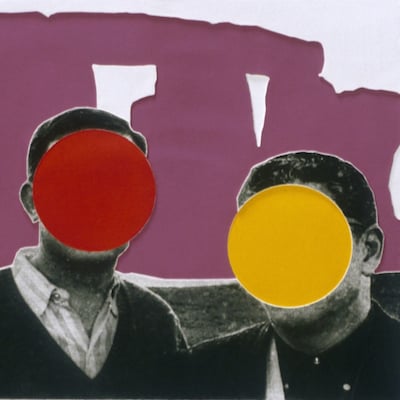
Jonathan Monk is a British artist living and working in Berlin, Germany. He creates photographs, film, sculpture and installation pieces which are thought to be humorous reinterpretations of works by Sol LeWitt, Ed Ruscha, and John Baldessari to name some. Monk often uses quotations to give new ideas to works viewed as seminal in their time, adding quirkiness to challenge the value of the artwork. Jonathan Monk's upbringing in a working class environment is viewed by some as his source for taking the artistic and adding the mundane in ways that encourage viewers to think differently about specific art pieces than they may have before. Jonathan Monk has works exhibited throughout the world. His Tears, 2005 photograph shows a passport photo with the eyes completely covered by a pair of drop earrings placed to represent tears. His Painting of a photo of a photo of a painting, 2008, has images of a purple vase filled with yellow sunflowers, both in photograph image and then drawn in markers. The greeting “Get Well Soon” is one of three witty, hand-lettered greetings included. These are only two of the pieces which have established Jonathan Monk's reputation as a humorist in the art world.
The Light and Space Movement refers to loosely affiliated art movements connected to minimalism, geometric abstraction, and op art that originated in Southern California in the 1960s. Greatly influenced by artist John McLaughlin, these artists focused on sensory phenomena such as light, perception, and space as central elements of their work. They also incorporated cutting-edge technologies from the aerospace and engineering industries to develop light-filled and sensuous objects, creating immersive experiences that emphasize the viewer's perception.