

Güije espíritu burlón (2009) by José Bedia is an etching and engraving measuring 89 × 115 cm, created in an edition of 50. The work juxtaposes the image of a battleship emitting dramatic plumes of smoke with faint, schematic red line drawings in the foreground—possibly referencing a mythical or spiritual figure. The title refers to the “Güije,” a mischievous water spirit from Afro-Cuban folklore, suggesting a tension between military power and cultural mysticism. Bedia’s layering of expressive mark-making with precise drawing evokes a visual dialogue between colonial histories, myth, and resistance.
Artwork Copyright © José BediaJosé Bedia (Cuba, 1959) is a Cuban contemporary artist whose work bridges African, Caribbean, and indigenous spiritual traditions. Known for his dynamic paintings and installations, Bedia explores themes of migration, ritual, and cultural identity. His art is showcased in prestigious collections worldwide, including the Museum of Modern Art in New York and the Smithsonian Institution.
Artwork Copyright © José BediaGüije espíritu burlón, 2009
Form
Medium
Size
- Inches
- Centimeters
Edition
Price
- USD
- EUR
- GBP
- CHF
- Authenticity Guaranteed
- Insured Shipping
- Online Since 2005
●Inventory 16358
●Signed
●Comes with gallery invoice and certificate
●Sell Us a Similar Artwork. Learn more.
Güije espíritu burlón (2009) by José Bedia is an etching and engraving measuring 89 × 115 cm, created in an edition of 50. The work juxtaposes the image of a battleship emitting dramatic plumes of smoke with faint, schematic red line drawings in the foreground—possibly referencing a mythical or spiritual figure. The title refers to the “Güije,” a mischievous water spirit from Afro-Cuban folklore, suggesting a tension between military power and cultural mysticism. Bedia’s layering of expressive mark-making with precise drawing evokes a visual dialogue between colonial histories, myth, and resistance.
Artwork Copyright © José BediaJosé Bedia (Cuba, 1959) is a Cuban contemporary artist whose work bridges African, Caribbean, and indigenous spiritual traditions. Known for his dynamic paintings and installations, Bedia explores themes of migration, ritual, and cultural identity. His art is showcased in prestigious collections worldwide, including the Museum of Modern Art in New York and the Smithsonian Institution.
Artwork Copyright © José BediaAvailability
SORT BY

José Bedia
Güije espíritu burlón, 2009
Limited Edition Print
Etching
EUR 1,800

José Bedia
Sunka Wakan, 2007
Limited Edition Print
Etching
EUR 1,800

José Bedia
Otra temporada, 2008
Limited Edition Print
Etching
EUR 1,800

José Bedia
Mbele mboba, 1997
Limited Edition Print
Etching
EUR 1,800
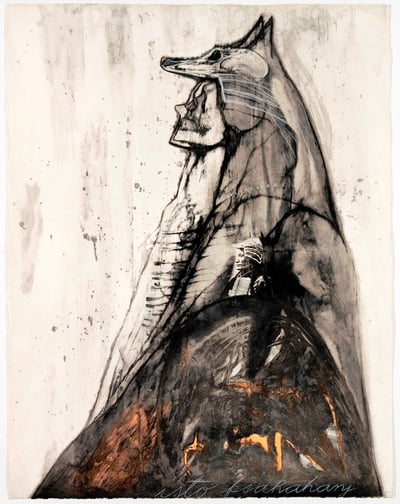
José Bedia
Isto psakahanj, 2008
Limited Edition Print
Etching
EUR 2,000
Related Artists

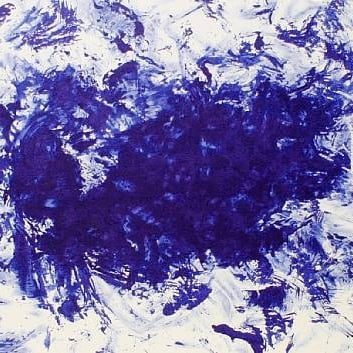
Artwork by Yves Klein
What is body art?
Body art involves creating art directly on or with the human body. Common forms include body piercings and tattoos, but it also encompasses practices like branding, scarification, scalping, body painting, full-body tattoos, body shaping, and sub-dermal implants. Body art can also refer to a subcategory of performance art where the artist's body is central to the artwork.

José Bedia
Güije espíritu burlón, 2009
89 x 115 cm


