

// José Bedia's Otra Temporada, a limited edition etching from 2008, is a hauntingly evocative work that explores themes of cycles, transformation, and cultural symbolism. The piece centers on a bold, darkly outlined insect-like form, tethered to a loop, suggesting restraint or containment. Below, the hand-drawn text OTRA TEMPORADA (Another Season) hints at themes of renewal or the repetition of life’s phases. Bedia’s characteristic use of primal forms and earthy textures evokes indigenous spiritual connections, encouraging viewers to ponder the impermanence and cyclical nature of existence. The monochromatic palette adds an element of austerity, deepening its contemplative impact.
Artwork Copyright © José BediaJosé Bedia (Cuba, 1959) is a Cuban contemporary artist whose work bridges African, Caribbean, and indigenous spiritual traditions. Known for his dynamic paintings and installations, Bedia explores themes of migration, ritual, and cultural identity. His art is showcased in prestigious collections worldwide, including the Museum of Modern Art in New York and the Smithsonian Institution.
Artwork Copyright © José BediaOtra temporada, 2008
Form
Medium
Size
- Inches
- Centimeters
Edition
Price
- USD
- EUR
- GBP
- CHF
- Authenticity Guaranteed
- Insured Shipping
- Online Since 2005
●Inventory 16354
●Signed
●Comes with gallery invoice and certificate
●Sell Us a Similar Artwork. Learn more.
// José Bedia's Otra Temporada, a limited edition etching from 2008, is a hauntingly evocative work that explores themes of cycles, transformation, and cultural symbolism. The piece centers on a bold, darkly outlined insect-like form, tethered to a loop, suggesting restraint or containment. Below, the hand-drawn text OTRA TEMPORADA (Another Season) hints at themes of renewal or the repetition of life’s phases. Bedia’s characteristic use of primal forms and earthy textures evokes indigenous spiritual connections, encouraging viewers to ponder the impermanence and cyclical nature of existence. The monochromatic palette adds an element of austerity, deepening its contemplative impact.
Artwork Copyright © José BediaJosé Bedia (Cuba, 1959) is a Cuban contemporary artist whose work bridges African, Caribbean, and indigenous spiritual traditions. Known for his dynamic paintings and installations, Bedia explores themes of migration, ritual, and cultural identity. His art is showcased in prestigious collections worldwide, including the Museum of Modern Art in New York and the Smithsonian Institution.
Artwork Copyright © José BediaAvailability
SORT BY

José Bedia
Güije espíritu burlón, 2009
Limited Edition Print
Etching
EUR 1,800

José Bedia
Sunka Wakan, 2007
Limited Edition Print
Etching
EUR 1,800

José Bedia
Otra temporada, 2008
Limited Edition Print
Etching
EUR 1,800

José Bedia
Mbele mboba, 1997
Limited Edition Print
Etching
EUR 1,800
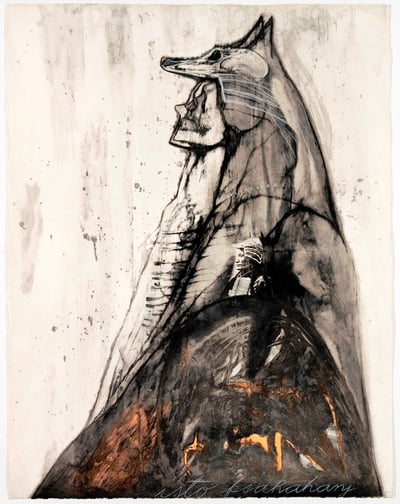
José Bedia
Isto psakahanj, 2008
Limited Edition Print
Etching
EUR 2,000
Related Artists

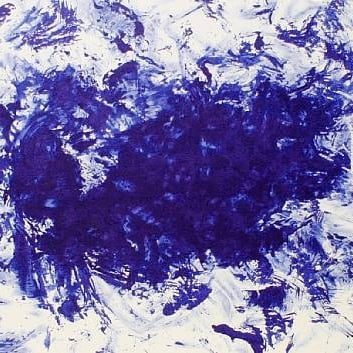
Artwork by Yves Klein
What is body art?
Body art involves creating art directly on or with the human body. Common forms include body piercings and tattoos, but it also encompasses practices like branding, scarification, scalping, body painting, full-body tattoos, body shaping, and sub-dermal implants. Body art can also refer to a subcategory of performance art where the artist's body is central to the artwork.


José Bedia
Otra temporada, 2008
115 x 89 cm


