

Chromogenic print, mounted on cardboard, signed, dated in pencil on the lower mount.
- Image : 32 x 48 cm
- Sheet : 33 x 49 cm
Kiki Smith's Untitled (Head of Kuan Yin) (2002) is a poignant chromogenic print that reflects her fascination with the human form, spirituality, and fragility. The close-up image depicts a sculptural representation of the head of Kuan Yin, the bodhisattva of compassion, rendered in delicate, textured materials. The rough surface of the head, coupled with its partially open eyes and subtle coloration, evokes a sense of vulnerability and reverence. The photograph's intimate perspective enhances its tactile qualities and emotional depth. Measuring 32 x 48 cm, this piece is part of an edition of 3 (+1 artist proof) and reflects Smith’s exploration of materiality and the divine in everyday objects.
Artwork Copyright © Kiki SmithKiki Smith (USA, 1954) is a multidisciplinary artist known for her evocative works exploring the human body, nature, and mythology. Utilizing mediums like sculpture, printmaking, and glass, Smith's art often examines themes of transformation and mortality. Her works are featured in major collections, including the MoMA and the Whitney Museum.
Artwork Copyright © Kiki SmithUntitled (Head of Kuan Yin), 2002
Form
Medium
Size
- Inches
- Centimeters
Edition
Price
- USD
- EUR
- GBP
- CHF
- Authenticity Guaranteed
- Insured Shipping
- Online Since 2005
●Inventory 15489
●Signed
●Comes with gallery invoice and certificate
●Sell Us a Similar Artwork. Learn more.
Chromogenic print, mounted on cardboard, signed, dated in pencil on the lower mount.
- Image : 32 x 48 cm
- Sheet : 33 x 49 cm
Kiki Smith's Untitled (Head of Kuan Yin) (2002) is a poignant chromogenic print that reflects her fascination with the human form, spirituality, and fragility. The close-up image depicts a sculptural representation of the head of Kuan Yin, the bodhisattva of compassion, rendered in delicate, textured materials. The rough surface of the head, coupled with its partially open eyes and subtle coloration, evokes a sense of vulnerability and reverence. The photograph's intimate perspective enhances its tactile qualities and emotional depth. Measuring 32 x 48 cm, this piece is part of an edition of 3 (+1 artist proof) and reflects Smith’s exploration of materiality and the divine in everyday objects.
Artwork Copyright © Kiki SmithKiki Smith (USA, 1954) is a multidisciplinary artist known for her evocative works exploring the human body, nature, and mythology. Utilizing mediums like sculpture, printmaking, and glass, Smith's art often examines themes of transformation and mortality. Her works are featured in major collections, including the MoMA and the Whitney Museum.
Artwork Copyright © Kiki Smith- Recently Added
- Price (Low-High)
- Price (High-Low)
- Year (Low-High)
- Year (High-Low)

Kiki Smith
Untitled (Head of Kuan Yin), 2002
Photography
C-Print
EUR 7,000

Kiki Smith
1st State Self Portrait, 1993
Limited Edition Print
Etching
USD 5,950

Kiki Smith
Untitled - bite, 1988
Limited Edition Print
Digital Print on paper
USD 2,950

Kiki Smith
Moment B, 2006
Limited Edition Print
Lithograph
Currently Not Available
Related Artists


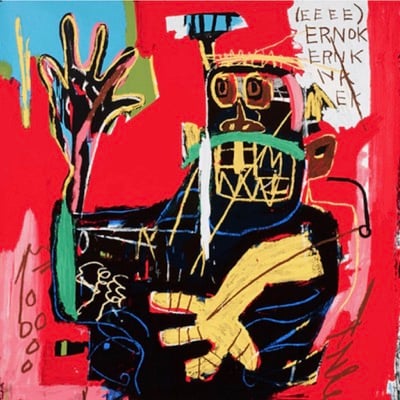
Artwork by Jean-Michel Basquiat
What is East Village Art?
In 1981, Patti Astor opened the first art gallery in New York City's East Village, helping to launch the careers of various artists and musicians. The gallery started small but quickly gained popularity, contributing to the emergence of art movements such as Neo-Expressionism and Street Art in the area. The East Village became a hub for these new artistic expressions. However, the gallery closed in 1985 due to waning interest.


Kiki Smith
Untitled (Head of Kuan Yin), 2002
33 x 49 cm


