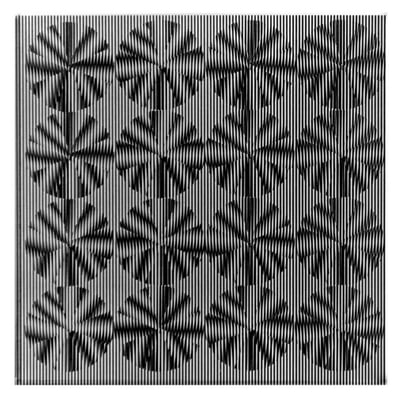
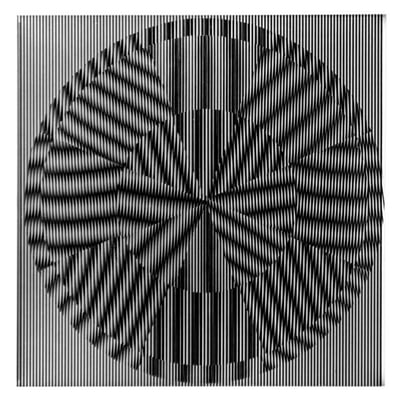
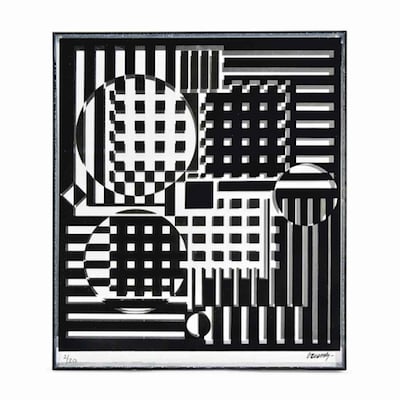
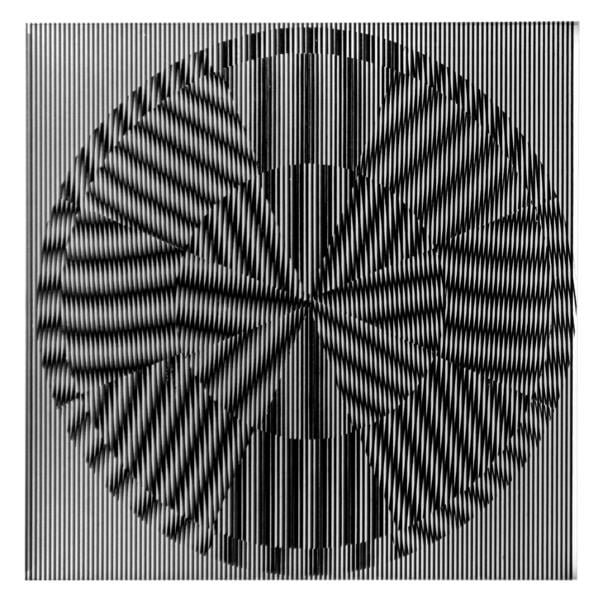
SBST 2839 by Ludwig Wilding, created in 2001, is a limited-edition print that embodies the artist’s fascination with optical art and visual perception. This mixed-media piece utilizes precise, parallel lines and contrasting black and white tones to form an intricate, three-dimensional effect. The central circular design appears to shift and pulse, engaging the viewer's eye in a dynamic interplay of depth and motion. Wilding's work, known for its experimental exploration of visual illusions, invites the viewer to experience the artwork as a sensory phenomenon rather than a static image. This piece exemplifies his commitment to pushing the boundaries of two-dimensional media.
Alison Wilding (UK, 1948) is a contemporary sculptor known for her innovative use of materials and forms. Combining wood, metal, resin, and other elements, her works explore contrasts like light and shadow or fluidity and solidity. Wilding’s abstract sculptures often evoke a sense of mystery and poetic tension.
Mixed mediaMixed media refers to artwork that incorporates more than one medium within a single piece. Unlike multimedia art, which combines distinct forms of visual art and often includes elements like sound, video, or digital media, mixed media focuses on combining traditional art materials, such as paint, ink, and collage. Mixed media art allows artists to achieve a wide range of effects and textures by layering and blending different materials.
Size
Inches
Centimeters
28 X 28 X 6 cm
Edition
Edition of 100
Price
USD
EUR
GBP
CHF
1,500EUR
?
+ VAT/import Duties (if applicable)
Authenticity Guaranteed
Insured Shipping
Online Since 2005
Share
●Inventory 2566
●Signed
●Comes with gallery invoice and certificate
●Any questions?
3d construction
SBST 2839 by Ludwig Wilding, created in 2001, is a limited-edition print that embodies the artist’s fascination with optical art and visual perception. This mixed-media piece utilizes precise, parallel lines and contrasting black and white tones to form an intricate, three-dimensional effect. The central circular design appears to shift and pulse, engaging the viewer's eye in a dynamic interplay of depth and motion. Wilding's work, known for its experimental exploration of visual illusions, invites the viewer to experience the artwork as a sensory phenomenon rather than a static image. This piece exemplifies his commitment to pushing the boundaries of two-dimensional media.
Alison Wilding (UK, 1948) is a contemporary sculptor known for her innovative use of materials and forms. Combining wood, metal, resin, and other elements, her works explore contrasts like light and shadow or fluidity and solidity. Wilding’s abstract sculptures often evoke a sense of mystery and poetic tension.
Ludwig Wilding was a German Op and Kinetic artist. He created three dimensional structures with shifting patterns using black and white designs. His work aimed at disorienting the viewer using tricks of where the eye would focus.
Ludwig Wilding had always been interested in visual perception of space and creating illusions of depth in pictures. Ludwig Wilding's work was inspired by the Modernists and M.C. Escher and he is responsible for inventing the technology of using superimposition of interference which created three dimensional optical illusions. In the 1950's his "optical interference" identified and isolated the line using black and white as the primary structure in his work. By the 1960's Ludwig Wilding began to incorporate two and three dimensional images by constructing "interfering objects" where he then superimposed a network of lines to produce effects of optical vertigo. Ludwig Wilding's works question the interaction between the viewer's eye and brain. His patterns appear to shift and flicker as the viewer looks at them, confusing the eye. He often referred to his work as "irritating art" as he incorporated the limits of visual perception and viewers often have to rub their eyes as the patterns physically irritate them. Ludwig Wilding's works have appeared in museums across the globe including the United States and Germany.
Op Art is a visual art style that uses optical illusions to create the impression of movement, vibrating patterns, flashing, or hidden images. The works are typically abstract, with many well-known pieces in black and white. The roots of Op Art can be traced back to earlier movements like Futurism, Constructivism, Dada, and Neo-Impressionism, particularly in their use of color effects and graphic design.