Original Lithograph printed in colours on fine wove paper. Signed Chadwick in pencil, dated 1960 and numbered from the limited edition of 300. Published by the Kestner-Kesellschaft, Hanover, with their stamp to the reverse.
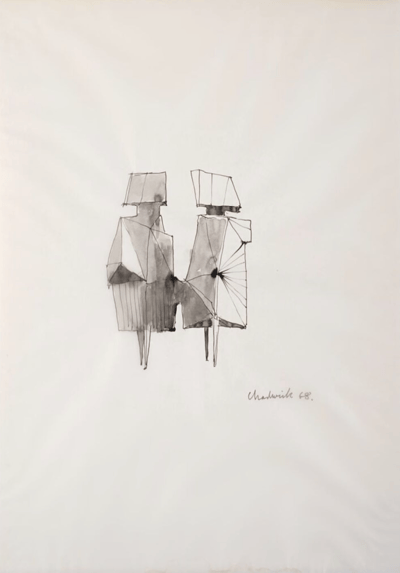
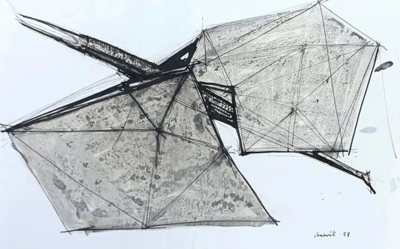
Watchers by Lynn Chadwick, created in 1960, is a limited edition lithograph showcasing the artist’s distinctive abstract style. The print features two anthropomorphic, geometric figures rendered in beige, black, and soft blue tones against a monochromatic blue background. The figures have sharp, angular lines and appear as if they are engaged in observation, their forms both rigid and organic, embodying Chadwick's fascination with human and mechanical forms. The lithograph is signed, dated, and numbered (114/300), published by the Kestner-Kesellschaft in Hanover. This work captures Chadwick’s exploration of structure, abstraction, and expressive symbolism, offering an introspective view into his artistic approach.
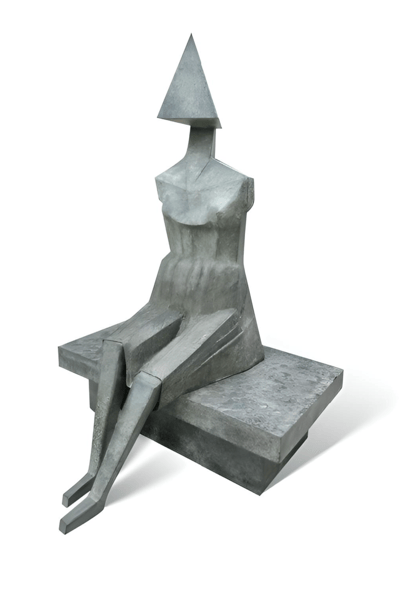
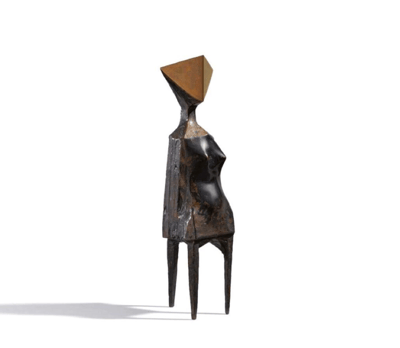
Lynn Chadwick (UK, 1914–2003) was a leading British sculptor known for his abstract, often angular figures crafted from metal. Influenced by Surrealism and the human form, his works evoke movement and tension. Chadwick gained international acclaim after winning the International Sculpture Prize at the 1956 Venice Biennale, cementing his legacy in modern sculpture.
Lithograph Lithography is a printing method based on the principle that water and oil do not mix. It can be used to print artwork or text onto paper or other suitable materials. Traditionally, an image was drawn with wax, fat, or oil onto a lithographic limestone surface or plate. Today, metal plates and other surfaces are also used in lithographic printing.
Original Lithograph printed in colours on fine wove paper. Signed Chadwick in pencil, dated 1960 and numbered from the limited edition of 300. Published by the Kestner-Kesellschaft, Hanover, with their stamp to the reverse.
Watchers by Lynn Chadwick, created in 1960, is a limited edition lithograph showcasing the artist’s distinctive abstract style. The print features two anthropomorphic, geometric figures rendered in beige, black, and soft blue tones against a monochromatic blue background. The figures have sharp, angular lines and appear as if they are engaged in observation, their forms both rigid and organic, embodying Chadwick's fascination with human and mechanical forms. The lithograph is signed, dated, and numbered (114/300), published by the Kestner-Kesellschaft in Hanover. This work captures Chadwick’s exploration of structure, abstraction, and expressive symbolism, offering an introspective view into his artistic approach.
Lynn Chadwick (UK, 1914–2003) was a leading British sculptor known for his abstract, often angular figures crafted from metal. Influenced by Surrealism and the human form, his works evoke movement and tension. Chadwick gained international acclaim after winning the International Sculpture Prize at the 1956 Venice Biennale, cementing his legacy in modern sculpture.
Lynn Chadwick (b. 1914 UK, d. 2003 UK) was a prominent British sculptor, celebrated for his innovative and often abstract sculptures that explored the tension between organic and geometric forms. Initially trained as an architectural draftsman, Chadwick transitioned to sculpture after World War II, gaining recognition for his distinctive works in welded metal. His sculptures, often depicting human and animal figures, are characterized by their angular shapes, sharp lines, and a sense of movement and balance. Chadwick's work played a significant role in the post-war revival of British sculpture, and he became a leading figure in the art world, winning the prestigious International Prize for Sculpture at the Venice Biennale in 1956. His ability to fuse modernist abstraction with figurative elements has left a lasting legacy in the world of contemporary art. (Artist website)
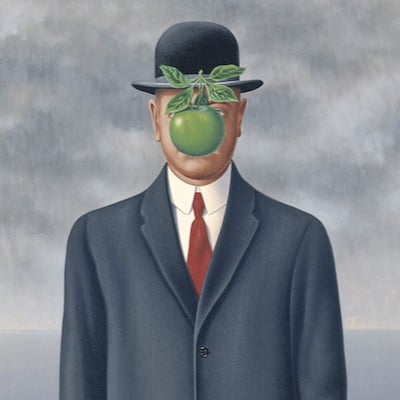
Surrealism began in the 1920s as an art and literary movement with the goal of revealing the unconscious mind and unleashing the imagination by exploring unusual and dream-like imagery. Influenced by Sigmund Freud’s theories of psychoanalysis, Surrealist artists and writers sought to bring the unconscious into rational life, blurring the lines between reality and dreams. The movement aimed to challenge conventional perceptions and express the irrational aspects of the human experience.