

Pencil ink wash on paper. Hand-signed by artist.
Study for the Watcher by Lynn Chadwick is a unique 1960 work rendered in pencil and ink wash on paper. The composition presents a vertically stacked figure-like structure, each section resembling a distorted box enclosed by taut linear elements—evocative of scaffolding or architectural forms. Chadwick integrates earthy washes of rust and ochre, conveying a sense of corrosion or organic decay. The skeletal precision of the lines contrasts with the expressive texture, reflecting his background in architecture and sculpture. This study hints at the transformation of human or sentinel forms into abstract, mechanized presences, emblematic of Chadwick’s post-war exploration of the body and surveillance.
Artwork Copyright © Lynn ChadwickLynn Chadwick (UK, 1914–2003) was a leading British sculptor known for his abstract, often angular figures crafted from metal. Influenced by Surrealism and the human form, his works evoke movement and tension. Chadwick gained international acclaim after winning the International Sculpture Prize at the 1956 Venice Biennale, cementing his legacy in modern sculpture.
Artwork Copyright © Lynn ChadwickStudy for the Watcher, 1960
Form
Medium
Size
- Inches
- Centimeters
Edition
Price
- Authenticity Guaranteed
- Insured Shipping
- Online Since 2005
●Inventory 16274
●Signed
●Comes with gallery invoice and certificate
●Sell Us a Similar Artwork. Learn more.
Pencil ink wash on paper. Hand-signed by artist.
Study for the Watcher by Lynn Chadwick is a unique 1960 work rendered in pencil and ink wash on paper. The composition presents a vertically stacked figure-like structure, each section resembling a distorted box enclosed by taut linear elements—evocative of scaffolding or architectural forms. Chadwick integrates earthy washes of rust and ochre, conveying a sense of corrosion or organic decay. The skeletal precision of the lines contrasts with the expressive texture, reflecting his background in architecture and sculpture. This study hints at the transformation of human or sentinel forms into abstract, mechanized presences, emblematic of Chadwick’s post-war exploration of the body and surveillance.
Artwork Copyright © Lynn ChadwickLynn Chadwick (UK, 1914–2003) was a leading British sculptor known for his abstract, often angular figures crafted from metal. Influenced by Surrealism and the human form, his works evoke movement and tension. Chadwick gained international acclaim after winning the International Sculpture Prize at the 1956 Venice Biennale, cementing his legacy in modern sculpture.
Artwork Copyright © Lynn ChadwickAvailability
Size
Form
Medium
SORT BY

Lynn Chadwick
Maquette VII Walking Couple, 1976
Sculpture / Object
Bronze
Inquire For Price

Lynn Chadwick
Study for the Watcher, 1960
Drawing / Watercolor
Ink
Inquire For Price
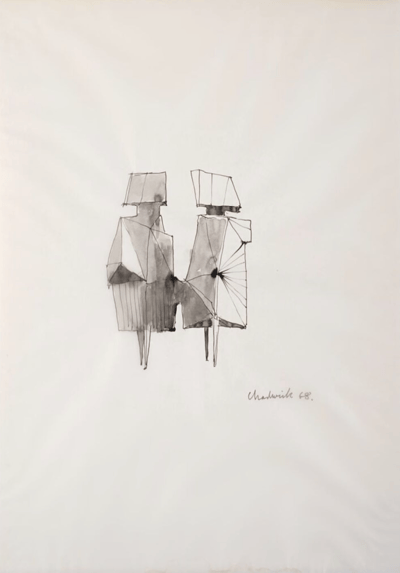
Lynn Chadwick
Two Watchers, 1968
Drawing / Watercolor
Ink
GBP 10,000 - 15,000
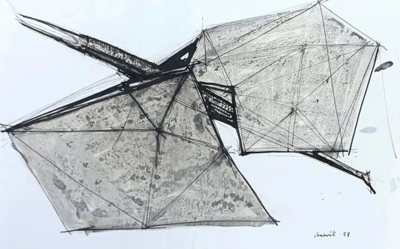
Lynn Chadwick
Study Related to Bird III, 1958
Drawing / Watercolor
Mixed Media
GBP 25,000 - 30,000
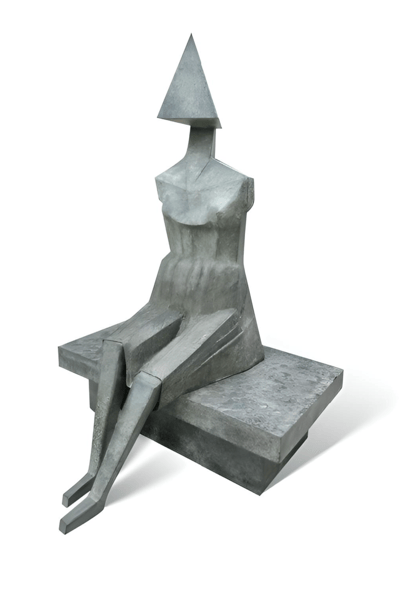
Lynn Chadwick
Little Girl III, 1987
Sculpture / Object
Bronze
Inquire For Price
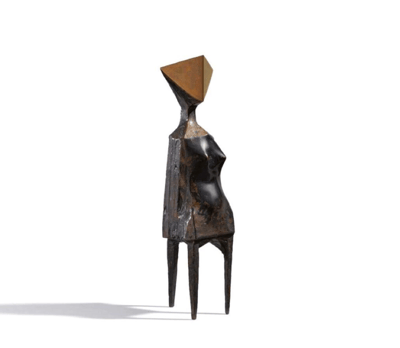
Lynn Chadwick
Little Girl, 1970
Sculpture / Object
Bronze
Inquire For Price

Lynn Chadwick
Watchers, 1960
Limited Edition Print
Lithograph
Currently Not Available
Related Artists

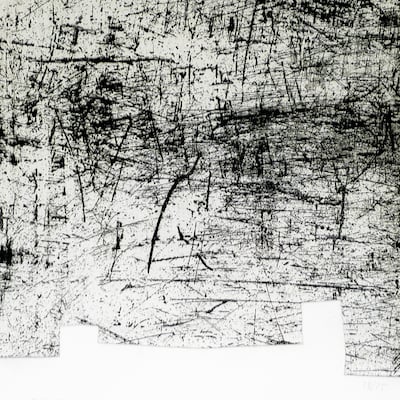
Artwork by Eduardo Chillida
What is abstract art?
Abstract art uses form, shape, line, and color to create a visual experience without attempting to represent external reality. The composition exists independently of the world's visual references, focusing on expressing ideas and emotions through non-representational means.

Lynn Chadwick
Study for the Watcher, 1960
48 x 33 cm


