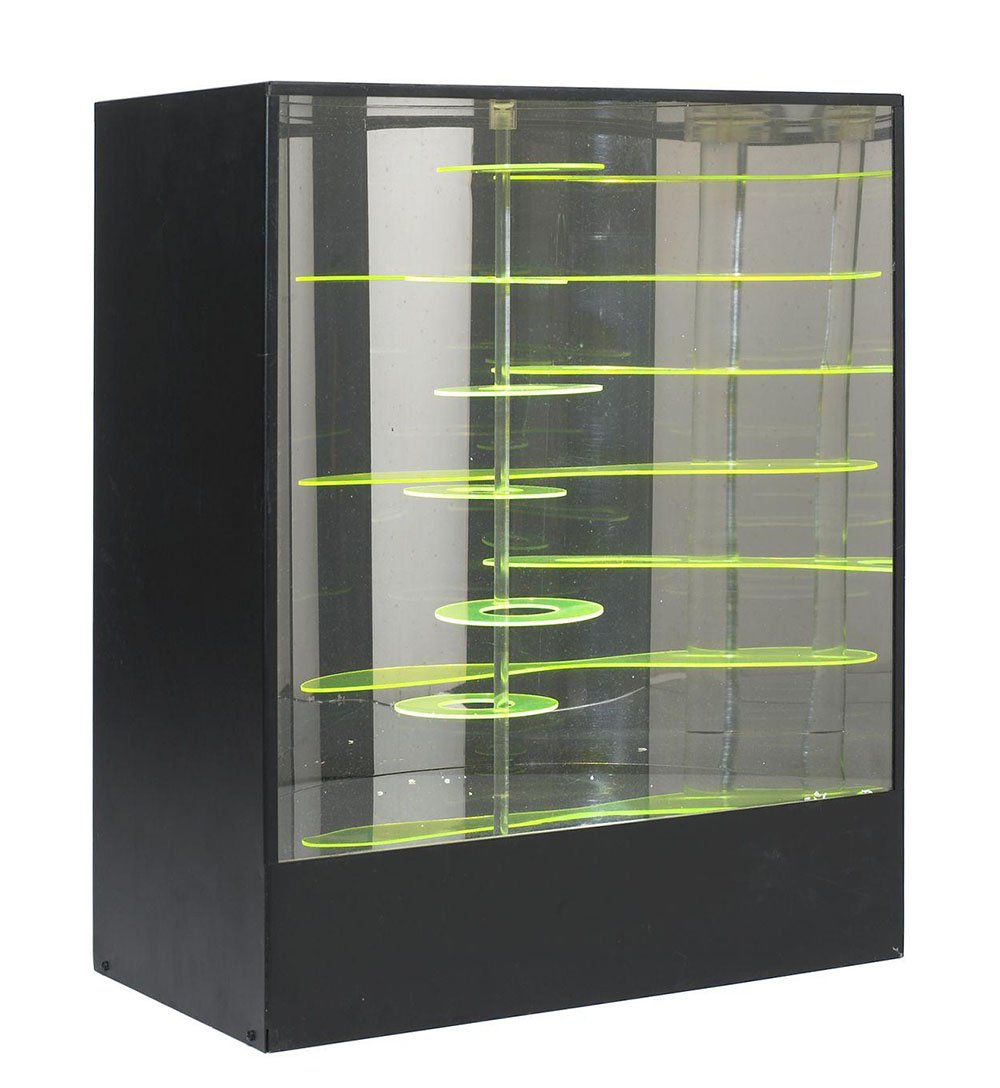
Motorized artwork: metal, motor and mirror. Edition d'Atelier
Déplacement optique A by Martha Boto is a motorized acrylic sculpture from 1969 that exemplifies the artist's interest in kinetic art and optical illusions. This piece, crafted with metal, a motor, and mirrors, creates a mesmerizing experience of movement and light. Yellow-green circular acrylic discs are arranged at varying heights within a black rectangular box, and the motor introduces subtle rotations, generating dynamic reflections that alter depending on the viewer's angle. This interplay of geometry, reflection, and motion captures Boto's exploration of space, perception, and the fluid boundaries between the physical and visual dimensions.
Artwork Copyright © Martha BotoMartha Boto (Argentina, 1925–2004) was a pioneering kinetic and programmed art artist. Co-founder of the Group of Non-Figurative Artists of Argentina, she created innovative sculptures and installations exploring movement, light, and color. Her works, often incorporating Plexiglas and electric motors, deliver dynamic and immersive visual experiences.
Artwork Copyright © Martha BotoDéplacement optique A, 1969
Form
Medium
Size
- Inches
- Centimeters
Edition
Price
- USD
- EUR
- GBP
- CHF
- Authenticity Guaranteed
- Insured Shipping
- Online Since 2005
●Inventory 2554
●Signed
●Comes with gallery invoice and certificate
●Any questions?
Motorized artwork: metal, motor and mirror. Edition d'Atelier
Déplacement optique A by Martha Boto is a motorized acrylic sculpture from 1969 that exemplifies the artist's interest in kinetic art and optical illusions. This piece, crafted with metal, a motor, and mirrors, creates a mesmerizing experience of movement and light. Yellow-green circular acrylic discs are arranged at varying heights within a black rectangular box, and the motor introduces subtle rotations, generating dynamic reflections that alter depending on the viewer's angle. This interplay of geometry, reflection, and motion captures Boto's exploration of space, perception, and the fluid boundaries between the physical and visual dimensions.
Artwork Copyright © Martha BotoMartha Boto (Argentina, 1925–2004) was a pioneering kinetic and programmed art artist. Co-founder of the Group of Non-Figurative Artists of Argentina, she created innovative sculptures and installations exploring movement, light, and color. Her works, often incorporating Plexiglas and electric motors, deliver dynamic and immersive visual experiences.
Artwork Copyright © Martha Boto- Recently Added
- Price (Low-High)
- Price (High-Low)
- Year (Low-High)
- Year (High-Low)
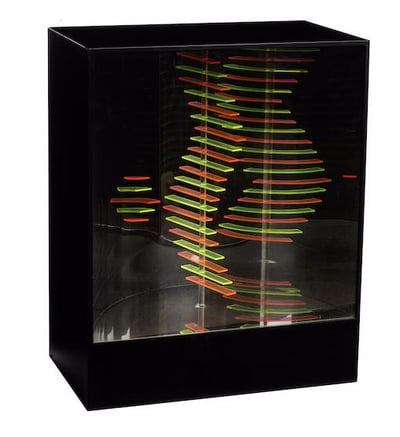
Martha Boto
Déplacement optique D, 1969
Sculpture / Object
Object
EUR 6,000
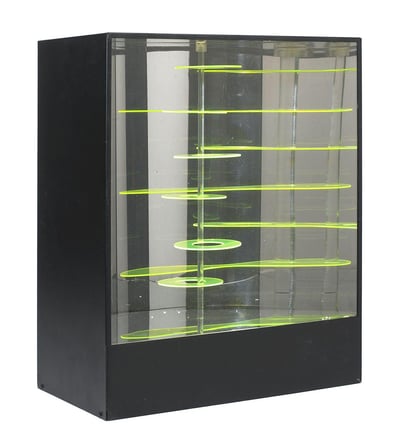
Martha Boto
Déplacement optique A, 1969
Sculpture / Object
Acrylic sculpture
EUR 6,000
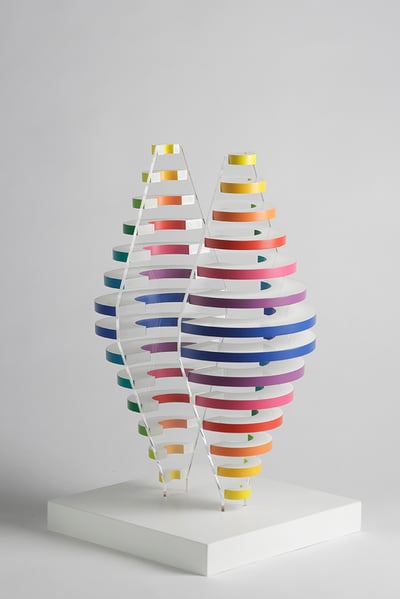
Martha Boto
2 Demi cones avec anneaux de couleurs, 1975
Sculpture / Object
Acrylic sculpture
EUR 3,500
Related Artists


Artwork by James Turrell
What is ‘light and space’?
The Light and Space Movement refers to loosely affiliated art movements connected to minimalism, geometric abstraction, and op art that originated in Southern California in the 1960s. Greatly influenced by artist John McLaughlin, these artists focused on sensory phenomena such as light, perception, and space as central elements of their work. They also incorporated cutting-edge technologies from the aerospace and engineering industries to develop light-filled and sensuous objects, creating immersive experiences that emphasize the viewer's perception.