

plexiglass on wooden base
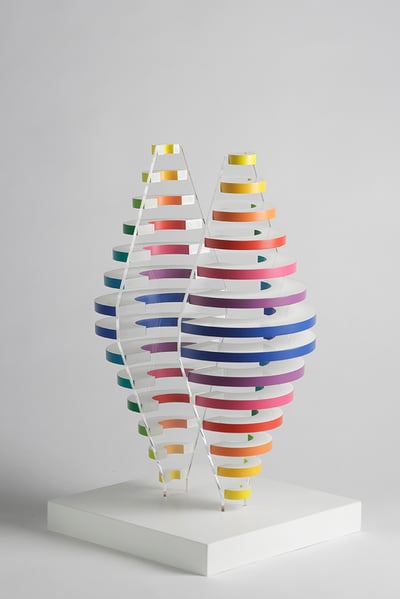
2 Demi cones avec anneaux de couleurs by Martha Boto is a striking acrylic sculpture from 1975, featuring two symmetrical, cone-like forms adorned with colorful rings. Crafted with precision from plexiglass and mounted on a wooden base, the work showcases Boto’s signature exploration of kinetic aesthetics and vibrant color schemes. Each cone is formed by a series of colorful rings in shades of red, blue, green, orange, and yellow, creating an optical illusion of movement and depth. This visually dynamic piece invites viewers to appreciate the balance between geometry and vibrant hues, embodying Boto's fascination with perception and spatial experience.
Artwork Copyright © Martha BotoMartha Boto (Argentina, 1925–2004) was a pioneering kinetic and programmed art artist. Co-founder of the Group of Non-Figurative Artists of Argentina, she created innovative sculptures and installations exploring movement, light, and color. Her works, often incorporating Plexiglas and electric motors, deliver dynamic and immersive visual experiences.
Artwork Copyright © Martha Boto2 Demi cones avec anneaux de couleurs, 1975
Form
Medium
Size
- Inches
- Centimeters
Edition
Price
- USD
- EUR
- GBP
- CHF
- Authenticity Guaranteed
- Insured Shipping
- Online Since 2005
●Inventory 2553
●Signed
●Comes with gallery invoice and certificate
●Any questions?
plexiglass on wooden base
2 Demi cones avec anneaux de couleurs by Martha Boto is a striking acrylic sculpture from 1975, featuring two symmetrical, cone-like forms adorned with colorful rings. Crafted with precision from plexiglass and mounted on a wooden base, the work showcases Boto’s signature exploration of kinetic aesthetics and vibrant color schemes. Each cone is formed by a series of colorful rings in shades of red, blue, green, orange, and yellow, creating an optical illusion of movement and depth. This visually dynamic piece invites viewers to appreciate the balance between geometry and vibrant hues, embodying Boto's fascination with perception and spatial experience.
Artwork Copyright © Martha BotoMartha Boto (Argentina, 1925–2004) was a pioneering kinetic and programmed art artist. Co-founder of the Group of Non-Figurative Artists of Argentina, she created innovative sculptures and installations exploring movement, light, and color. Her works, often incorporating Plexiglas and electric motors, deliver dynamic and immersive visual experiences.
Artwork Copyright © Martha Boto- Recently Added
- Price (Low-High)
- Price (High-Low)
- Year (Low-High)
- Year (High-Low)
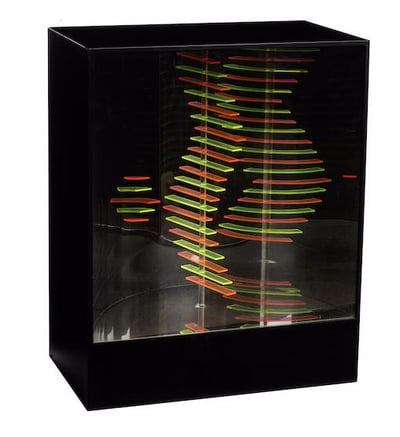
Martha Boto
Déplacement optique D, 1969
Sculpture / Object
Object
EUR 6,000
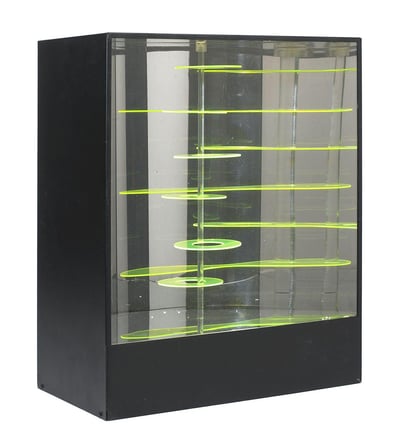
Martha Boto
Déplacement optique A, 1969
Sculpture / Object
Acrylic sculpture
EUR 6,000
Martha Boto
2 Demi cones avec anneaux de couleurs, 1975
Sculpture / Object
Acrylic sculpture
EUR 3,500
Related Artists
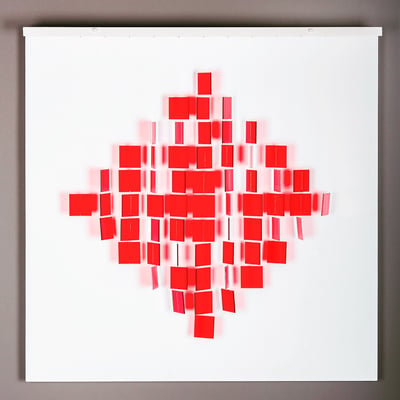
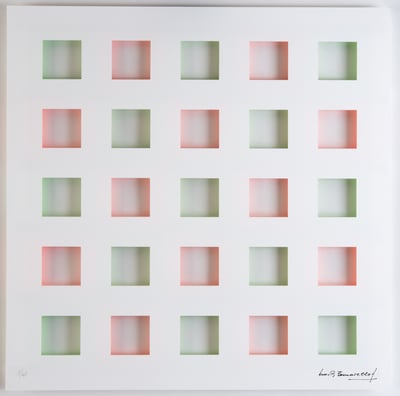


Artwork by Francois Morellet
What is geometric abstract art?
Geometric abstraction is a form of abstract art that uses geometric shapes arranged in a non-illusionistic space (though not always) and combined into non-representational (non-objective) compositions. Based on years of artistic research, some artists have proposed that geometric abstraction offers a solution to modern challenges by rejecting traditional illusionistic practices in favor of clarity and simplicity.



