

Artwork Copyright © Max Bill
Max Bill (Switzerland, 1908–1994) was a multidisciplinary artist, architect, and designer associated with the Bauhaus and concrete art movements. Renowned for his geometric sculptures, paintings, and typography, he pioneered functional design aesthetics. His works often blur the line between art and utility, emphasizing clarity and precision.
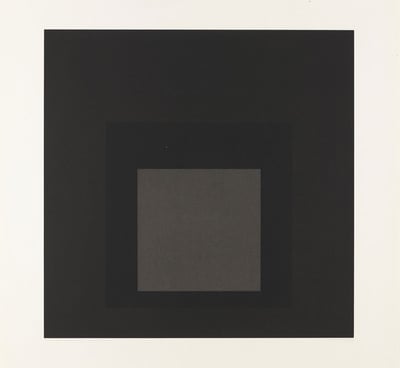
Artwork Copyright © Max BillFarb-Quadrate, 1967
Form
Medium
Size
- Inches
- Centimeters
Edition
Price
Available works →
- Authenticity Guaranteed
- Insured Shipping
- Online Since 2005
●
●Inventory 5276
●Hand Signed
●Comes with gallery invoice and certificate
●Sell Us a Similar Artwork. Learn more.
Artwork Copyright © Max Bill
Max Bill (Switzerland, 1908–1994) was a multidisciplinary artist, architect, and designer associated with the Bauhaus and concrete art movements. Renowned for his geometric sculptures, paintings, and typography, he pioneered functional design aesthetics. His works often blur the line between art and utility, emphasizing clarity and precision.
Artwork Copyright © Max Bill- Recently Added
- Price (Low-High)
- Price (High-Low)
- Year (Low-High)
- Year (High-Low)

Max Bill
Untitled (Columbus In Search of a New Tomorrow), 1992
Limited Edition Print
Silkscreen
Currently Not Available

Max Bill
Olympia München, 1970
Limited Edition Print
Silkscreen
Currently Not Available
Related Artists



Artwork by Max Bill
What is Bauhaus?
Bauhaus was a school of art, design and architecture established in Weimar, Germany. Architect Wlater Gropius established it in 1919. Bauhaus used a method for teaching within a community of artists working together and incorporating art in the fundamentals of daily life.


