

Max Bill
Max Bill (Switzerland, 1908–1994) was a multidisciplinary artist, architect, and designer associated with the Bauhaus and concrete art movements. Renowned for his geometric sculptures, paintings, and typography, he pioneered functional design aesthetics. His works often blur the line between art and utility, emphasizing clarity and precision.
© Max Bill. All rights reserved.
- Recently Added
- Price (Low-High)
- Price (High-Low)
- Year (Low-High)
- Year (High-Low)

Max Bill
Untitled (Columbus In Search of a New Tomorrow), 1992
Limited Edition Print
Silkscreen
Currently Not Available

Max Bill
Olympia München, 1970
Limited Edition Print
Silkscreen
Currently Not Available
Fine art is in the last consequence, philosophy expressed visually.
- Max Bill
- Max Bill
Max Bill (b. 1908 Switzerland, d. 1994 Germany) was a Swiss artist, architect, and designer, known for his contributions to the Concrete Art movement. Bill's work was characterized by its emphasis on clarity, mathematical precision, and a commitment to geometric abstraction. He was heavily influenced by the Bauhaus philosophy, where he studied under masters like Wassily Kandinsky and Paul Klee. Throughout his career, Bill explored various mediums, including sculpture, painting, and industrial design, always maintaining a focus on the principles of functionality and simplicity. His notable works include his public sculptures and his designs for everyday objects, which reflect his belief in art’s ability to improve daily life. As a key figure in 20th-century design and art, Max Bill's legacy continues to shape contemporary practices in both fields. (Artist website)
Related Artists


Related Articles
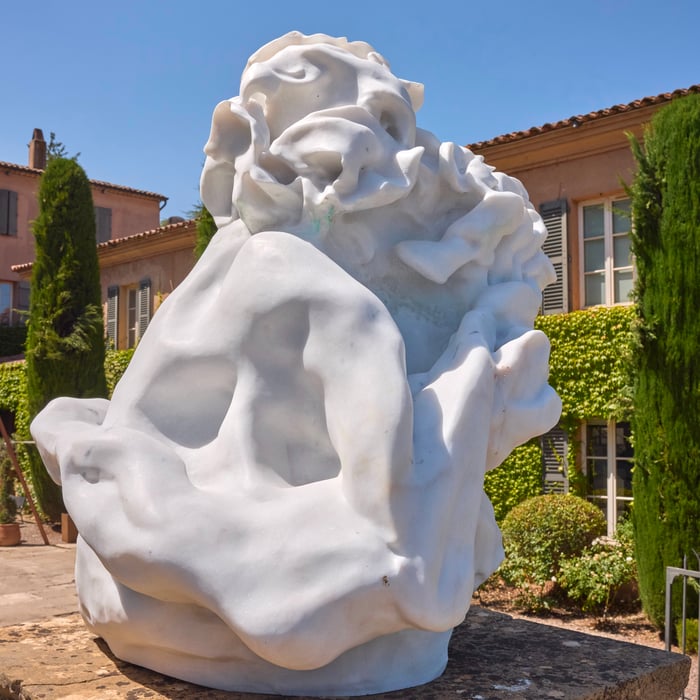
News, Popular, Collecting, Artists - August 12, 2026
In Minor Keys: Finding Intimacy and Identity at the 61st Venice Biennale — and in Your Collection
Explore how Koyo Kouoh’s 61st Venice Biennale vision, In Minor Keys, is shifting contemporary collecting toward quiet introspection, memory, and personal identi…Read More

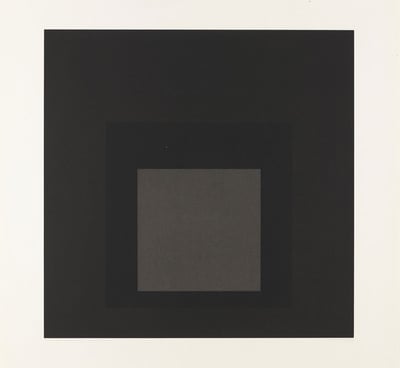
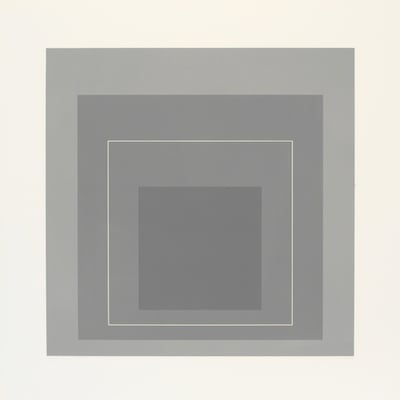 Artwork by Joseph Albers
What is concrete art?
Concrete Art is an art movement founded by the Dutch artist Theo van Doesburg in the 1930s. The movement emphasizes pure abstraction, focusing on geometric shapes and colors without any reference to the natural world or symbolic meaning. Unlike other forms of abstract art, Concrete Art is entirely non-representational and is based on mathematical principles…
Explore »

