Halley, Peter | Exploding Cell (yellow), 1994 — available on Composition Gallery
Color Screenprint - Signed, dated and Numbered
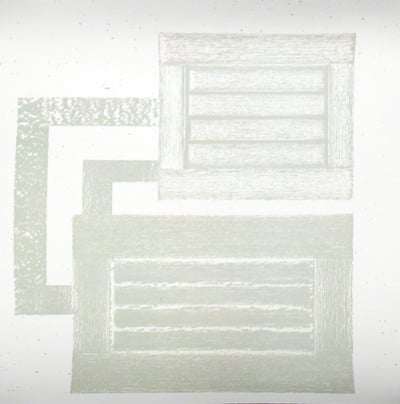
Peter Halley's Exploding Cell (Yellow) (1994) is a vibrant screen print that reflects his exploration of geometric forms and societal structures. The composition is dominated by a bold yellow field, intersected by abstract shapes resembling circuits or networks. These forms, outlined in black and filled with hues of green and brown, evoke a sense of connectivity and fragmentation. Halley’s use of flat, intense color contrasts and minimalistic shapes creates a dynamic, almost diagrammatic visual experience that comments on the isolation and connection within modern urban life. This limited edition print is signed, dated, and numbered by the artist.
Artwork Copyright © Peter Halley
Peter Halley (United States, 1953) is an American artist and central figure in the Neo-Conceptualist movement of the 1980s. Renowned for his Day-Glo geometric paintings, Halley explores themes of urban isolation and technological confinement. His work often features motifs like 'cells' and 'conduits,' symbolizing modern life's structural and social systems.
Artwork Copyright © Peter Halley

Exploding Cell (yellow), 1994

Form

Medium

Edition

Price

Available works →
  • Authenticity Guaranteed
  • Insured Shipping
  • Online Since 2005
Inventory 12189
Signed
Comes with gallery invoice and certificate
Sell Us a Similar Artwork. Learn more.
Color Screenprint - Signed, dated and Numbered
Peter Halley's Exploding Cell (Yellow) (1994) is a vibrant screen print that reflects his exploration of geometric forms and societal structures. The composition is dominated by a bold yellow field, intersected by abstract shapes resembling circuits or networks. These forms, outlined in black and filled with hues of green and brown, evoke a sense of connectivity and fragmentation. Halley’s use of flat, intense color contrasts and minimalistic shapes creates a dynamic, almost diagrammatic visual experience that comments on the isolation and connection within modern urban life. This limited edition print is signed, dated, and numbered by the artist.
Artwork Copyright © Peter Halley
Peter Halley (United States, 1953) is an American artist and central figure in the Neo-Conceptualist movement of the 1980s. Renowned for his Day-Glo geometric paintings, Halley explores themes of urban isolation and technological confinement. His work often features motifs like 'cells' and 'conduits,' symbolizing modern life's structural and social systems.
Artwork Copyright © Peter Halley
Untitled (from the BAM III Portfolio)

Peter Halley

Untitled (from the BAM III Portfolio), 1991

Limited Edition Print

Lithograph

USD 3,100

Cartoon Views

Peter Halley

Cartoon Views, 2020

Limited Edition Print

Etching

EUR 1,750
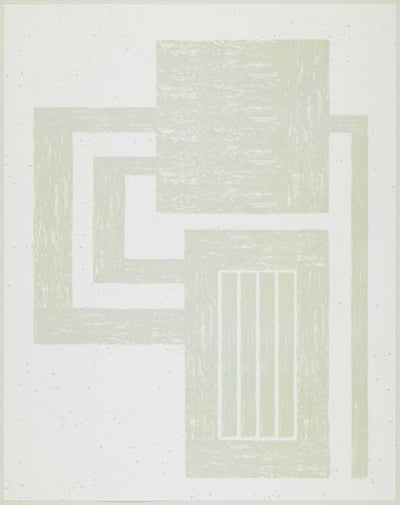
Stack

Peter Halley

Stack, 2015

Limited Edition Print

Mixed Media

EUR 3,500
Pure-Play

Peter Halley

Pure-Play, 2015

Limited Edition Print

Mixed Media

EUR 3,500

Stop Word

Peter Halley

Stop Word, 2015

Limited Edition Print

Mixed Media

EUR 3,500

Available works by Peter Halley

See all →
Untitled (from the BAM III Portfolio)

Peter Halley

Untitled (from the BAM III Portfolio), 1991

Limited Edition Print

Lithograph

USD 3,100

Cartoon Views

Peter Halley

Cartoon Views, 2020

Limited Edition Print

Etching

EUR 1,750

Stack

Peter Halley

Stack, 2015

Limited Edition Print

Mixed Media

EUR 3,500

Pure-Play

Peter Halley

Pure-Play, 2015

Limited Edition Print

Mixed Media

EUR 3,500

Stop Word

Peter Halley

Stop Word, 2015

Limited Edition Print

Mixed Media

EUR 3,500

Stay Updated on Peter Halley

Subscribe to receive updates on new artworks, exhibitions and news about Peter Halley.

We respect your privacy and protect your information.
What is East Village Art?

What is East Village Art?

In 1981, Patti Astor opened the first art gallery in New York City's East Village, helping to launch the careers of various artists and musicians. The gallery started small but quickly gained popularity, contributing to the emergence of art movements such as Neo-Expressionism and Street Art in the area. The East Village became a hub for these new artistic expressions. However, the gallery closed in 1985 due to waning interest.

Est. 2005 — twenty years of collecting, online.