
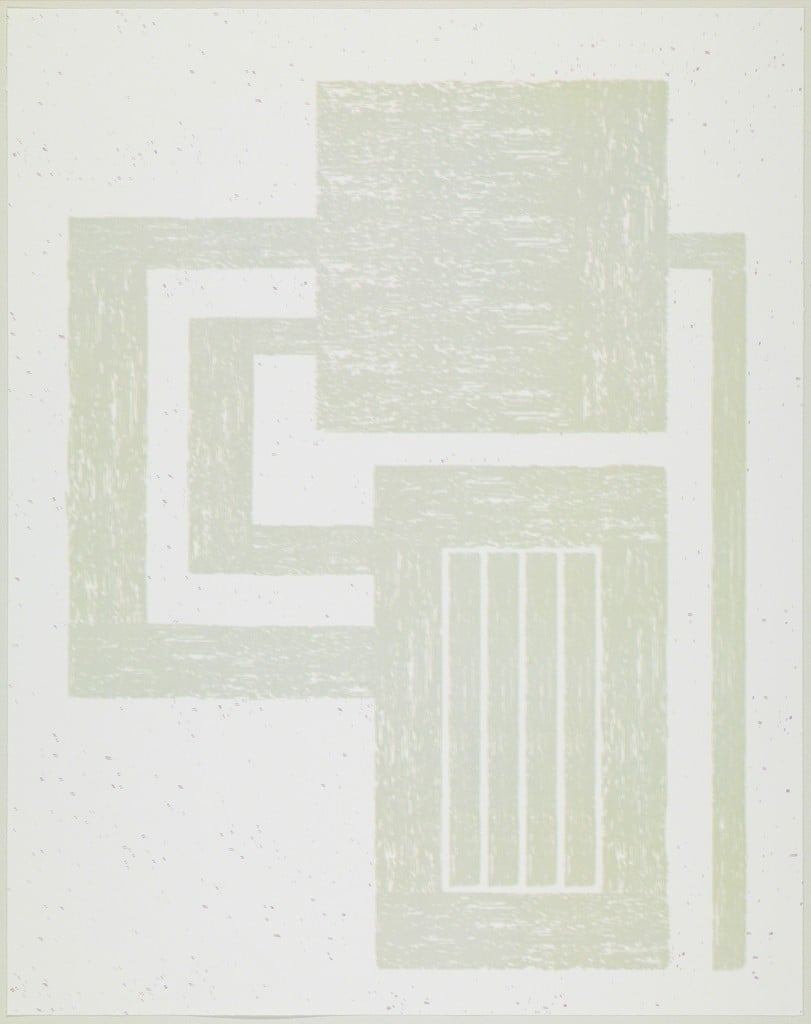
Lithograph and silkscreen
Stack by Peter Halley is a limited edition print created in 2015, utilizing a combination of lithography and silkscreen techniques. This abstract composition features Halley’s signature geometric forms, arranged in a configuration of intersecting shapes and lines. The subdued, almost monochromatic palette emphasizes texture and form, creating a subtle yet structured visual impact. Halley's work often reflects themes of modern urban landscapes and digital structures, suggesting elements of confinement and connectivity. Stack exemplifies his exploration of spatial boundaries and systems, inviting viewers to contemplate the patterns and structures that define contemporary life.
Artwork Copyright © Peter HalleyPeter Halley (United States, 1953) is an American artist and central figure in the Neo-Conceptualist movement of the 1980s. Renowned for his Day-Glo geometric paintings, Halley explores themes of urban isolation and technological confinement. His work often features motifs like 'cells' and 'conduits,' symbolizing modern life's structural and social systems.
Artwork Copyright © Peter HalleyStack, 2015
Form
Medium
Size
- Inches
- Centimeters
Edition
Price
- USD
- EUR
- GBP
- CHF
- Authenticity Guaranteed
- Insured Shipping
- Online Since 2005
●Inventory 2984
●Signed
●Comes with gallery invoice and certificate
●Any questions?
Lithograph and silkscreen
Stack by Peter Halley is a limited edition print created in 2015, utilizing a combination of lithography and silkscreen techniques. This abstract composition features Halley’s signature geometric forms, arranged in a configuration of intersecting shapes and lines. The subdued, almost monochromatic palette emphasizes texture and form, creating a subtle yet structured visual impact. Halley's work often reflects themes of modern urban landscapes and digital structures, suggesting elements of confinement and connectivity. Stack exemplifies his exploration of spatial boundaries and systems, inviting viewers to contemplate the patterns and structures that define contemporary life.
Artwork Copyright © Peter HalleyPeter Halley (United States, 1953) is an American artist and central figure in the Neo-Conceptualist movement of the 1980s. Renowned for his Day-Glo geometric paintings, Halley explores themes of urban isolation and technological confinement. His work often features motifs like 'cells' and 'conduits,' symbolizing modern life's structural and social systems.
Artwork Copyright © Peter HalleyAvailability
Medium
SORT BY

Peter Halley
Untitled (from the BAM III Portfolio), 1991
Limited Edition Print
Lithograph
USD 3,100

Peter Halley
Cartoon Views, 2020
Limited Edition Print
Etching
EUR 1,750
Peter Halley
Stack, 2015
Limited Edition Print
Mixed Media
EUR 3,500
Peter Halley
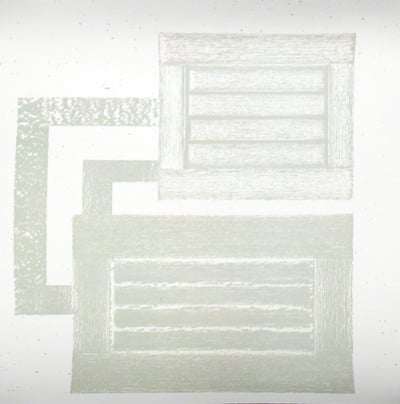
Pure-Play, 2015
Limited Edition Print
Mixed Media
EUR 3,500

Peter Halley
Stop Word, 2015
Limited Edition Print
Mixed Media
EUR 3,500
Related Artists

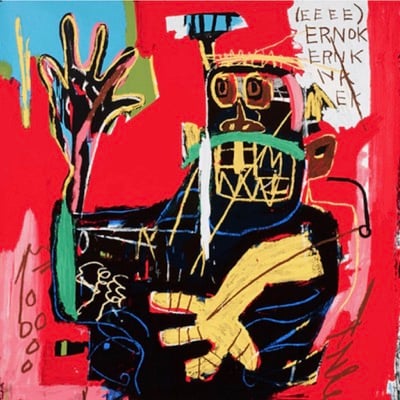
Artwork by Jean-Michel Basquiat
What is East Village Art?
In 1981, Patti Astor opened the first art gallery in New York City's East Village, helping to launch the careers of various artists and musicians. The gallery started small but quickly gained popularity, contributing to the emergence of art movements such as Neo-Expressionism and Street Art in the area. The East Village became a hub for these new artistic expressions. However, the gallery closed in 1985 due to waning interest.

Peter Halley
Stack, 2015
84 x 66 cm


