Halley, Peter | Exploding Cell (Gray Plume), 1994 — available on Composition Gallery
Color Screenprint - Signed, dated and Numbered
Peter Halley's Exploding Cell (Gray Plume) is a screen-print from 1994, showcasing his characteristic geometric abstraction. The print features an expansive, pale gray background interrupted by circular, plume-like forms that radiate outwards. Below, a contrasting deep brown block with small, scattered speckles and linear formations suggests an architectural or structural element. Halley's work often explores themes of confinement and isolation, with his signature use of geometric shapes representing cells or prisons. The composition reflects the artist's ongoing interest in social and architectural constructs, blending minimalism with a commentary on the constraints of modern life.
Artwork Copyright © Peter Halley
Peter Halley (United States, 1953) is an American artist and central figure in the Neo-Conceptualist movement of the 1980s. Renowned for his Day-Glo geometric paintings, Halley explores themes of urban isolation and technological confinement. His work often features motifs like 'cells' and 'conduits,' symbolizing modern life's structural and social systems.
Artwork Copyright © Peter Halley

Exploding Cell (Gray Plume), 1994

Form

Medium

Edition

Price

Available works →
  • Authenticity Guaranteed
  • Insured Shipping
  • Online Since 2005
Inventory 12188
Signed
Comes with gallery invoice and certificate
Sell Us a Similar Artwork. Learn more.
Color Screenprint - Signed, dated and Numbered
Peter Halley's Exploding Cell (Gray Plume) is a screen-print from 1994, showcasing his characteristic geometric abstraction. The print features an expansive, pale gray background interrupted by circular, plume-like forms that radiate outwards. Below, a contrasting deep brown block with small, scattered speckles and linear formations suggests an architectural or structural element. Halley's work often explores themes of confinement and isolation, with his signature use of geometric shapes representing cells or prisons. The composition reflects the artist's ongoing interest in social and architectural constructs, blending minimalism with a commentary on the constraints of modern life.
Artwork Copyright © Peter Halley
Peter Halley (United States, 1953) is an American artist and central figure in the Neo-Conceptualist movement of the 1980s. Renowned for his Day-Glo geometric paintings, Halley explores themes of urban isolation and technological confinement. His work often features motifs like 'cells' and 'conduits,' symbolizing modern life's structural and social systems.
Artwork Copyright © Peter Halley
Untitled (from the BAM III Portfolio)

Peter Halley

Untitled (from the BAM III Portfolio), 1991

Limited Edition Print

Lithograph

USD 3,100

Cartoon Views

Peter Halley

Cartoon Views, 2020

Limited Edition Print

Etching

EUR 1,750
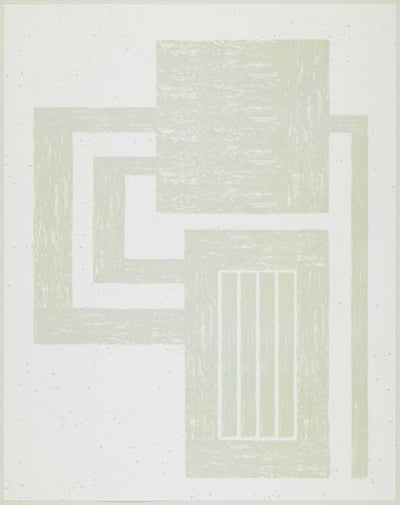
Stack

Peter Halley

Stack, 2015

Limited Edition Print

Mixed Media

EUR 3,500
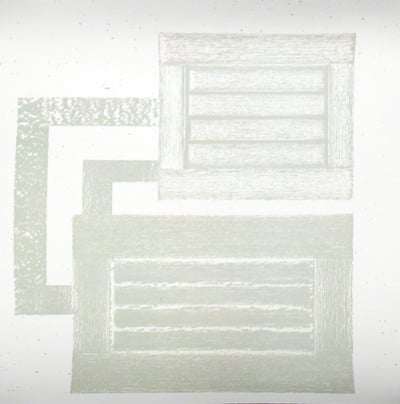
Pure-Play

Peter Halley

Pure-Play, 2015

Limited Edition Print

Mixed Media

EUR 3,500

Stop Word

Peter Halley

Stop Word, 2015

Limited Edition Print

Mixed Media

EUR 3,500

Available works by Peter Halley

See all →
Untitled (from the BAM III Portfolio)

Peter Halley

Untitled (from the BAM III Portfolio), 1991

Limited Edition Print

Lithograph

USD 3,100

Cartoon Views

Peter Halley

Cartoon Views, 2020

Limited Edition Print

Etching

EUR 1,750

Stack

Peter Halley

Stack, 2015

Limited Edition Print

Mixed Media

EUR 3,500

Pure-Play

Peter Halley

Pure-Play, 2015

Limited Edition Print

Mixed Media

EUR 3,500

Stop Word

Peter Halley

Stop Word, 2015

Limited Edition Print

Mixed Media

EUR 3,500

Stay Updated on Peter Halley

Subscribe to receive updates on new artworks, exhibitions and news about Peter Halley.

We respect your privacy and protect your information.
What is minimalism?

What is minimalism?

Minimalism is a style in music and visual arts characterized by pared-down designs and simplicity. It began in Western art after World War II, gaining prominence particularly in American visual arts. Minimalism draws heavily on aspects of modernism and is often viewed as a reaction against Abstract Expressionism, as well as a precursor to post-minimal art practices. Prominent minimalist artists include Agnes Martin, Donald Judd, Robert Morris, Frank Stella, and Dan Flavin.

Est. 2005 — twenty years of collecting, online.