From Síntesis Series
- Mixed media on plexiglass
- Signed and numbered on a label affixed to the reverse
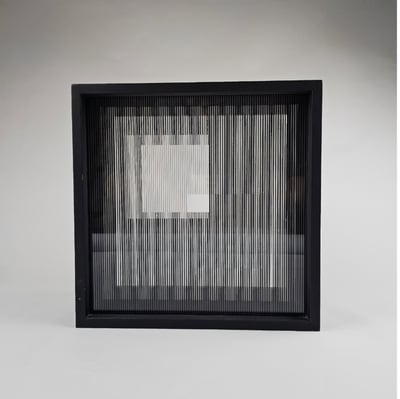
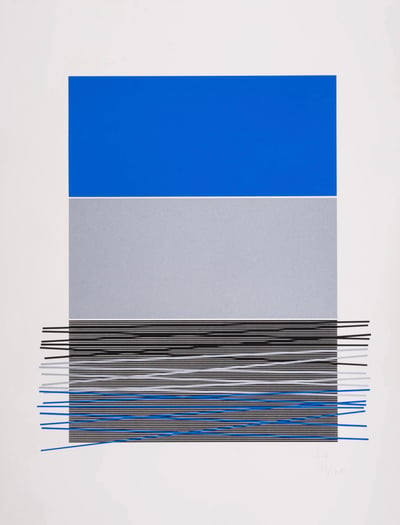
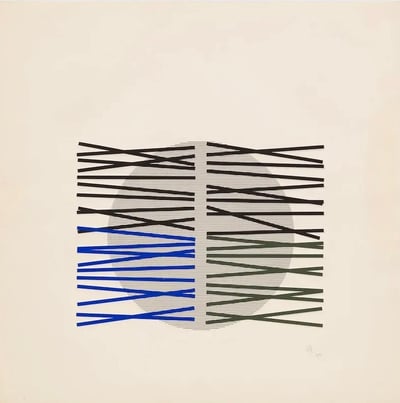
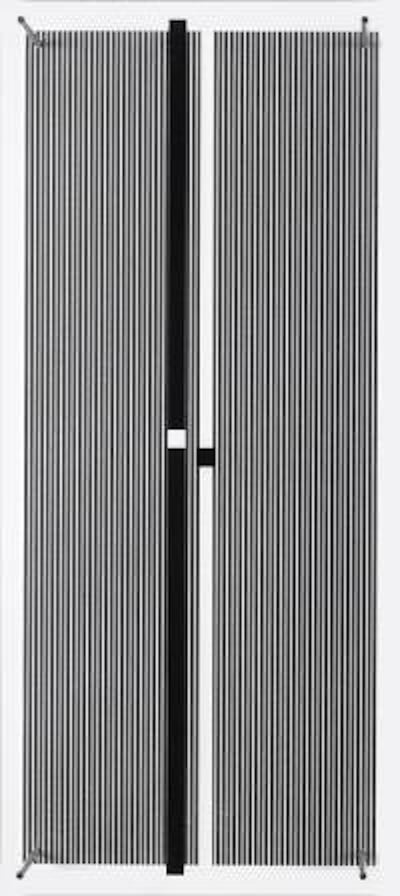
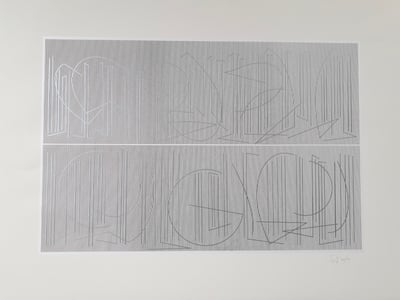
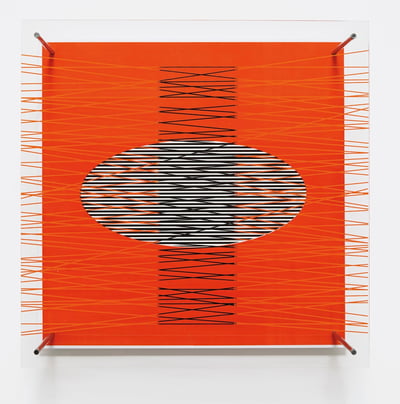
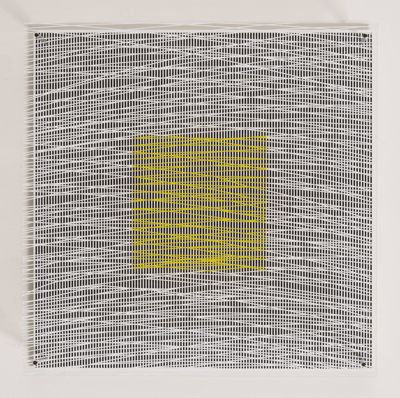
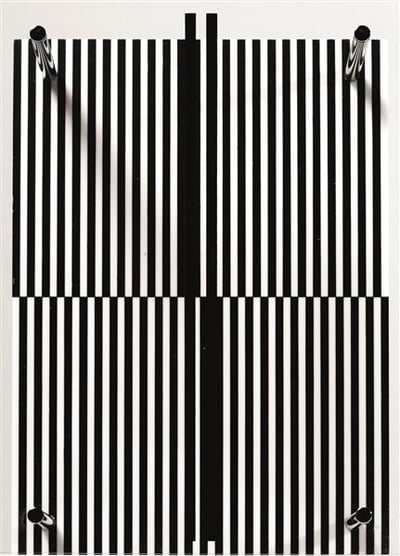
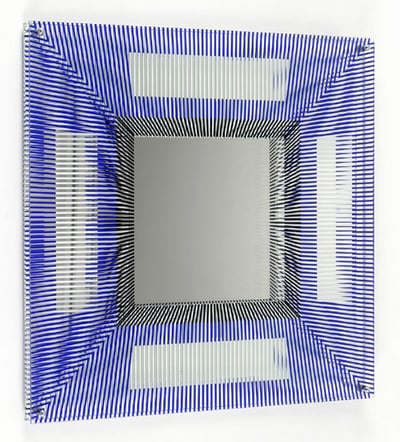
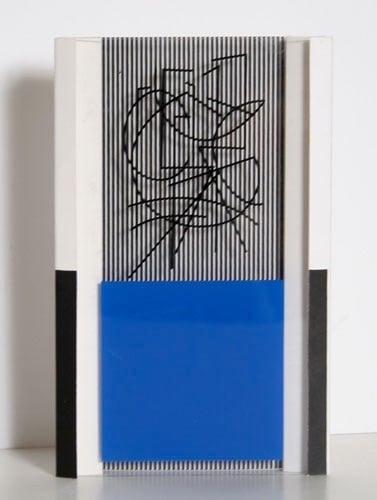
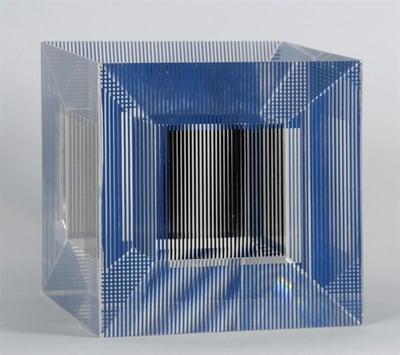
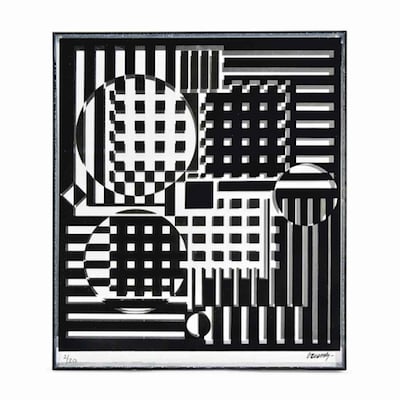
Rafael Jesus Soto’s La Escalera Azul is a captivating mixed-media work that plays with perception, illusion, and dimensionality. Part of the Síntesis series, the piece is constructed using Plexiglas and features horizontal black and white lines that create a visual rhythm. Over this structured backdrop, thin blue and black forms appear to float, creating an optical illusion of depth and movement. The blue lines, resembling the form of a ladder, stand out, drawing attention to the lower portion of the piece, where the blue tone dominates. The precision of the lines and their arrangement produce a kinetic effect as the viewer moves, shifting the perception of the artwork from static to dynamic. Soto’s ability to manipulate light and space through minimal elements transforms La Escalera Azul into an interactive visual experience, where the viewer’s movement activates the work. Signed and numbered on the reverse, this piece exemplifies Soto’s signature approach to kinetic and optical art.
Jesús Rafael Soto (Venezuela, 1923–2005) was a pioneering figure in kinetic and op art. Renowned for his 'Penetrables' series, he created immersive installations that invited viewer interaction, blurring the lines between art and observer. Soto's work explored movement, perception, and the dematerialization of the art object, leaving a lasting impact on contemporary art.
Mixed MediaMixed media refers to artwork that incorporates more than one medium within a single piece. Unlike multimedia art, which combines distinct forms of visual art and often includes elements like sound, video, or digital media, mixed media focuses on combining traditional art materials, such as paint, ink, and collage. Mixed media art allows artists to achieve a wide range of effects and textures by layering and blending different materials.
From Síntesis Series
- Mixed media on plexiglass
- Signed and numbered on a label affixed to the reverse
Rafael Jesus Soto’s La Escalera Azul is a captivating mixed-media work that plays with perception, illusion, and dimensionality. Part of the Síntesis series, the piece is constructed using Plexiglas and features horizontal black and white lines that create a visual rhythm. Over this structured backdrop, thin blue and black forms appear to float, creating an optical illusion of depth and movement. The blue lines, resembling the form of a ladder, stand out, drawing attention to the lower portion of the piece, where the blue tone dominates. The precision of the lines and their arrangement produce a kinetic effect as the viewer moves, shifting the perception of the artwork from static to dynamic. Soto’s ability to manipulate light and space through minimal elements transforms La Escalera Azul into an interactive visual experience, where the viewer’s movement activates the work. Signed and numbered on the reverse, this piece exemplifies Soto’s signature approach to kinetic and optical art.
Jesús Rafael Soto (Venezuela, 1923–2005) was a pioneering figure in kinetic and op art. Renowned for his 'Penetrables' series, he created immersive installations that invited viewer interaction, blurring the lines between art and observer. Soto's work explored movement, perception, and the dematerialization of the art object, leaving a lasting impact on contemporary art.
Art is not expression; art is knowledge.
- Rafael Jesus Soto
Celebrated for his contributions to both the Op Art movement and Kinetic Sculpture, Jesus Rafael Soto worked with a range of materials to create his trademark sculptural reliefs; his works study the interplay between colours as well as the dynamic between foreground and background, both of which often result in a final optical illusion effect, as exemplified in his acclaimed Vibration Blanc et Jaune work. Soto began his artistic career as a post-impressionist painter, but later discovered the methods and teachings of Piet Mondrian, from whom he gained much of his inspiration. Alongside his notable reliefs, Soto created a number of interactive sculptures that allowed direct audience participation – Penetrables is among his most successful works of this kind, of which the artist has remarked ‘’when you enter a penetrable, you have the sensation of being in a light swirl, a total plenitude of vibrations.’’ (Artist website)
Op Art is a visual art style that uses optical illusions to create the impression of movement, vibrating patterns, flashing, or hidden images. The works are typically abstract, with many well-known pieces in black and white. The roots of Op Art can be traced back to earlier movements like Futurism, Constructivism, Dada, and Neo-Impressionism, particularly in their use of color effects and graphic design.