Suite: Six Etchings for Poems of W.B. Yeats
- Hand Initialed and numbered by Diebenkorn
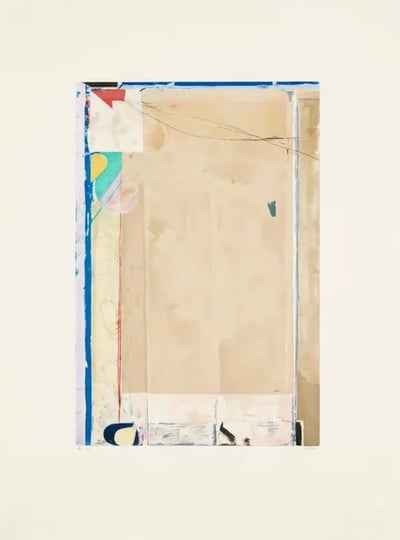
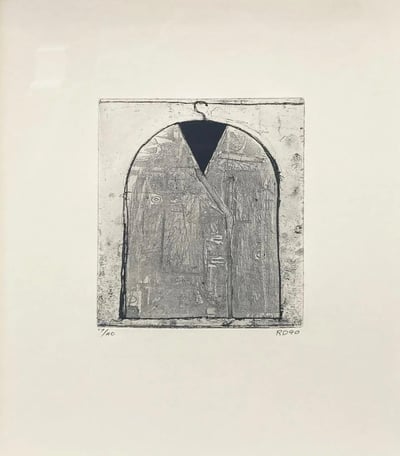
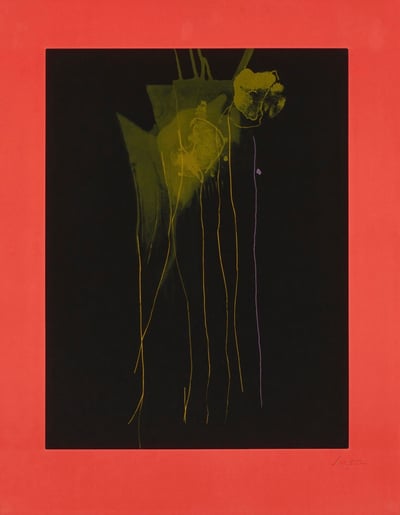
Double Map of Ireland by Richard Diebenkorn, created in 1990, is an etching that forms part of the suite Six Etchings for Poems of W.B. Yeats. This limited edition print features two abstract representations of Ireland's map, stacked one above the other. The upper portion showcases a dark, textured outline of the island, while the lower segment presents a lighter, more subdued interpretation. The division between the two maps is marked by partial text that reads RUNS ON RUN…, adding a sense of mystery and fragmentation. Diebenkorn’s intricate line work and subtle play with negative space create a dynamic tension, inviting viewers to explore the geographical form through an abstract, poetic lens. The work exemplifies Diebenkorn's mastery in balancing structure and spontaneity, offering a contemplative take on spatial relationships and abstraction.
Richard Diebenkorn (USA, 1922–1993) was a celebrated painter and printmaker, known for his transition from abstract expressionism to figurative work and back to abstraction. His Ocean Park series, inspired by the landscapes of California, features luminous, geometric compositions. Diebenkorn’s art bridges abstraction and representation, leaving a profound impact on modern art.
EtchingEtching is a technique where a design is created on a metal surface by using a strong acid or mordant to eat away the unprotected parts of the metal, leaving the desired pattern in relief (intaglio). In modern art and manufacturing, different chemicals may be used depending on the material being etched.
Suite: Six Etchings for Poems of W.B. Yeats
- Hand Initialed and numbered by Diebenkorn
Double Map of Ireland by Richard Diebenkorn, created in 1990, is an etching that forms part of the suite Six Etchings for Poems of W.B. Yeats. This limited edition print features two abstract representations of Ireland's map, stacked one above the other. The upper portion showcases a dark, textured outline of the island, while the lower segment presents a lighter, more subdued interpretation. The division between the two maps is marked by partial text that reads RUNS ON RUN…, adding a sense of mystery and fragmentation. Diebenkorn’s intricate line work and subtle play with negative space create a dynamic tension, inviting viewers to explore the geographical form through an abstract, poetic lens. The work exemplifies Diebenkorn's mastery in balancing structure and spontaneity, offering a contemplative take on spatial relationships and abstraction.
Richard Diebenkorn (USA, 1922–1993) was a celebrated painter and printmaker, known for his transition from abstract expressionism to figurative work and back to abstraction. His Ocean Park series, inspired by the landscapes of California, features luminous, geometric compositions. Diebenkorn’s art bridges abstraction and representation, leaving a profound impact on modern art.
Mistakes can't be erased, but they move you from your present position.
- Richard Diebenkorn
Arguably best known for his Ocean Park paintings, Richard Diebenkorn was a painter and printmaker with early roots in abstract expressionism and a later involvement with the Bay Area Figurative Movement throughout the 1950’s and 1960’s. His move to figuration saw works such as Girl On a Terrace come to light – he employed a range of soft, subtle colours to create his simple depictions of life at the time. Diebenkorn explored figuration for a decade or so before he returned to his abstraction origins – this is when he began to compile the Ocean Park series, a selection of works that, while abstract, still managed to capture the essence of the landscape and the times he was living among. While it could be stated that his artistic career was divided into three different segments – abstraction, figuration and abstraction once again – Diebenkorn was not afraid to mix the two, and his portraits were usually a striking blend of the two. His work has frequently been compared to that of Willem De Kooning – an artist that Diebenkorn has often cited as an inspiration. (Artist website)
Abstract art uses form, shape, line, and color to create a visual experience without attempting to represent external reality. The composition exists independently of the world's visual references, focusing on expressing ideas and emotions through non-representational means.