

Photolito on paper
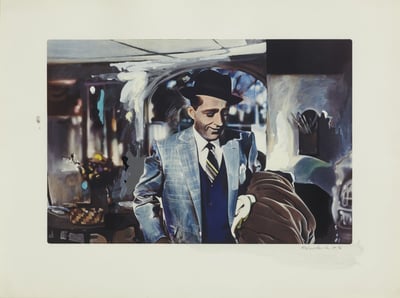
Poster by Richard Hamilton, created between 1973-74, is a vibrant mixed media print using photolithographic techniques on paper. The composition showcases a lively still life of flowers in bold, expressive colors—reds, yellows, and greens dominate the scene, creating a sense of movement and energy. The use of light and shadow adds depth and dynamism, characteristic of Hamilton’s innovative approach to blending traditional and modern techniques. Measuring 84 cm × 60 cm, the piece invites viewers into a lush, colorful exploration of form and nature, emphasizing the artist’s mastery in translating vibrancy and texture into print.
Artwork Copyright © Richard HamiltonRichard Hamilton (United Kingdom, 1922–2011) was a British painter and collage artist, often regarded as the father of Pop Art. His 1956 collage 'Just what is it that makes today's homes so different, so appealing?' is considered one of the earliest works of the movement. Hamilton's innovative approach combined popular culture with fine art, influencing generations of artists.
Artwork Copyright © Richard HamiltonPoster, 1973-74
Form
Medium
Size
- Inches
- Centimeters
Edition
Price
- USD
- EUR
- GBP
- CHF
- Authenticity Guaranteed
- Insured Shipping
- Online Since 2005
●Inventory 11170
●Signed
●Comes with gallery invoice and certificate
●Sell Us a Similar Artwork. Learn more.
Photolito on paper
Poster by Richard Hamilton, created between 1973-74, is a vibrant mixed media print using photolithographic techniques on paper. The composition showcases a lively still life of flowers in bold, expressive colors—reds, yellows, and greens dominate the scene, creating a sense of movement and energy. The use of light and shadow adds depth and dynamism, characteristic of Hamilton’s innovative approach to blending traditional and modern techniques. Measuring 84 cm × 60 cm, the piece invites viewers into a lush, colorful exploration of form and nature, emphasizing the artist’s mastery in translating vibrancy and texture into print.
Artwork Copyright © Richard HamiltonRichard Hamilton (United Kingdom, 1922–2011) was a British painter and collage artist, often regarded as the father of Pop Art. His 1956 collage 'Just what is it that makes today's homes so different, so appealing?' is considered one of the earliest works of the movement. Hamilton's innovative approach combined popular culture with fine art, influencing generations of artists.
Artwork Copyright © Richard Hamilton- Recently Added
- Price (Low-High)
- Price (High-Low)
- Year (Low-High)
- Year (High-Low)

Richard Hamilton
Kent State, 1970
Limited Edition Print
Silkscreen
EUR 3,450

Richard Hamilton
Poster, 1973-74
Limited Edition Print
Mixed Media
EUR 5,000
Richard Hamilton
I'm dreaming of a black Christmas, 1971
Limited Edition Print
Screen-print
Currently Not Available
Related Artists


Artwork by Raymond Pettibon
What is Comic Strip Art?
Comic strip art refers to artwork that utilizes the subject matter and commercial printing techniques found in comic strips. In the 1960s, a group of artists began creating paintings that incorporated Ben-Day dots—commonly used in comics and advertising—to produce highly graphic designs in bright colors, using traditional art media.


Richard Hamilton
Poster, 1973-74
84 x 60 cm


