

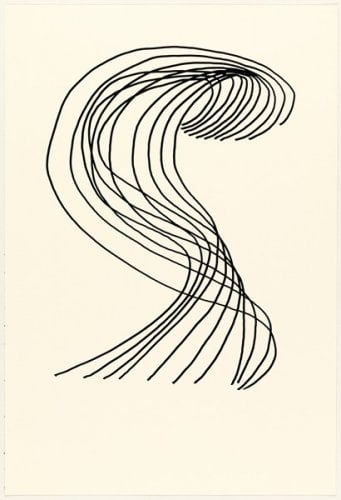
// Los nuevos Oradores I by Sandra Gamarra, a drypoint print from 2010, presents a quiet and introspective composition. The artwork depicts a solitary, lifeless figure lying face down on a narrow, inclined surface that fades into an undefined space. Rendered in delicate, monochromatic lines, the scene exudes a sense of isolation and vulnerability, evoking themes of silence and stillness. Gamarra’s meticulous linework captures subtle details of the fabric and body, grounding the figure within a stark, almost surreal setting. This piece invites contemplation on the concept of presence and absence, as the figure appears both part of and detached from its surroundings. Gamarra’s work here speaks to the fragility of existence, exploring profound themes with a minimalist yet poignant approach.
Artwork Copyright © Sandra GamarraSandra Gamarra (Peru, 1972) is a Peruvian artist who examines cultural narratives and the dynamics of art institutions. Working with painting, sculpture, and installation, she explores themes like colonialism, identity, and cultural appropriation. Her work often challenges traditional exhibition formats, encouraging viewers to question ownership and interpretation of art and artifacts.
Artwork Copyright © Sandra GamarraLos nuevos Oradores I , 2010
Form
Medium
Size
- Inches
- Centimeters
Edition
Price
- USD
- EUR
- GBP
- CHF
- Authenticity Guaranteed
- Insured Shipping
- Online Since 2005
●Inventory 7982
●Signed
●Comes with gallery invoice and certificate
●Sell Us a Similar Artwork. Learn more.
// Los nuevos Oradores I by Sandra Gamarra, a drypoint print from 2010, presents a quiet and introspective composition. The artwork depicts a solitary, lifeless figure lying face down on a narrow, inclined surface that fades into an undefined space. Rendered in delicate, monochromatic lines, the scene exudes a sense of isolation and vulnerability, evoking themes of silence and stillness. Gamarra’s meticulous linework captures subtle details of the fabric and body, grounding the figure within a stark, almost surreal setting. This piece invites contemplation on the concept of presence and absence, as the figure appears both part of and detached from its surroundings. Gamarra’s work here speaks to the fragility of existence, exploring profound themes with a minimalist yet poignant approach.
Artwork Copyright © Sandra GamarraSandra Gamarra (Peru, 1972) is a Peruvian artist who examines cultural narratives and the dynamics of art institutions. Working with painting, sculpture, and installation, she explores themes like colonialism, identity, and cultural appropriation. Her work often challenges traditional exhibition formats, encouraging viewers to question ownership and interpretation of art and artifacts.
Artwork Copyright © Sandra GamarraAvailability
Size
Medium
SORT BY
Sandra Gamarra
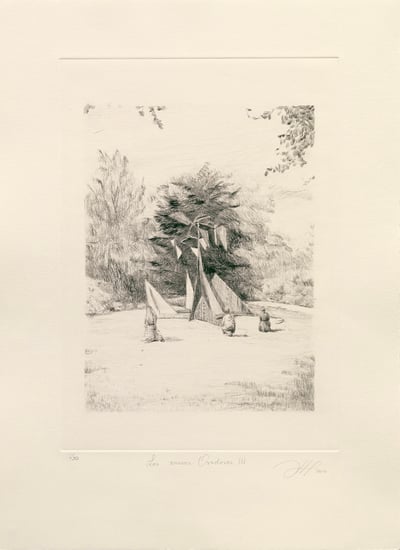
Los nuevos Oradores III , 2010
Limited Edition Print
Drypoint
EUR 300
Sandra Gamarra
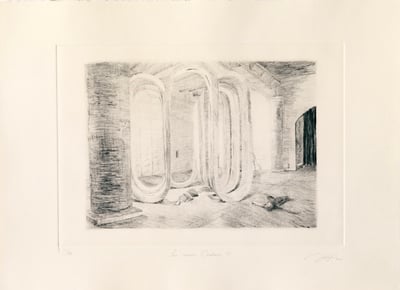
Los nuevos Oradores IV , 2010
Limited Edition Print
Drypoint
EUR 300

Sandra Gamarra
Los nuevos Oradores I , 2010
Limited Edition Print
Drypoint
EUR 300
Sandra Gamarra
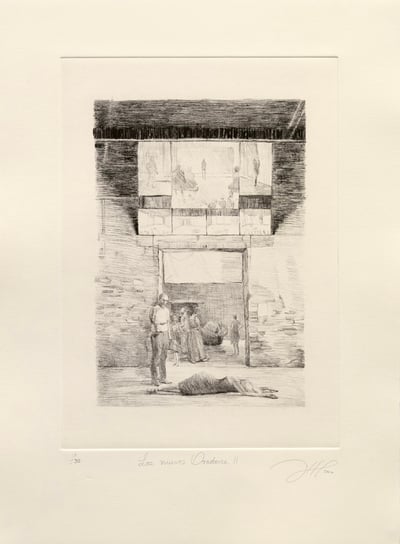
Los nuevos Oradores II , 2010
Limited Edition Print
Drypoint
EUR 300

Sandra Gamarra
Portfolio RESELECCION NATURAL, 2010
Limited Edition Print
Lithograph
EUR 2,000
Related Artists



Artwork by Carlos Cruz-Diez
What is Latin American art?
Latin American Art is a style which takes inspiration from its culture, society, politics, native traditions, religions and landscape. Op-Art and Kinetic Art figure prominently in Latin artworks. Colors in Latin American compositions are often bold. Latin American artists work in all media and movements.


Sandra Gamarra
Los nuevos Oradores I , 2010
30 x 41 cm


